Back to AI information
The Qwen team proposed Soft Adaptive Policy Optimization to improve the stability of large model RL

The Qwen team proposed Soft Adaptive Policy Optimization to improve the stability of large model RL

AI information Admin 199 views

The paper on the Soft Adaptive Policy Optimization (SAPO) algorithm was published on arXiv, and then the Qwen team introduced this reinforcement learning training method for large language and multimodal models through the official blog system. It is pointed out that the existing strategy optimization based on hard clipping either disappears or explodes when the importance is more than extreme fluctuations, especially in the mixed expert (MoE) structure, which is more likely to lead to unstable training and low sample utilization efficiency.

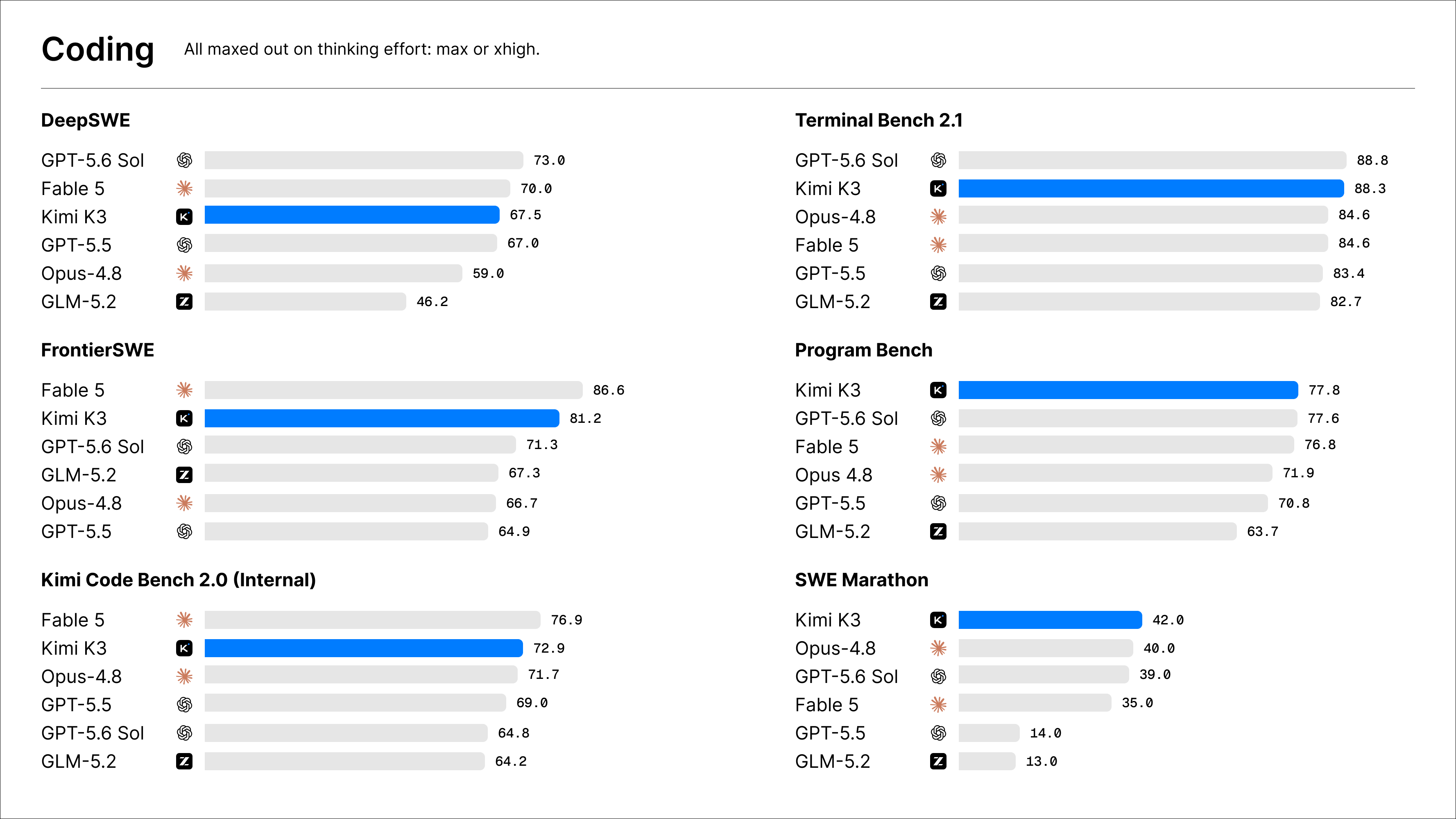
SAPO replaces the traditional hard boundary with a continuous, adjustable "temperature gating" that adaptively scales token-level importance while maintaining trust-domain-like constraints at the serial level, suppressing only the parts that deviate from the policy severely while retaining the effective gradient close to the policy distribution. The algorithm also allows for asymmetric temperature settings to enhance robustness in high-variance MoE models. Papers and experiments show that under similar training budgets, SAPO can support stable RL training for a longer period of time, and significantly improve key indicators such as Pass@1 in mathematics, code, and multimodal tasks of the Qwen3-VL series models, providing a more scalable and reusable foundation for RL tuning of large models.

FAQs

Q: What is SAPO?

A: SAPO stands for Soft Adaptive Policy Optimization, which is a policy optimization method for large model RL tuning, emphasizing smooth gating and adaptive updates.

Q: What are its core improvements over traditional hard clipping?

A: SAPO replaces hard thresholds with continuous, temperature-controlled doors to avoid sudden gradient disappearance or explosion caused by "full on/all off".

Q: Why is there a special emphasis on advantages over the MoE model?

A: The MoE structure itself amplifies the variance, and SAPO's asymmetric temperature and fine-grained token adjustment can mitigate the damage to training stability by extreme samples.

Q: What are the specific benefits of SAPO in terms of performance?

A: Experimental reports show that it can achieve a longer and more stable RL training process, and bring higher Pass@1 and multitasking performance improvements on the Qwen3-VL.

Q: To what extent is SAPO's research and implementation open?

A: The details of the algorithm and experimental results have been published through papers and official blogs for further implementation and evaluation by researchers and engineering teams.

Analysis of SAPO large model reinforcement learning tuning algorithm SAPO has optimization advantages over traditional hard clipping strategies SAPO soft adaptive strategy optimization avoids gradient explosion How SAPO replaces hard truncation with temperature gating SAPO Reinforcement Learning Training Method for Large Language Models Application of SAPO in RL Tuning of Multimodal Large Model Why does hard truncation clipping cause gradients to disappear How SAPO mitigates extreme fluctuations in importance ratio Implementation idea of SAPO for serial-level trust domain constraints SAPO plays an important role in token-level adaptive scaling SAPO only inhibits the mechanism of severe deviation from the strategy sample Why SAPO can retain a gradient close to the policy distribution SAPO asymmetric temperature design improves the robustness of the MoE model Advantages of SAPO in Hybrid Expert MoE Structure Training How to improve the training stability of MoE high-variance scenarios Practical experience in using SAPO to improve sample utilization efficiency SAPO supports the experimental results of stable RL training for a longer period of time Qwen team's official blog interpretation of the SAPO algorithm SAPO improves Pass1 in Qwen3VL math tasks SAPO improves the performance of Qwen3VL code generation Pass1 Evaluation of the effect of SAPO in multimodal visual language tasks How SAPO provides a scalable foundation for large model RL tuning Compared with traditional strategy gradient methods such as PPO, SAPO advantages are compared Effect of SAPO temperature gating parameter selection on training stability How to integrate SAPO algorithms into existing RLHF pipelines Benefits of SAPO continuing RL training in the post-instruction fine-tuning phase SAPO robustness analysis of reward model noise and bias Application prospect of SAPO algorithm in long sequence generation scenarios How SAPO balances exploration and utilization to improve sample efficiency SAPO discusses the relationship between gradient clipping and importance sampling SAPO mitigates pattern collapse in code generation tasks The impact of SAPO on the performance of multi-turn dialogue and inference tasks How to achieve more stable RL training hyperparameters based on SAPO The overall indicator improvement of Qwen3VL after adopting SAPO Detailed analysis of SAPO's improvement in mathematical reasoning Pass1 indicators SAPO robustness experiment in multimodal visual question and answer task Why SAPO is more suitable as the cornerstone of the MoE large model RL Effect of SAPO on training effect of extreme samples and long-tail distribution SAPO Implementation Details and Open Source Papers Code Reading Guide Practical engineering experience using SAPO to align large model behavior The potential value of SAPO in enterprise-level multimodal model training How to integrate the SAPO method into the existing Qwen training framework SAPO's comprehensive benefits on the convergence speed and stability of RL training The role of SAPO in the safety alignment and reward design of large models Comparison of SAPO with traditional trust domain methods such as PPOTRPO Progress of SAPO algorithm reproduction and evaluation in the open source community SAPO reduces the performance of hyperparameter sensitivity in RL training The mathematical and code capabilities of large models based on SAPO have been comprehensively improved SAPO's adaptability to long-context tasks of generative large models The reusable value of SAPO on the Qwen3VL multimodal base

Recommended Tools

More