Back to AI information
It is reported that OpenAI plans to merge Cameos with Characters and unify the web editing portal

It is reported that OpenAI plans to merge Cameos with Characters and unify the web editing portal

AI information Admin 101 views

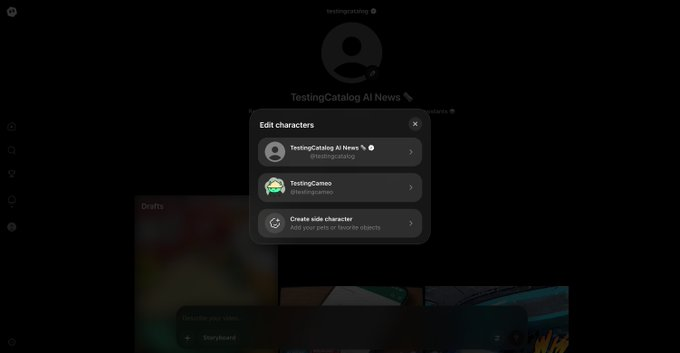
Recently, there has been test information showing that OpenAI is adjusting the product form of its role-related functions, planning to merge the existing Cameos and Characters portals, unified as "Characters" on the interface, and allow users to create and edit these two types of characters through the web interface. Relevant screenshots indicate that this change is still in the development or grayscale stage and has not been officially rolled out to all users.

The current actual usage situation is that Cameos functions mainly rely on mobile applications to complete creation and editing, and the web side can only call existing roles to participate in generating content, and does not yet support the complete management process. In the future, if it is unified into Characters, it is expected to bring a more consistent naming and permission configuration experience, which is conducive to creators managing their digital identity and character resources synchronously between mobile and web pages.

Judging from the existing public statement, OpenAI has incorporated the ability to name Cameo in the early days into the broader role system, but the full implementation time of the unified naming and web page management portal is still unclear, and there may also be differences depending on the region, platform and account type, and ordinary users still need to rely on mobile to record and modify Cameos in the short term.

FAQ

Q: What do Cameos and Characters refer to in OpenAI products?

A: Cameos typically refer to short-term or scene-specific characters generated from personal images, while Characters are reusable character systems, both of which are used to add fixed characters to videos or content.

Q: Is it possible to create or edit Cameos on a web page now?

A: Current information shows that Cameos still mainly relies on mobile applications for creation and editing, and the web side has not yet opened the same complete operation capabilities.

Q: Why are they all called Characters after the merger?

A: Unified naming helps reduce confusion between Cameos and Characters, so that role-related functions only have one title and management portal within the product.

Q: What role-related operations can the web side do in the future?

A: If the merger goes ahead with the test information, users can expect to create, edit, and manage all character assets directly from the web interface, without distinguishing between the original Cameos and Characters.

Q: Is this feature adjustment officially available to all users?

A: Currently, there is only information about the test interface, and there is no clear full launch timeline, and the actual experience may vary depending on the account and region.
OpenAI merges Cameos with Characters OpenAI's character functions are unified into Characters Cameos roles will be managed on the web side in the future OpenAI web supports character creation and editing Mobile recording Cameos is synchronized with web pages OpenAI Character System Naming Normalization Trend Cameos is integrated into OpenAI's universal character system What changes will be brought about by the merger of OpenAI's character portals What web-side role management means for creators The new Characters interface was exposed in OpenAI's test Cameos roles still need to be created via mobile OpenAI character function grayscale online user experience OpenAI's character capabilities vary in different regions How digital image creators can utilize OpenAI characters OpenAI's character system supports video content creation Cameos is suitable for short-term scenario-based character expression Characters are suitable as long-term reuse characters How to configure role permissions after unifying Characters How web and mobile role resources work together OpenAI character assets are managed synchronously across platforms Creators use OpenAI to build their personal digital presence The impact of OpenAI's role system on content workflows Explanation of the differences between the concepts of Cameos and Characters Current usage restrictions of OpenAI's character system are explained When will the role management portal be fully opened on the web side? OpenAI's character editing feature is open to regular users The OpenAI character system is aimed at video generation applications Does OpenAI's character system support multi-account scenarios? Use OpenAI Controllers to create brand IP image OpenAI's character system and creator economic relationship Unified role naming reduces user learning costs Prediction of the future development direction of OpenAI's character system How to choose between Cameos and Characters OpenAI character page beta interface detailed analysis OpenAI's role management capabilities are valuable to enterprise customers Improve content consistency and recognition with OpenAI characters The impact of OpenAI's role system on privacy and compliance How developers can integrate OpenAI character-related capabilities The OpenAI character system supports multi-platform collaborative creation Cameos Recording Considerations & Best Practices Guide Web-side role editing will change the authoring workflow Version control and updates of OpenAI character resources Comparison of the functions of account roles on different platforms Use OpenAI characters to operate social media personality IP OpenAI character features compared to other platforms How to determine if your account is open for role testing The impact of OpenAI's unified character naming on product structure Creators build content matrices using OpenAI characters OpenAI's character system opens up opportunities for short video creation Product signals released by OpenAI's role merger strategy

Recommended Tools

More