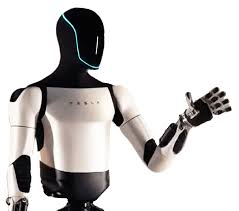
1. Product positioning
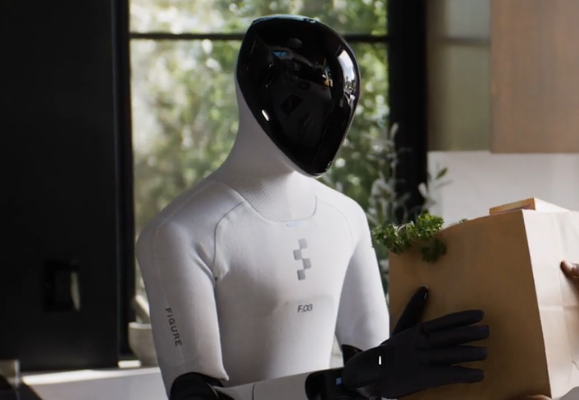
Tesla Optimus is a general-purpose humanoid robot created by Tesla, with a height of about 1.7 meters and a weight of about 56 kilograms, with the goal of taking over dangerous, repetitive, and boring labor, such as factory handling, material turnover, simple assembly, etc. Its control system shares perception and decision-making capabilities with Tesla's autonomous driving, which is equivalent to moving "in-vehicle AI that can understand the environment and make decisions" into a humanoid body.
2. Core highlights
Thelatest Optimus Gen2 has a significant improvement in athletic ability: the walking speed is about 30% faster than the first generation, and the body is lighter, the energy consumption is lower, and the heat and battery pressure will be reduced when working for a long time. The foot adds force and torque perception to better perceive the ground and center of gravity, making it more stable when walking on ramps, going up and down steps, and lifting heavy objects.
The hands are another focus: the hands have multiple degrees of freedom in the joints and add tactile perception to the fingers, which can firmly grasp fragile objects such as eggs and cups. This means that not only can you do the rough work of "moving boxes", but you also have the opportunity to participate in more detailed tasks such as electronic assembly and fine sorting.
3. Application scenarios and landing rhythm
In the short term, Optimus is mainly used in Tesla's own factory, giving priority to parts handling, production line replenishment and other work, because these scenarios have a controllable environment and clear safety requirements, which is convenient for rapid iteration. Next is third-party factories and warehousing logistics, pallet handling, shelf picking, etc.
It will be a further stage to truly enter homes and shopping malls, because the environment is more complex and there is more human-computer interaction, which needs to be further matured in terms of security, fault tolerance and cost. Tesla has mentioned that it hopes to achieve small-scale mass production around 2025, first for internal use and then open to the outside world, and the specific pace may still be adjusted.
4. Q&A
Q1: What are the advantages of Optimus compared with traditional industrial robotic arms?
A: The robotic arm is usually fixed on the production line and only does a single action; Optimus can move freely around the plant, use existing tools, and switch between different stations, making it ideal for companies that require frequent line changes and small-batch, multi-mix production.
Q2: When can the average business buy Optimus?
A: At this stage, it is mainly for Tesla's internal self-use, and will gradually open up procurement to external customers after the factory is verified and stable and the maintenance cost is controllable. For most companies, a more realistic time window is probably a few years after small-scale mass production.
Q3: Is the price of Optimus exaggerated?
A: Tesla has not yet announced the official price, but has repeatedly mentioned that it wants to be close to the price of a mid-to-high-end car. The total cost of real implementation also includes operation and maintenance, software subscription and deployment transformation, and enterprises need to calculate it based on the "total cost of ownership" when evaluating, rather than just looking at the price of buying a machine.
Q4: Will humanoid robots steal a large number of job opportunities?
A: In the short term, it is more likely to replace high-risk, physically demanding and extremely repetitive positions, such as handling, high-temperature environment operations, etc. For positions that require creativity, communication and comprehensive decision-making, humanoid robots are more of an auxiliary tool. What enterprises need to plan in advance is job structure adjustment and employee retraining.