1. Error Meaning Analysis
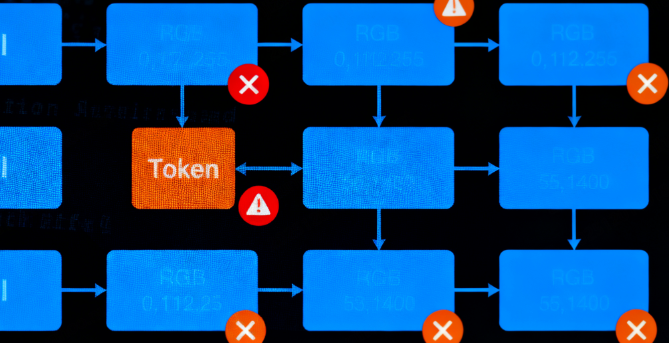
Thiserror usually appears in OAuth2/OIDC login or third-party API authorization, and when using code to call the token endpoint in exchange for access_token, the server returns HTTP 403 Forbidden. Explain that the request reached the token interface but was rejected by the server (permission or policy issue), not a 404 due to a miswritten URL, nor a 400 caused by a pure syntax error.
2. The most common reasons
Common scenarios include: client_id or client_secret mismatch, resulting in credentials not having the right to call the token interface; redirect_uri Inconsistent with background configuration and considered untrustworthy; The authorization server does not have the corresponding license type enabled for the application (for example, authorization_code/refresh_token is not opened). The requesting IP or domain name is not whitelisted, or is blocked by WAF/firewall policies. On some platforms, the app is in the "Unreviewed" or "Not Live" state, and you can only test your own account to use it, while other accounts will be 403.
3. Suggested troubleshooting steps
Thefirst step is to check whether the client_id, client_secret, token endpoint, and redirect_uri are exactly the same as the document, and pay attention to the case and tail slash. Step 2: Open the request log or capture packet (Fiddler/Browser Network): Confirm that the request method is POST, and the parameters such as Content-Type, grant_type, code, and redirect_uri are correct. The third step is to look at the return body: Many platforms will give errors or error_description in the 403 JSON, and the prompts indicate whether it is scope, permission, IP restriction, or the application is not moderated. Step 4: Confirm whether the current logged in account has permission to use the app.
4. Common Fixing Ideas
If it is a configuration problem (client_secret, redirect_uri, scope, etc.), restart the full authorization process after modification instead of reusing the old code. If it is a permission/audit issue, you need to apply to activate the relevant interface on the corresponding platform or pass the application review. If the network is a whitelist issue, confirm that the server egress IP address and callback domain name have been added to the whitelist, and if necessary, have O&M check the blocking logs of the firewall and reverse proxy.
5. Q&A Frequently Asked Questions
Q: How to determine whether it is a misconfiguration or a permission problem?
A: Prioritize the error field that returns the body; 4xx and the prompt invalid_client/invalid_grant is mostly a configuration issue, and if it prompts insufficient_scope, unauthorized, or policy-related, it is mostly a permission or policy issue.
Q: Can the authorization code be reused?
A: In most OAuth implementations, authorization codes can only be used once and have a short-term validity period. Once the token exchange fails or expires, you need to go through the user authorization process again to obtain a new code.
Q: Yes, locally, the server is 403, what is the reason?
A: Most of them are related to the network environment, such as the server egress IP is not whitelisted, the computer room is risk-controlled, or the proxy/gateway modifies the request header and causes authentication failure.