In the past 24 hours (November 29 to November 30, 2025), Beijing has released an annual AI industry white paper on artificial intelligence industry planning, patent examination, and medical care, and policies at the local and ministerial levels have continued to increase. Overseas, the "Black Friday" e-commerce, computing power and military applications have been comprehensively upgraded, capital continues to bet on AI infrastructure, and algorithm risks and energy pressures have also received more attention.
1. Beijing released a white paper on the AI industry: the annual scale of core industries is expected to exceed 450 billion yuan
Beijing officially released the "Beijing Artificial Intelligence Industry White Paper (2025)", showing that in the first half of 2025, the scale of the city's artificial intelligence core industry has reached more than 200 billion yuan, a year-on-year increase of more than 20%, and the annual scale is expected to exceed 450 billion yuan. The white paper disclosed that the number of AI companies in Beijing has reached thousands, and more than 100 large models have been filed, continuing to maintain a leading position in the country, providing data support for the construction of the "first artificial intelligence city" and the national innovation highland.
2. The white paper emphasizes that AI Agents and embodied intelligence will usher in explosive applications
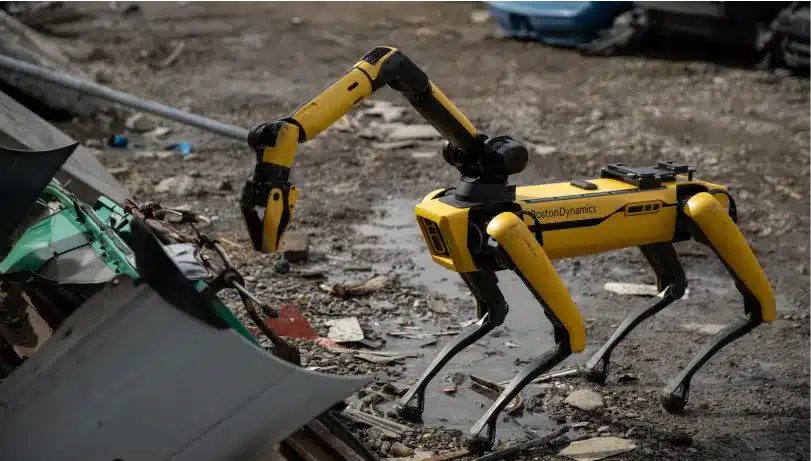
Inaddition to the industrial scale, the Beijing white paper focuses on the explosive growth of various AI agents in scenarios such as personal assistants, enterprise process automation, and scientific research assistants. The report is also optimistic about the development of embodied intelligence, believing that it will achieve a leap from "information processing" to "physical operation", promote the accelerated implementation of robots in logistics, manufacturing and home services, and bring new hardware and software innovation opportunities to the upstream and downstream of the industrial chain.
3. China improves patent examination in the field of AI: adds a special chapter on "artificial intelligence and big data" and strengthens ethical requirements
The relevant departments of national intellectual property rights have released a new version of the patent examination guidelines, and for the first time, a separate chapter on "artificial intelligence and big data" has been set up, putting forward clearer requirements for the legality, morality and technical disclosure of AI-related patents. The new regulations emphasize that model training data collection and rule setting must comply with the law and public interests, and require a more complete explanation of the model construction and training process, which is conducive to protecting innovation while preventing risks caused by "black box algorithms" and promoting AI technology to "intelligent for good".
4. AI-empowered elderly care and health services: smart products are accelerating their entry into the silver and medical scenes
Focusing on themes such as "AI + elderly care" and "AI + health services", a number of domestic conferences and policies focused on the past day. The industry proposes that through voice assistants, virtual companionship, intelligent rehabilitation equipment and other products, the spiritual culture and care needs of the elderly can be better met; Relevant departments also proposed to standardize the introduction of AI-assisted diagnosis and treatment and health management in scenarios such as county-level medical communities, chronic disease management, and elderly care and childcare. The industry and regulatory levels are advancing simultaneously, and it is expected to form a number of replicable "AI pension" and "AI medical care" demonstration scenarios.
5. Baidu was exposed to start a new round of centralized layoffs, and AI investment coexisted with traditional business pressure
According to media reports, Baidu has recently launched centralized layoffs in search, mobile ecology and some AI-related businesses, involving departments ranging from 1 to 30%. The report pointed out that while traditional cash flow businesses such as search advertising are under pressure, investment in large models and computing power continues to increase, forcing companies to free up resources through organizational adjustments and cost optimization. Industry analysis believes that while "betting on large models", leading Internet companies are also reorganizing their business structures, which will have a chain reaction on the talent structure and entrepreneurial ecology in the short term.
6. AI has helped the United States set a record for online consumption on "Black Friday", and the traffic of intelligent shopping guides has skyrocketed
The latest e-commerce statistics show that online spending on Black Friday in the United States this year hit a record high, exceeding $10 billion, an increase significantly higher than the overall retail growth rate. Among them, the increase in traffic from AI shopping guides, Q&A assistants and other tools on retail websites is particularly prominent, and the traffic related to some platforms has soared several times year-on-year. Large retailers help consumers quickly screen products, compare prices and match them through built-in large model assistants, which is seen as a key driver of this round of growth, and also indicates that "AI shopping agents" will become electronic label distribution capabilities.
7. Micron plans to invest about $10 billion in Japan to build an AI memory chip factory
The memory chip giant confirmed in the past 24 hours that it will build a new high-end memory chip factory for AI applications in Japan, with a planned investment of nearly $10 billion. The new factory will focus on producing high-bandwidth storage products that adapt to large model training and inference, and is expected to receive funding and policy support from the local government. This project is not only an extension of the global "AI computing power arms race", but also seen as a rebalancing of the East Asian semiconductor industry pattern under geopolitical and supply chain security considerations.
8. Ukrainian drone units have introduced AI on a large scale to improve battlefield decision-making and anti-jamming capabilities
There are reports that Ukraine's frontline drone forces are accelerating the deployment of AI technology to assist in target recognition, route planning and flight control in electronic jamming environments. Some troops have tried to embed AI in drone terminals or ground stations to reduce operator workload, shorten the decision-making chain, and maintain a higher hit rate in highly disturbed environments. Military experts believe that this marks the formation of a battlefield pattern of "deep coupling of algorithms and firepower" and will also intensify the international debate around AI armaments and ethics.
9. AI inference chip company d-Matrix received $275 million in financing, and capital continued to bet on computing power infrastructure
d-Matrix, a startup focused on AI inference computing power, announced the completion of a new round of financing of approximately US$275 million to accelerate the commercialization of low-power inference chips and systems. The company proposes to reduce the cost of large model inference with composable chip modules and memory-like computing architecture, and is suitable for cloud data centers and enterprise private deployment scenarios. This case shows that at a time when the competition at the model layer is fierce, capital still maintains a high level of attention to the underlying hardware that "reduces the cost of AI computing power".
10. The gender bias of large models has caused new controversy, and the industry has called for more transparent evaluation and data governance
A report on gender bias in generative AI has sparked heated discussions in overseas communities, and cases show that some large models still show obvious gender stereotypes in descriptions such as occupation, ability, and emotions. The article points out that even if the model does not "admit" its bias, its output may still amplify unfairness in applications such as recruitment and content distribution. Researchers and practitioners call for companies to disclose more training and evaluation information, introduce multiple data and independent audit mechanisms, and turn "debias" from a propaganda slogan into a quantifiable and verifiable process.
11. Data centers "cooling for AI" have become a global problem, and the implementation of liquid cooling and green energy has been accelerated
As the demand for large model training and inference soars, data centers in many overseas places are facing severe challenges in terms of energy consumption and heat dissipation. Some analysts pointed out that the power consumption of the new generation of AI server cabinets has risen sharply, approaching the cooling limit of traditional air conditioning, prompting cloud vendors and operators to accelerate the adoption of solutions such as immersion liquid cooling, waste heat recovery, and renewable energy power supply. The "energy consumption ledger" around AI is becoming a new focus of attention for policymakers and investors, forcing the industry to improve energy efficiency while expanding computing power.
Frequently Asked Questions (Q&A)
Q: What are the core trends in global AI development in the past 24 hours?
A: Overall, on the one hand, industry and capital continue to accelerate the layout of "hard applications" such as computing power, chips, e-commerce and military industry, and on the other hand, domestic and foreign regulatory and ethical discussions are heating up simultaneously, from patent examination, medical health to model bias governance are looking for institutionalized solutions.
Q: What does the AI industry white paper released by Beijing signal about the domestic pattern?
A: The white paper shows that Beijing continues to lead in the number of large models, enterprise agglomeration and industrial scale, and is clearly optimistic about the explosion of AI Agent and embodied intelligence, which means that first-tier cities are shifting from "comparing parameters and models" to "comparing scenarios and ecology", which is a path demonstration for other regions and industries.
Q: Which overseas AI application scenarios are the most noteworthy?
A: In the short term, consumer-oriented AI shopping assistants and search guides are significantly changing the e-commerce conversion path; In the medium term, the upgrade of AI-specific memory chips, inference hardware and data center infrastructure will directly determine the cost and experience of large model services, and will also affect the competitiveness of countries in computing power.
Q: What opportunities and risks do these dynamics mean for businesses and developers?
A: The opportunity lies in the fact that there will be more room for products around AI Agent, industry vertical scenarios, and cost optimization, but at the same time, data compliance, intellectual property rights, and algorithmic bias issues need to be taken seriously. For engineering teams, compound talents who understand business scenarios, computing power efficiency and compliance requirements will become more and more popular.