1. Product positioning and series division
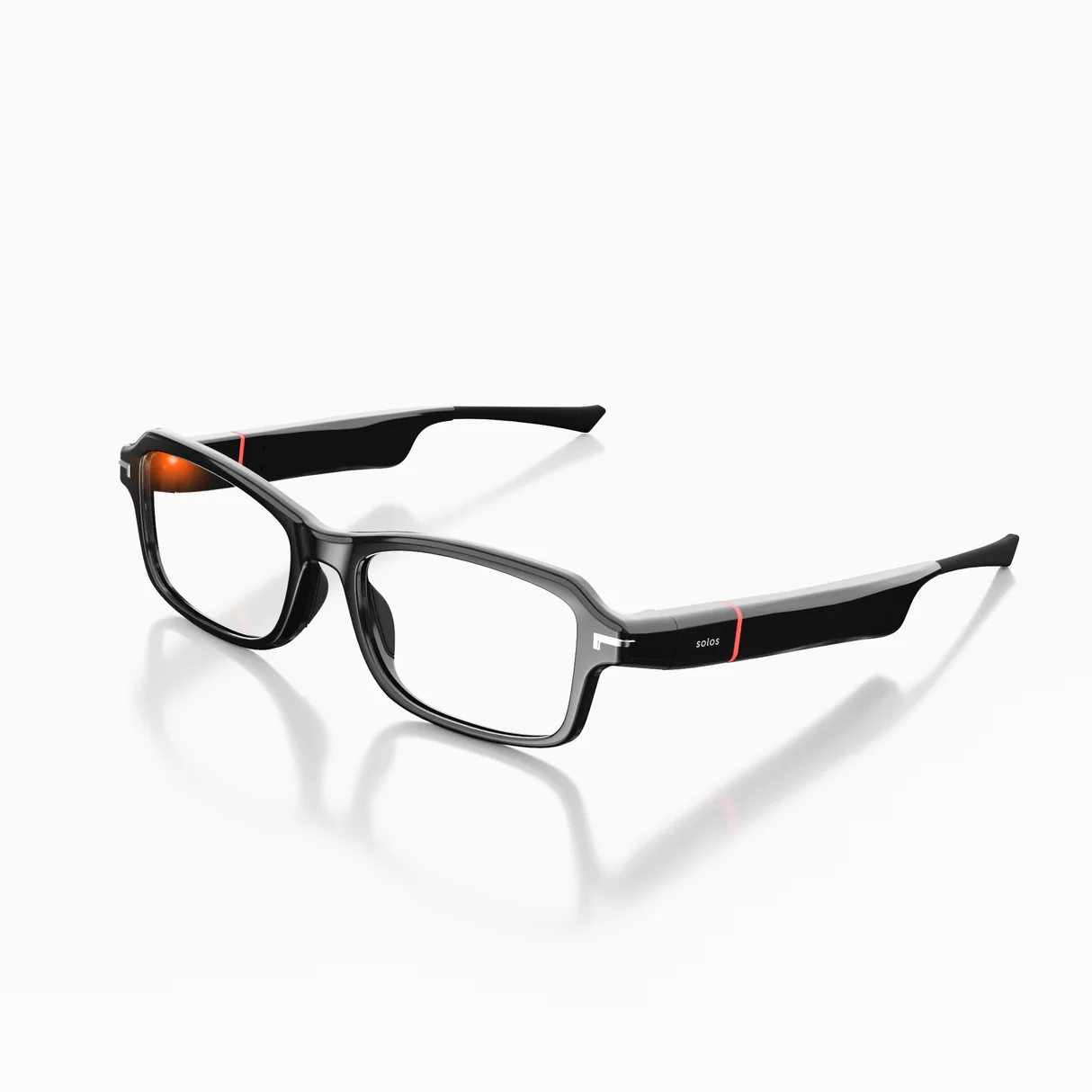
Solos focuses on "AI smart glasses that can be worn every day", with the AirGo series as the core, including the audio-only AirGo 3 and the AirGo Vision with camera. The overall positioning is between Bluetooth headsets and AR glasses with screens, more like "AI assistants that look like ordinary glasses + open headphones".
2. Core hardware and wearing experience
AirGo 3 adopts an open speaker and multi-microphone design, supporting touch and virtual buttons; The temples have a built-in battery and main control, and the body supports IP-rated waterproof and sweatproof, mainly for commuting and sports scenarios. The featured detachable SmartHinge structure can replace the front frame to achieve a set of electronic temples with multiple frames, which can be used for everyday optical glasses, sunglasses or sports models. The battery life is roughly at the level of a full day of commuting and debris use, and the charging port is USB-C.
3. AI functions and typical scenarios
Solos' own SolosChat and SolosTranslate are based on mainstream large models, which can realize voice conversations, real-time translation, simple Q&A, and proxy messaging. AirGo Vision adds a camera on this basis, which can hand over the seen images to multimodal AI for object recognition, text reading, navigation prompts, etc., which is more suitable for "looking up with AI" when traveling, shopping, and walking. This type of feature is more valuable for users who often travel abroad, need to communicate across languages, or have difficulty looking down at their phones.
4. Applicable people and precautions
Solos smart glasses are more suitable for people who wear glasses for a long time and want to reduce the number of times they take out their mobile phones, as well as heavy commuters, business trippers and content creators. It does not offer a large-screen display near the eye, and its main value is in audio and AI assistance. When using it, you need to accept dependence on mobile phone networks and cloud services, and pay attention to privacy in public places: inform others in advance when turning on the camera, and avoid recording and recording in sensitive scenes such as conference rooms and classrooms.
Q&A
Q1: Is there a big difference between AirGo 3 and AirGo Vision?
A: AirGo 3 only has audio, no camera, lighter and more low-key; AirGo Vision has an additional front camera and multi-modal AI, which can read pictures, read menus, and translate street signs, but it is slightly heavier and more sensitive to privacy disputes.
Q2: What are the characteristics of Ray-Ban Meta compared to similar products?
A: Solos focuses on replaceable front frames and open ecology, integrating core electronics and batteries in the temples, and the front frame can be replaced with a camera-free model; In terms of AI functions such as translation and object recognition, it emphasizes multi-model access, which is more "tool-like" and has slightly weaker social entertainment attributes.
Q3: Can it be used as a complete replacement for Bluetooth headsets?
A: It can replace most open-ear headphones in listening to songs, answering phone calls, and holding meetings, but the sound leakage will be more obvious than in-ear types, and the hearing experience will be affected in noisy environments such as subways; If you care a lot about sound quality and low frequencies, traditional headphones are still more suitable.
Q4: Will it be abrupt to wear for a long time?
A: The appearance looks close to ordinary myopia glasses or sunglasses, most styles are relatively low-key, but the temples will be slightly thicker. It is more acceptable for people who are used to wearing glasses, and it may take some time for people who are not used to wearing glasses to get used to the weight and oppression.