I. Basic Information
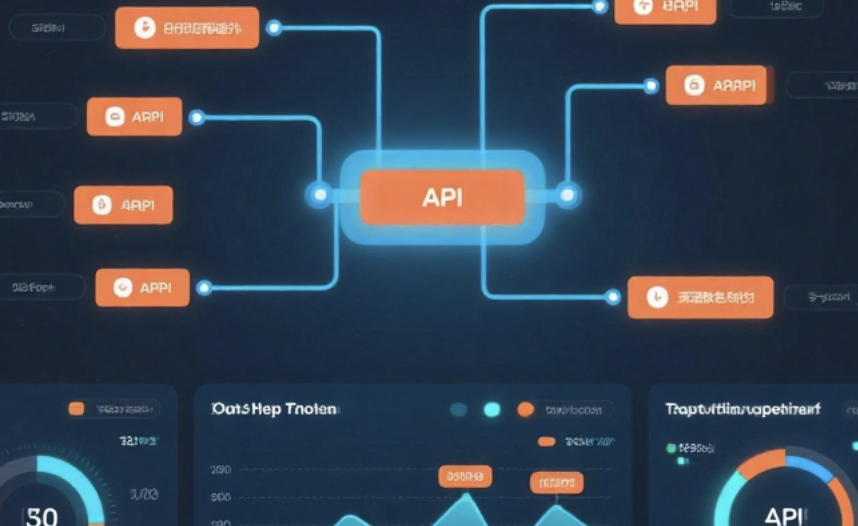
Firecrawl is a web data API for generative AI and data applications, providing three main capabilities: page crawling, website scraping, and web search. Its goal is to transform internet content into clean data suitable for large-scale model processing. The platform supports multiple output formats, including Markdown, JSON, HTML, and screenshots, and can be integrated via SDKs or REST interfaces such as Python and Node.js. It is suitable for scenarios such as intelligent agents, RAG retrieval enhancement, data extraction, and monitoring.
II. Product Overview
Firecrawl operates on a "URL input—content extraction—structured output" model, enabling high-fidelity crawling of single pages as well as automatic discovery of accessible subpages and batch data generation across a site. Version V1 introduces output format options, URL mapping endpoints, and a more user-friendly task query interface, while also providing team and key management, callbacks, and a higher speed limit. The platform emphasizes adaptation to dynamic JS pages and protected content, reducing the costs of proxy and fingerprint maintenance associated with traditional crawlers through "agentless configuration," and optimizing speed and stability for real-time intelligent agents and large-scale applications.
III. Core Functions
1. Main functions
Scrape: Outputs LLM-ready data to a single page, supporting formats such as Markdown, JSON, HTML, and screenshots.
Crawl: Automatically traverses accessible subpages of a website, generates independent data entries for each URL, and supports task status queries.
Search: Retrieves and returns the full text of the hits across the web, facilitating research and discovery.
URL Map: Quickly retrieve most of the relevant links on the page, serving as entry points for subsequent crawling.
Interactive Fetch Actions: Simulate clicks, scrolling, input, and waiting before fetching to handle scenarios such as login pages or lazy loading.
Callback and Real-time: Provides Webhook and WebSocket for easy integration with batch tasks and online applications.
2. Technical characteristics
Multi-format and main content extraction: By default, only the main content is output to reduce noise; multi-format parallel processing meets the diverse downstream processing needs.
Developer ecosystem: Official Python and Node SDKs, community implementations in Go and Rust, available via command line and cURL.
Engineering-grade experience: Task-based queries and higher rate limits to adapt to concurrent data crawling; unified key and team management in the console.
Compatible with intelligent agents: Provides an MCP server to enable plug-and-play interaction with mainstream LLM clients or agent frameworks.
IV. Pricing and Versions
Firecrawl uses a quota-based and plan-based billing model, distinguishing between free and paid tiers; different plans differ in rate limits, concurrency, team support, and advanced features. Specific pricing, quota conversions, and failed request billing policies are subject to change and are available on the official pricing page.
V. Applicable Scenarios and Target Audience
It is suitable for building RAG and enterprise knowledge bases, monitoring competitors and prices, aggregating regulations and public opinion, synchronizing technical documents, bulk data collection for research agents, and collecting marketing and SEO materials. Target audience includes AI application and intelligent agent teams, data engineering and operations teams, research and consulting institutions, content and operations teams, and independent developers.
VI. Frequently Asked Questions
Q: What formats can Firecrawl's API return?
A: Supports Markdown, JSON, HTML, and screenshots, with multiple formats available for output as needed, facilitating direct entry into vectorization or annotation processes.
Q: Does it support site-level batch and link discovery?
A: Yes. You can obtain a collection of URLs using the Map endpoint, process them in batches using the Crawl endpoint, and track progress via task query or Webhook/WebSocket.
Q: How well does it adapt to dynamic pages and anti-scraping measures?
A: It provides action-level interaction and "agentless configuration" crawling solutions, covering complex scenarios such as JS rendering and protected pages, reducing manual maintenance costs.
Q: What official integrations and SDKs are available?
A: We provide official Python and Node SDKs, and the community maintains Go and Rust; we also provide an MCP server for easy access within clients such as Cursor and Claude.
Q: What is the relationship between open source and hosting?
A: The official documentation and open-source repository are maintained, and cloud hosting services are provided; developers can refer to the open-source implementations and documentation to quickly deploy the hosting solution to production.