I. Basic Information
Modal is a serverless computing platform for AI and data teams, supporting the execution of CPU and GPU intensive tasks in the cloud with billed rates down to the second. The platform defines applications, functions, container images, and required hardware through a Python SDK, automatically scheduling elastic resources and scaling up and down as needed, covering scenarios such as model inference, fine-tuning and training, batch processing, and data tasks. Modal emphasizes "code as configuration," allowing developers to declare dependencies, images, and mounted resources without writing additional configuration files.
II. Product Overview
Modal uses Function as a Service (FPS) as its core abstraction. Developers use decorators to host local Python functions as remotely callable services, declaring their container images, GPU types, and concurrency limits. The platform provides entry points for workloads such as inference, training, batch processing, Notebook, and sandboxing, forming an integrated path from development to production by combining distributed storage and secure credential injection. Typical uses include deploying online inference endpoints for custom models, quickly fine-tuning with multi-machine, multi-GPU clusters, or batch generating images and text under high concurrency.
III. Core Functions
1. Main functions
Model inference and online services. HTTP endpoints are exposed as functions or classes, automatically scaling up and down based on request volume to achieve low-latency inference services.
Training and fine-tuning. Declare the required GPU and node size, start a single-machine or multi-node task, and support breakpoint resume training and log visualization.
Batch processing and scheduled tasks. Run large-scale offline computations as batch jobs or scheduled tasks, with billing per second to avoid long-term idle time.
Notebooks and Sandboxes. Collaborative notebook and short-lived sandbox environments facilitate debugging third-party or untrusted code.
File and data management. Distributed volumes enable writing model weights and datasets once and reading them from multiple locations, adapting to inference distribution.
2. Technical characteristics
Images mirroring. A chained API defines the runtime environment and dependencies within the code, which can then be reused in different functions after building, reducing environment drift.
Volumes. Provides a high-performance distributed file system suitable for read-heavy, write-light scenarios with weighted output and large-scale reads.
Secrets. Securely inject credentials and keys into containers, manage them uniformly in a dashboard or SDK, and reduce the risk of leakage.
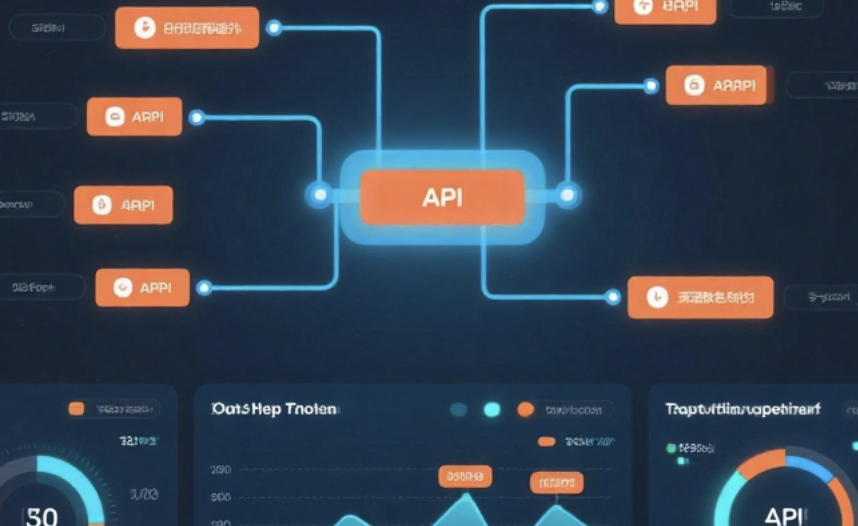
API and SDK. Provides a complete Python reference interface, covering capabilities such as applications, functions, images, volumes, keys, and concurrency control.
Elastic scheduling. Self-developed container and GPU scheduling accelerate instance startup, supporting second-level startup and large-scale concurrent expansion.
IV. Pricing and Versions
Modal employs a subscription-based pricing model. Common options include a beginner-friendly plan with no entry barriers and paid plans for teams. Computing resources are billed per second, and GPUs are priced by model. The platform offers a cost model that contrasts with traditional fixed-instance billing, reducing idle costs through elastic scaling under sudden and unpredictable loads. Specific pricing, concurrency limits, and associated benefits are subject to change over time and with promotions; please refer to the official website for the final details.
V. Applicable Scenarios and Target Audience
Modal is suitable for online inference of custom models, batch generation of AIGC, multi-machine fine-tuning and training, data cleaning and feature engineering, evaluation and A/B experiments, and demonstrations in education and training camps. Target users include machine learning engineers, backend and platform teams, researchers and educators, startups and SMEs, especially for AI applications and services that require rapid deployment, elastic scaling, and fine-grained billing.
VI. Frequently Asked Questions
Q: How does Modal manage its runtime environment and dependencies?
A: Define the base image and dependency packages within the code using Images, and bind them to functions after building to avoid inconsistencies across multiple environments.
Q: How to securely use third-party API keys on Modal?
A: Use Secrets to centrally manage and inject keys into container environment variables, eliminating the need to write keys to code or repositories.
Q: How to speed up weight distribution in large models?
A: Write the weights to Volumes and share them among inference replicas in a write-once-read-multiple manner, reducing network and I/O overhead.
Q: Does it support scheduled and batch calculations?
A: Supports running large-scale offline jobs in batch processing and scheduled tasks, billed by the second, and resources are released upon completion.
Q: What are the main cost advantages of Modal compared to traditional cloud computing?
A: Under fluctuating or sudden loads, reduce the cost of idle instances through automatic scaling and second-level billing; for stable loads, it is necessary to evaluate based on the individual's own load curve.