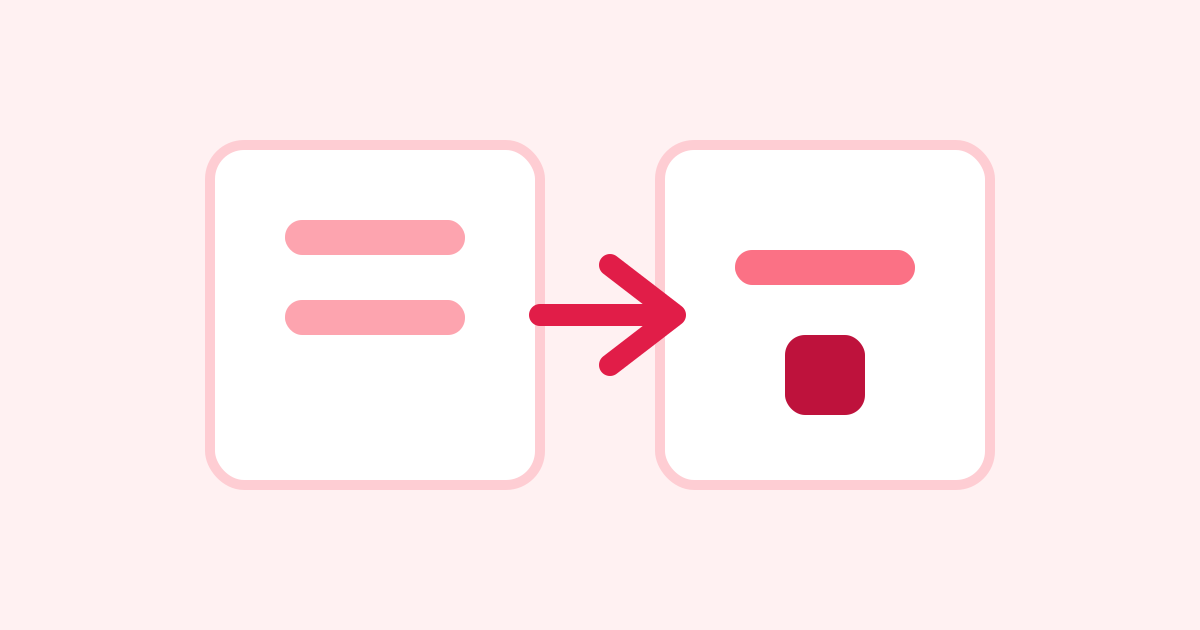
Speech-to-speech usually refers to the model directly from voice input to speech output to complete understanding and generation, rather than converting the voice into text first, then handing the text to the language model, and finally converting it back to speech. It is getting hotter because this route is closer to real human conversation and also has a better chance of retaining tone, pauses, emotions and speaking styles.
What is the difference between it and traditional voice links?
The traditional route is ASR plus LLM plus TTS, which has the advantage of clear modules and mature engineering. Speech-to-speech is more like an end-to-end conversational link, with the goal of reducing intermediate faults for more natural responses and lower latency. In other words, it is not completely denying the old link, but trying to make the "understand and then say it back" more like an integration process.
| way | Pros: | Challenge |
|---|---|---|
| Speech-to-text rebroadcast | Mature, controllable, and easy to debug | It is easy to lose tone and subtle non-text information |
| Speech-to-speech | More natural, lower latency, and more like a real-time conversation | Training, assessment, and stability are more complex |
Why this concept is increasingly being discussed in isolation
- Real-time voice assistants, simultaneous interpretation, and companion interaction are becoming real product demands.
- Users have higher and higher expectations for "like a real person's dialogue", and the mechanical sense of pure text transfer is more likely to be exposed.
- After the development of the multimodal model to a certain stage, speech is no longer just an input attachment, but begins to become the core interaction method.
What voice to voice really represents is not only a step less in the technology stack, but also a change in the interaction goal. The industry is no longer satisfied with "understanding and then pronouncing" and is beginning to pursue a more natural, continuous, and authentic AI voice experience.