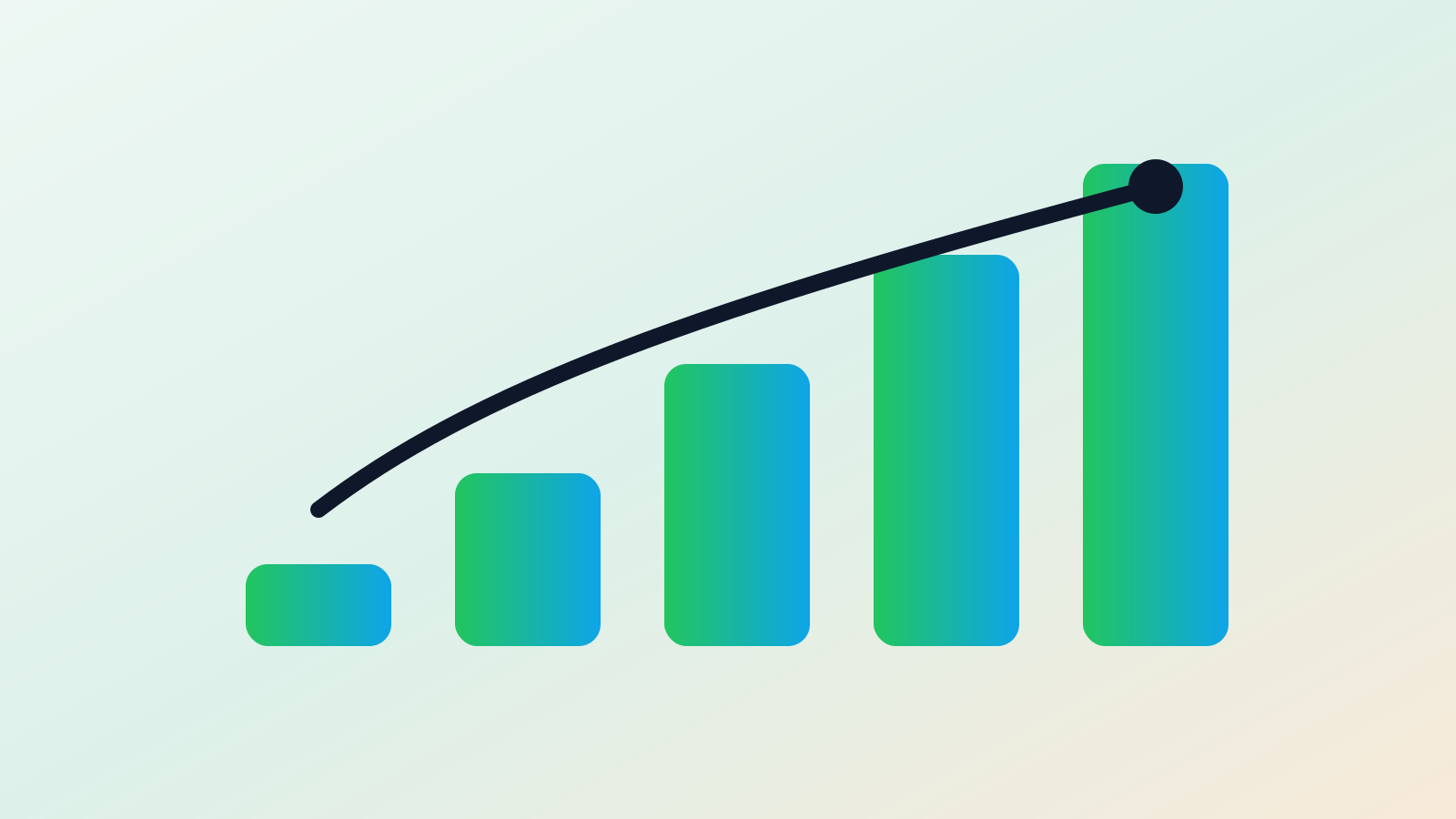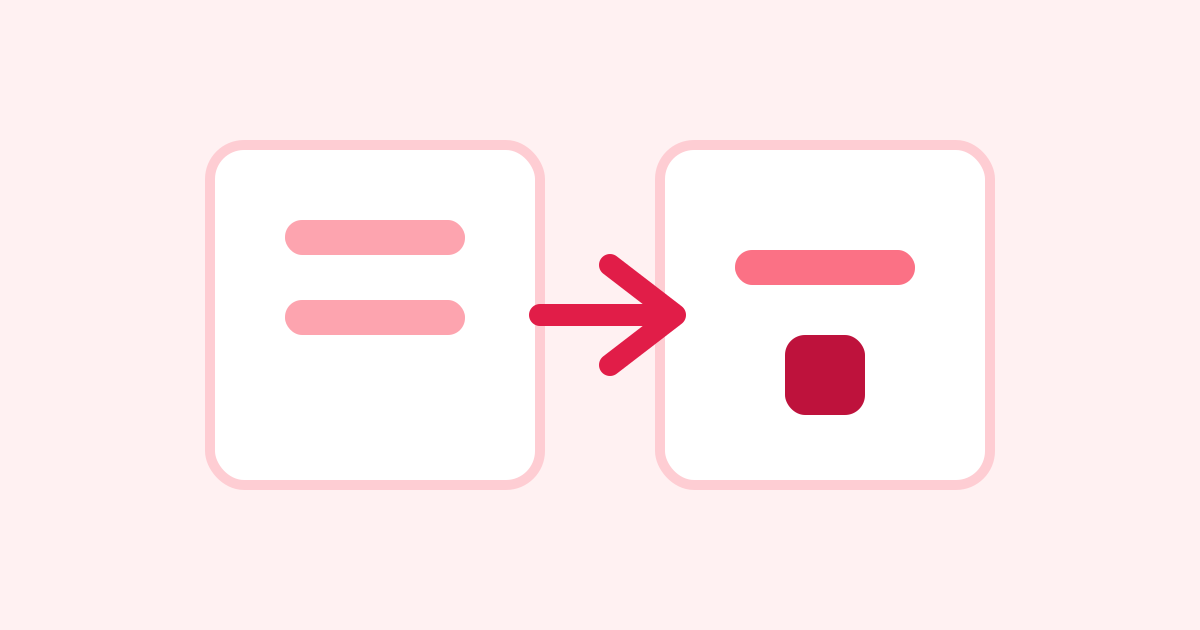
Synthetic data does not refer to "random batches of fake data", but training data created by simulation, generative models, rule engines, or programmatic methods. It has become more and more popular recently, and the fundamental reason is that a lot of real-world data is too expensive, too little, too difficult to label, or involves privacy and security boundaries, and as a result, everyone has begun to seriously regard "data creation" itself as capacity building.
Why is it so common in 2025-2026?
- Robots, autonomous driving, and physical AI require a large number of dangerous and long-tail scenes, and the real acquisition cost is extremely high.
- Enterprises often don't get enough high-quality labeling samples in training, especially when it comes to privacy and scarcity processes.
- With the increase in simulation and generation capabilities, synthetic data is no longer just an academic concept, but is closer to a production tool.
Its value is not just "replenishing quantity"
| Function | Explained |
|---|---|
| Supplement the long tail | Make up for rare but critical scenarios |
| Reduce costs | Reduces the pressure of human acquisition and manual labeling |
| Improve safety | Dangerous scenarios can be run in simulation first |
| Control privacy | Avoid direct exposure of real and sensitive data |
Of course, synthetic data also has boundaries. It is most afraid that the simulation world is too clean and ideal, resulting in the model being "very strong in the artificial world and dropping in the real world". Therefore, it is usually not a subscenium for real data, but is mixed with real data to make up for scarcity, risks, and costs. You can understand it as an increasingly important training lever rather than a free shortcut.