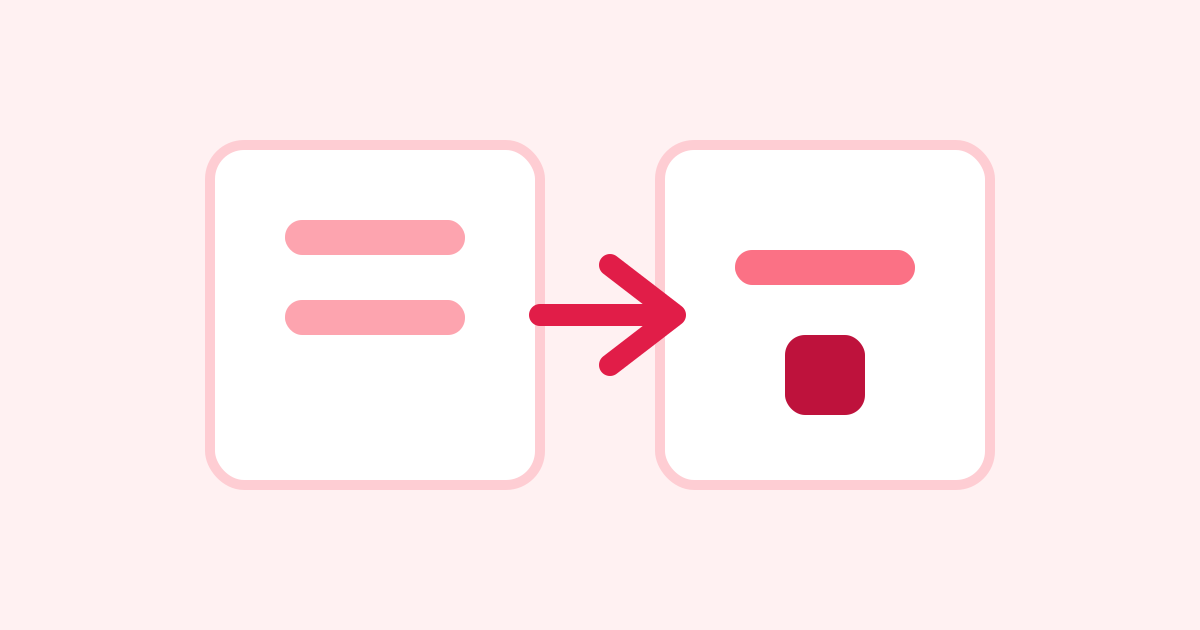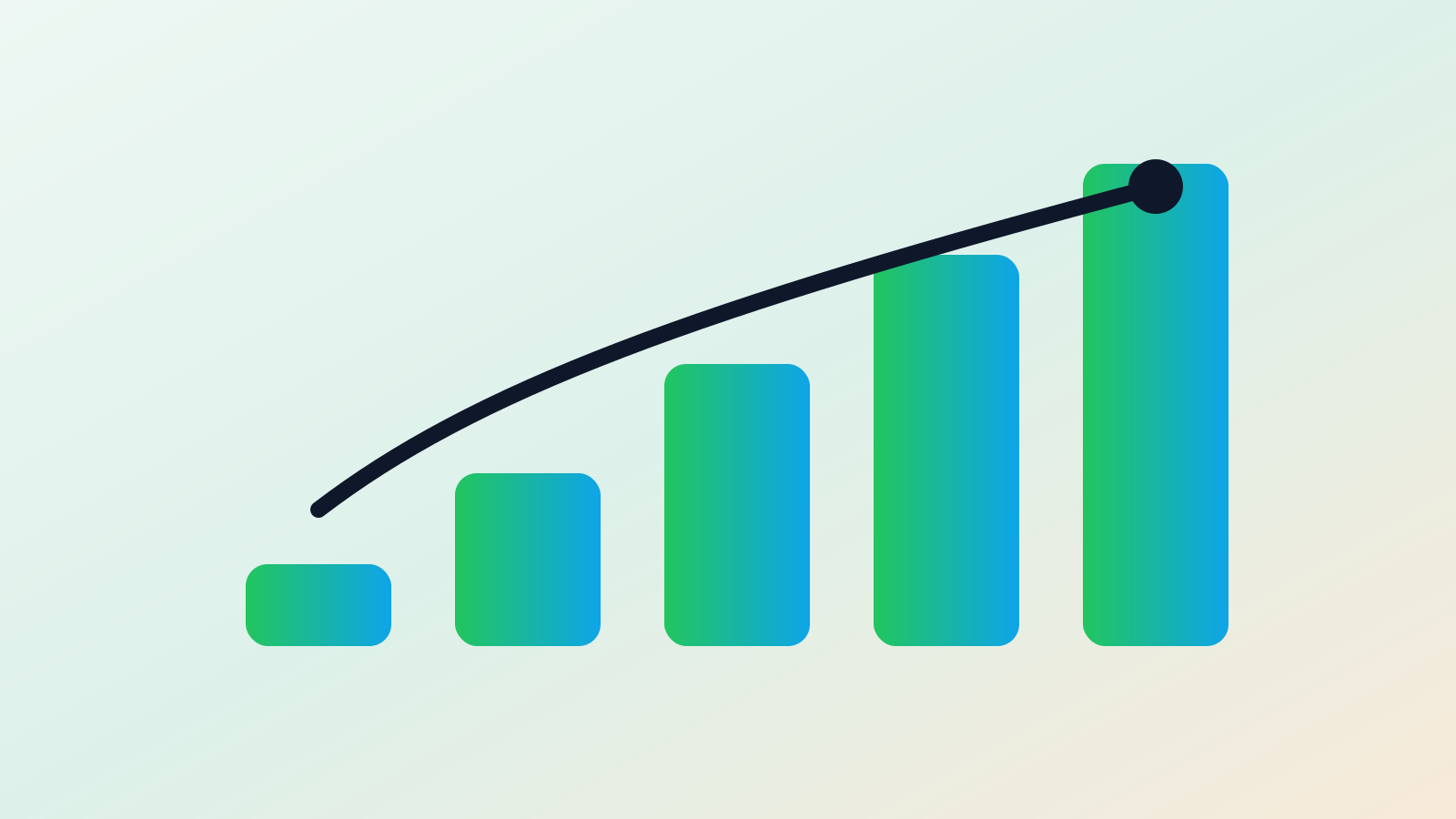
Test-Time Scaling can be understood as giving the model more inference budget, more attempts, or more thinking space when it actually answers a question, in exchange for better results. The reason why it is popular is because many people have found that the model's ability depends not only on how big it is at the time of training, but also on "whether you are willing to answer the moment and calculate it for a while".
What is it expanding?
- It may be a longer inference step to keep the model from jumping to conclusions too quickly.
- It may be multiple sampling, multiple candidate paths, and then choose a better one.
- It may also be an external tool, verifier, or self-check to correct errors as the model thinks.
Why is this different from traditional "heap parameters"?
The traditional idea is more like making the model bigger during training; Test-Time Scaling is concerned with how to use more computing power and steps in the inference stage to suppress the potential of existing models. It is not a training substitute, but it affects a realistic judgment of why some models are similar in simple question answering but far behind when it comes to complex reasoning.
Its value and cost
| Benefits | Cost |
|---|---|
| Complex questions are usually more stable | Slower and more expensive |
| Easier to do self-examination | The inference link is more difficult to control |
| It can "pull up" the medium model a little | It does not mean that all questions are worth it |
Therefore, Test-Time Scaling is really popular, not because everyone suddenly doesn't love large models, but because the industry has begun to face a problem more seriously: ability is not only trained, but also can "change a little more computing power and a little more time" when reasoning. This is why "the model gets stronger after a little more thought" sounds like magic, but it is actually becoming more and more engineered.