OpenClaw and Hermes are often put together to talk, but they are not the same thing. To put it simply, OpenClaw is more like a "workspace-driven" agent system, and Hermes is more like a runtime that integrates agents, memory, automation, and services. If you just remember one sentence: OpenClaw is more about files and workspaces, and Hermes is about complete platforms and migration paths.
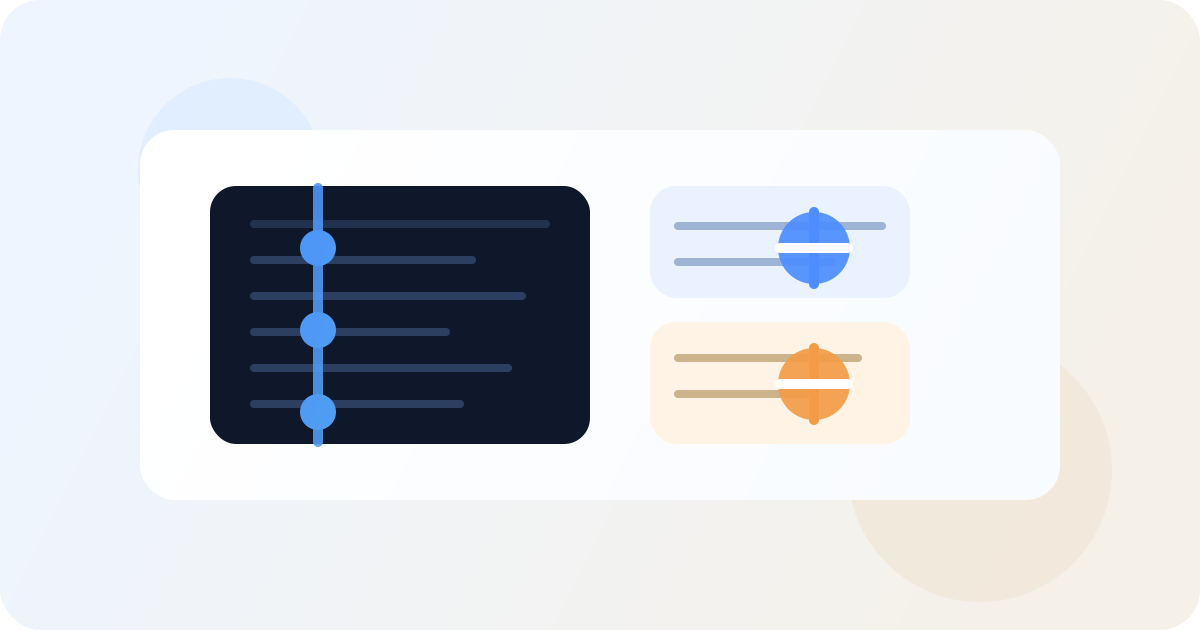
OpenClaw's official documentation treats 'AGENTS.md', 'SOUL.md', 'USER.md', and 'MEMORY.md' as the core context of the agent, with the default workspace in '~/.openclaw/workspace'. It focuses on keeping memories, playbooks, and routing logic in files and workspaces for easy viewing and migration.
Hermes did more
Hermes' official introduction emphasizes "living where you work": Telegram, Discord, Slack, WhatsApp, Signal, Email, CLI can all be accessed, and it also provides persistent memory, auto-generated skills, timing automation, sub-agents, sandboxes, and browser control. It is more like a long-term agent service.
| Dimensions | OpenClaw | Hermes |
|---|---|---|
| Core abstraction | Workspace + Documented Memory | Runtime + Memory + Automation |
| Access method | Gateway / Channels / Console | Multi-platform proxy + API server |
| Expand the focus | workspace、skills、multi-agent | subagents、sandbox、browser automation |
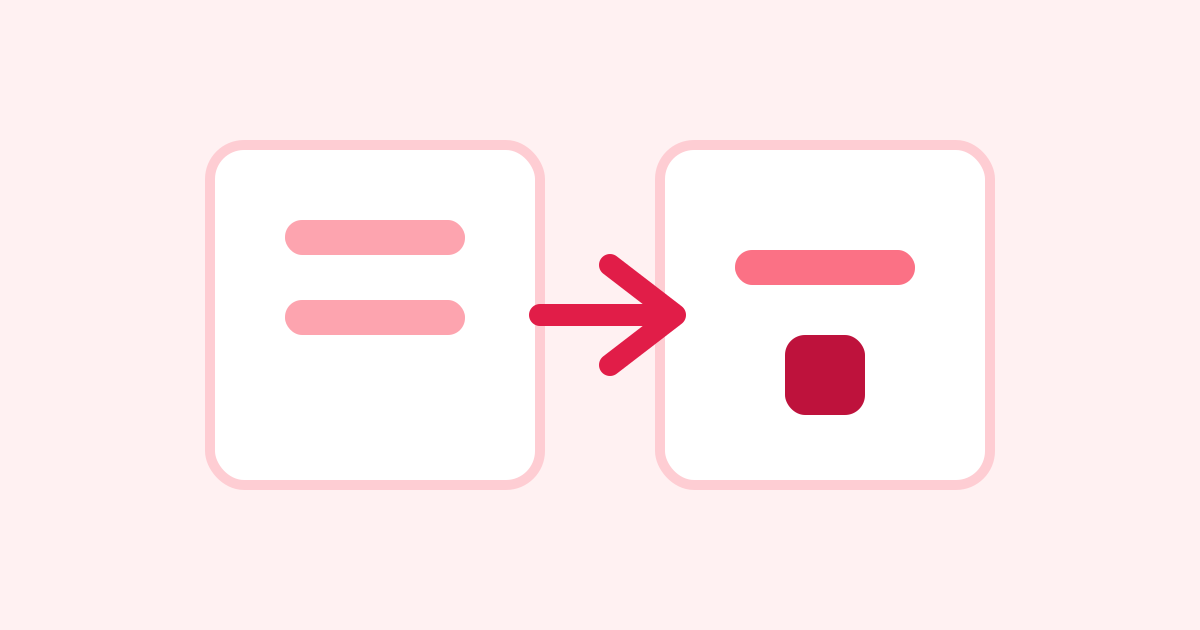
More importantly, the official Hermes migration guide provides a 'hermes claw migrate' to import OpenClaw configurations into Hermes. This shows that it is not a simple name change, but retains a clear migration path.
If you want to distinguish in one sentence: OpenClaw solves "how to organize workspaces and contexts", and Hermes solves "how agents run for a long time, cross-platform access, and external services".