In the past 24 hours (April 2 to April 3, 2026), the focus of domestic AI has focused on the release of new models, the jump in call scale and the acceleration of industry implementation; Overseas, focusing on large-scale model competitions, changes in open source ecosystems, and the accelerating advancement of state regulatory trends on AI and data centers, the industry's four lines of "model capabilities-tool chains-infrastructure-governance" have been tightened at the same time.
1. Ali released Qwen3.6-Plus and accelerated access to the enterprise side
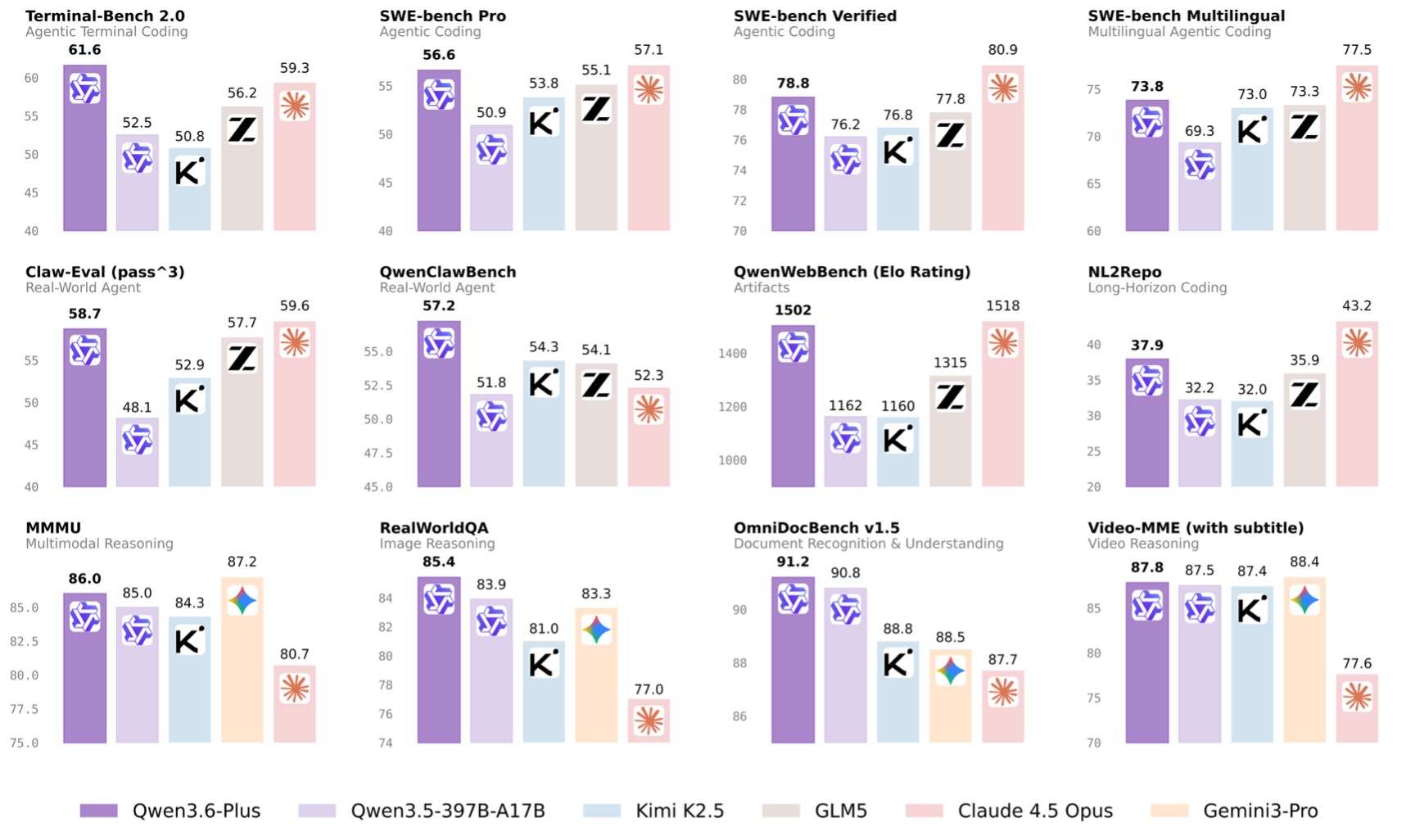
Ali launched Qwen3.6-Plus and opened API calls, emphasizing the overall enhancement of code, agent, reasoning and multimodal capabilities. Enterprise applications such as "Wukong" took the lead in accessing, releasing the commercialization rhythm of "model update is service upgrade" and promoting the penetration of domestic models in programming and agent scenarios.
2. Volcano Engine disclosed that the number of calls to the bean bun model has doubled ByteDance's Volcano Engine disclosed during the event that the average daily Tokens call to the bean bun model has reached a very high scale, and has doubled in recent quarters. The rapid upward flow of calls reflects the expanding demand for video generation and agent tools, and also means that reasoning costs, computing power supply and billing models will receive more attention.
3. Volcano Engine sponsors OpenClaw and builds a domestic mirror ecosystem
Volcano Engine announced that it sponsors OpenClaw and cooperates to build a domestic mirror station to strengthen ecological collaboration between agents and tool chains. For developers, mirroring and community support can significantly reduce the threshold for use and deployment, and promote the "agent workflow" from concept to large-scale application.
4. The "AI Smart Eye System" for energy storage in smart computing centers was released and entered into engineering application
Domestic scientific research institutions and enterprises jointly released the "AI Smart Eye System" for energy storage in smart computing centers, covering the entire process of battery manufacturing, operation and operation and maintenance. This type of system introduces AI into infrastructure security and efficiency management, which is expected to reduce failure risks and improve energy efficiency and operation and maintenance automation.
5. CCID Forum focuses on intelligent manufacturing upgrades and AI governance issues
Related forums release reports and discuss intelligent manufacturing upgrade paths, and at the same time put AI governance and compliance issues on the industry agenda. The signal is that AI is moving from "single point of application" to "systematic transformation", and governance requirements will be embedded into products and business processes earlier.
6. Microsoft released the MAI series of models, complementing the transcription, voice and image capabilities matrix
Microsoft released three basic models, covering voice transcription, speech generation and image generation, and are provided to developers through its own platform. This move shows that it has strengthened the "self-research + platformization" route in key modalities, further reducing reliance on a single external model and expanding ecological control.
7. Google released Gemma 4 and switched to a more open Apache 2.0 license
Google launched the Gemma 4 open source model and adjusted its licensing strategy to enhance usability and business friendliness. For developers and small and medium-sized teams, looser licensing is conducive to rapid integration and secondary development, and will also intensify competition between open source models at the edge and private deployment scenarios.
8. California promotes government procurement AI security requirements and emphasizes watermarks and compliance guidelines
California government related administrative actions focus on the security and transparency requirements of public sector procurement and use of generative AI, emphasizing watermarks, internal usage specifications and risk protection. Public sector rules often spill over into corporate recruitment and compliance practices, forming "quasi-industry standards."
9. Maine plans to set a moratorium on large data center construction, causing concern
Maine promotes the moratorium on large data center construction. The core concern is the pressure on public resources such as grid load and electricity price. This trend reflects that the contradiction between electricity consumption and land resources brought about by AI is being rapidly amplified by local legislation, and data center site selection and energy contracts may become stricter.
10. Many states in the United States continue to push forward bills such as AI deep pseudo-governance and data center environmental accountability.
The latest legislative trends show that many countries accelerate legislation and deliberation on AI deep pseudo-governance, industry use boundary and data center environmental impact. For enterprises, cross-state compliance differences will widen, and model launch, content distribution and infrastructure expansion all require more proactive compliance assessments.
Frequently Asked Questions (Q A)
Q: What have been the most obvious industry thread in the past 24 hours?
A: On one end, the model and open source ecosystem continue to accelerate iteration, and on the other end, the regulatory and infrastructure constraints are synchronized and strengthened, and the industry has entered a parallel period of "fast iteration + strong constraints".
Q: Where are the domestic AI commercialization signals mainly reflected?
A: Reflected in the open model API, rapid access to enterprise applications, and the continuous increase in call volume, indicating that demand is moving from trial to regular production use.
Q: What is the most direct impact of overseas supervision on enterprises?
A: Government procurement and content governance rules will spill over to corporate compliance and recruitment thresholds, and data center construction may face more stringent energy and environmental assessments.
Q: What are the practical suggestions for developers and entrepreneurial teams?
A: Give priority to models and tool chains with clear licenses, build alternative multi-model architectures, and use watermarks, logging, data compliance and evaluation mechanisms as product default capabilities.