Back to AI information
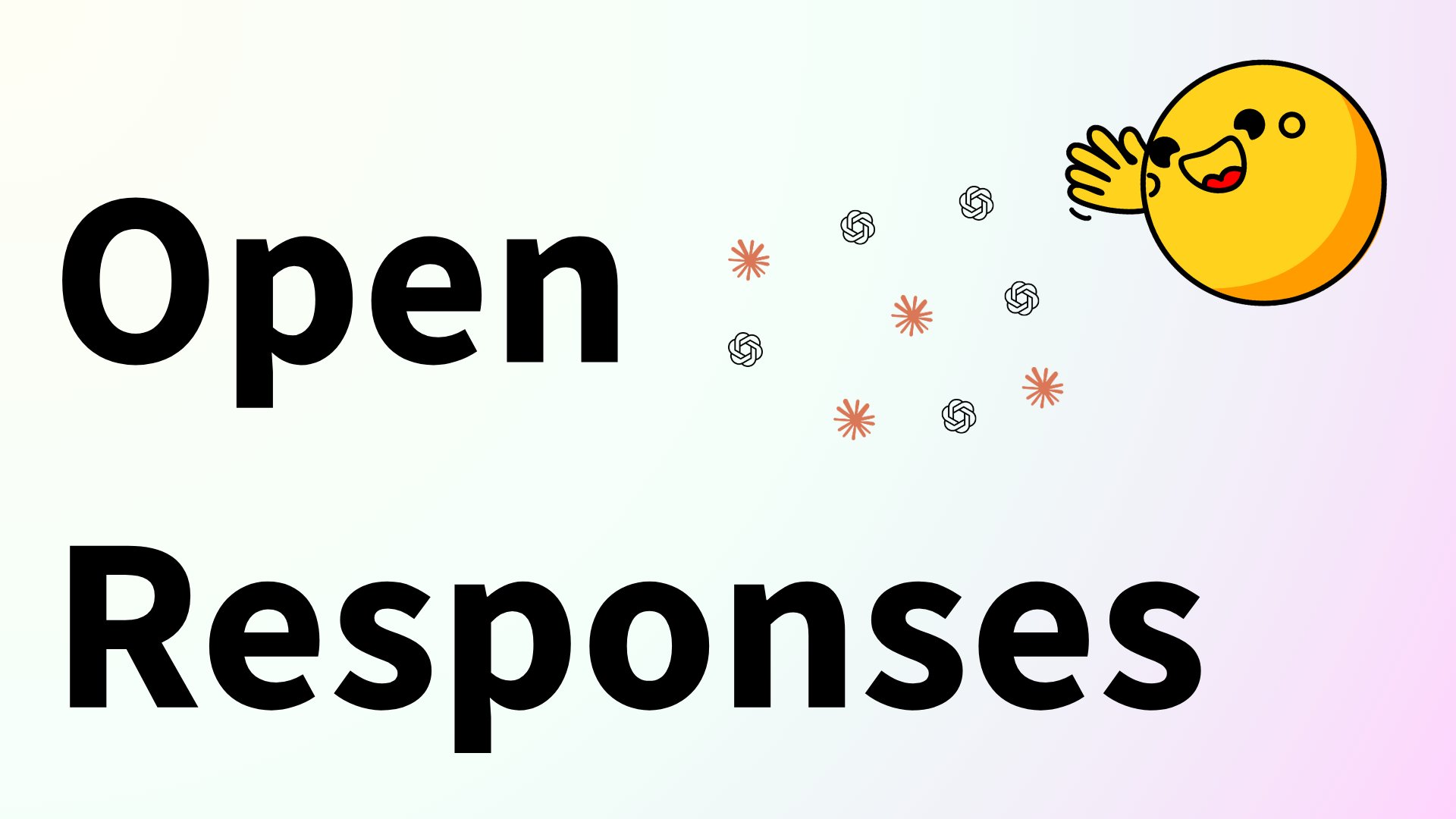
OpenAI Community Releases Open Responses: A Multi-Provider Open-Source Interface Specification Based on the Responses API

OpenAI Community Releases Open Responses: A Multi-Provider Open-Source Interface Specification Based on the Responses API

AI information Admin 68 views

OpenAI Developer Community post introduces Open Responses: A set of open-source specifications and ecosystems inspired by the OpenAI Responses API, with the goal of providing a unified interface for interoperable large language models from multiple providers, reducing the cost of repeated "docking translations" between different model platforms, and supporting common capabilities such as streaming output and tool calls.

According to the public statement, the specification is centered on "multi-provider defaults" and attempts to reuse the same set of input and output structures in environments such as OpenAI, Anthropic, Google Gemini, and local models. At the same time, it provides consistent streaming events, tool calls, and message orchestration, making it easy to build agent-based workflows. The official site also showcases ecological logos supported by community members such as OpenRouter, Vercel, Hugging Face, LM Studio, Ollama, vLLM, and OpenAI.

Currently, Open Responses is available on the official website and GitHub open specifications and related resources. As it is still in the early stages of rollout, its cross-platform compatibility boundaries, consistency across vendors, and long-term adoption still need to be verified by more public cases and test results.

FAQs

Q: What is the relationship between Open Responses and OpenAI?

A: Open Responses uses the OpenAI Responses API as a reference and inspiration to propose unified interface specifications and supporting tool ideas for multiple providers.

Q: Which model providers does Open Responses primarily target?

A: The public introduction mentions calling scenarios that can cover various sources such as OpenAI, Anthropic, Gemini, and local models.

Q: What development pain points does Open Responses solve?

A: The specification hopes to unify "common primitives" such as messages, streaming events, and tool calls to reduce interface differences and migration costs between different platforms.

Q: Is Open Responses the same as OpenAI's official API?

A: Open Responses is an open source specification and ecological direction, not an official single product of OpenAI, and the specific capabilities depend on the implementation and adaptation of all parties.

The OpenAI community released the Open Responses open source specification Open Responses is here: Unified multi-model interface reduces docking costs OpenAI-inspired Open Responses is a common API for multiple providers Open Responses is compatible with OpenAI Anthropic Gemini and local models Open Responses defines streaming event standards that support cross-platform multiplexing The Open Responses unified tool accelerates agent workflows by invoking primitives OpenAI Developer Community Introduces the Open Responses Ecosystem Panorama Open Responses is available on the official website and GitHub Open Specifications and Resources Open Responses is not an official OpenAI API but aims for interoperability Open Responses reduces platform translation costs with consistent message orchestration Open Responses targets agent-based workflows to unify the input/output structure Open Responses focuses on multi-provider default challenge interface fragmentation Open Responses ecological logo exposureOpenRouter and other participation support Open Responses is endorsed by community members such as Vercel Hugging Face Open Responses is connected to LM Studio Ollama vLLM to expand the local ecosystem Open Responses allows the same set of calls to run across the cloud and on-premises models Why Open Responses matters: The multi-model era requires a unified interface Whether Open Responses can become a factual standard remains to be verified by cases What are the uncertainties about the Open Responses cross-platform compatibility boundary? The consistency of the implementation of Open Responses will determine the implementation effect Open Responses normalizes streaming output to enhance the migration experience Open Responses makes tool calls and event flows universal Open Responses reduces multi-platform access costs, and developers benefit geometrically How OpenAI Responses API Inspiration Shapes Open Responses Clarification of the relationship between Open Responses and OpenAI: Reference inspiration is not the same product Open Responses covers which providers provide answers Open Responses solves three major pain points: message flow tool calls Open Responses promotes interoperability and unified interfaces against vendor lock-in Open Responses creates an interchangeable call layer for multi-provider LLMs Open Responses unifies the message orchestration of agent workflows Open Responses Open Source Specification Launch: How to get started quickly for developers The prospect of adoption in the early promotion period of the Open Responses ecosystem has attracted attention Whether Open Responses can replace various SDKs still needs to be tested Open Responses unifies events and tool calls to benefit the Agent framework How to use Open Responses in the OpenRouter Vercel ecosystem What Open Responses means for Hugging Face vs. the local inference stack How consistent will Open Responses be with Anthropic Gemini adaptation? Open Responses allows multi-model switching to eliminate the need to rewrite the docking layer Open Responses makes streaming events a common language across platforms Open Responses open resource list: The official website GitHub can be found on one site The key to the implementation of the Open Responses specification: adapter quality and test coverage Risks in the early stages of Open Responses promotion: blurred boundaries and divergent implementation Open Responses unifies schemas for tool calls to reduce migration pitfalls Open Responses is available to Ollama LM Studio, a local model ecosystem Can the combination of Open Responses and vLLM simplify the inference service interface? Why Open Responses emphasizes multi-provider default rather than single-vendor Open Responses brings a new idea of unified entry to multi-model products Open Responses: Moving from OpenAI Responses API to open source interoperability It remains to be seen whether Open Responses can lead to a unified standard for multiple platforms A new post from OpenAI's developer community sparked discussion on the Open Responses specification

Recommended Tools

More