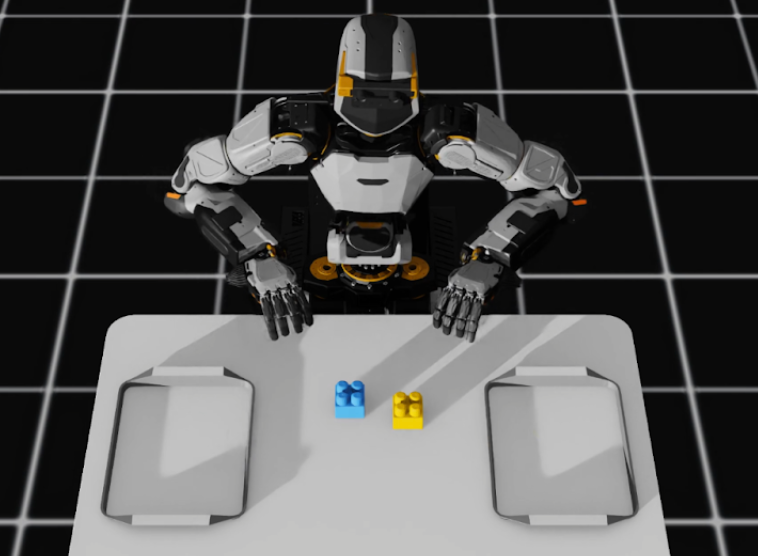
1. Product positioning
Sanctuary AI is a robotics company headquartered in Vancouver, Canada, with the goal of making general-purpose humanoid robots that "work like humans." Its core combination is the Phoenix robot body and carbon control system, which is aimed at industries that require a large number of front-line labor, such as retail, logistics, and manufacturing, and is positioned to fill the employment gap rather than a pure demonstration humanoid.
2. Core technology and parameters
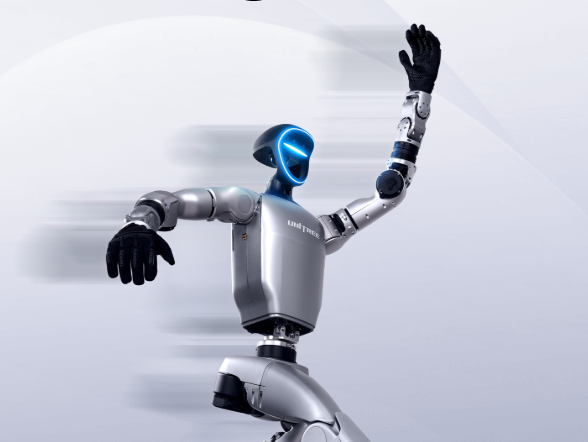
Phoenix is a bipedal humanoid close to the size of an adult, about 1.7 meters tall, weighing about 70 kilograms, with a maximum load of about 25,000 grams, and a walking speed close to the walking speed of a human, suitable for daily physical work such as carrying cardboard boxes and picking up and placing by the pallet.
Its highlight lies in the hands: more than 20 degrees of freedom with tactile sensing can complete fine actions such as pinching small objects, twisting, plugging and unplugging, laying the foundation for subsequent expansion to assembly and instrument operation.
The Carbon control system imitates the "human brain subsystem", unifies vision, hearing, memory and motion control, obtains a large amount of data through remote teaching in the early stage, and then gradually allows the robot to learn and complete tasks independently, which can not only ensure safety, but also accelerate the generalization of multi-tasking.
3. Typical scenarios and actual value
At present, the public applications are concentrated in retail and warehousing scenarios, such as shelf replenishment, picking, labeling, folding, cleaning, etc., and have also expanded to automobile manufacturing and other factories to help enterprises maintain stable production capacity during night shifts or high-turnover workstations.
Compared with special robotic arms or conveyor lines, Phoenix is more suitable for scenarios with multiple task categories and changing processes.
4. Deployment and evolution direction
In terms of deployment, it is necessary to plan safe channels and operation areas for the robot, connect with the existing business system, and use task lists to drive the robot scheduling. Recent generations of Sanctuary models focus on optimizing data acquisition, visibility, and remote O&M to quickly replicate multiple stations in a real factory.
From the perspective of routes, on the one hand, manufacturers continue to iterate on Phoenix hardware to support longer battery life and higher reliability, and on the other hand, they raise the upper limit of the "hand" through a new generation of haptic and dexterous operation algorithms to prepare for entering high-value assembly and service scenarios in the future.
Q&A Frequently Asked Questions
Q1: What is the biggest difference between Sanctuary's Phoenix and regular storage robots?
A: Traditional systems mostly fix robotic arms or carry trolleys, and only do a single task; Phoenix is designed for human body size and range of motion, and the same platform can be switched between different positions and "job descriptions" can be reassigned with software.
Q2: Is the current Phoenix mainly remote control or autonomous?
A: At the current stage, the two are parallel, and complex tasks are often taught remotely by humans first, and then the system is reused and generalized in similar scenarios.
Q3: If deployed in the factory, is there a high requirement for on-site transformation?
A: Large-scale civil engineering is usually not required, focusing on leveling the ground, adjusting shelf spacing and safety isolation, and reserving charging and maintenance space; The real workload is more in system integration and task process sorting.
Q4: Which type of general-purpose humanoid is more suitable for enterprises to try first?
A: Warehousing and discrete manufacturing enterprises with continuous labor tension, high job turnover rate, and large business requirements for flexibility are more suitable for early pilots, and can see benefits from labor costs and employment stability at the same time.