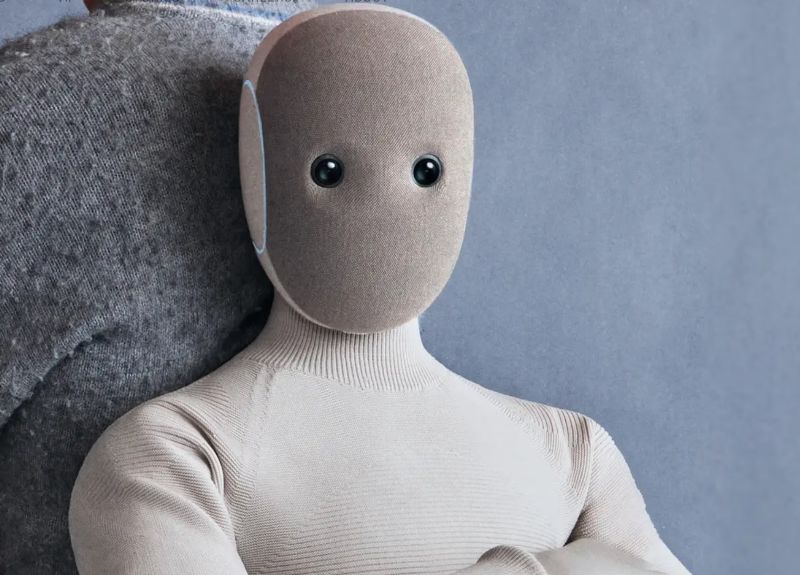
1. Company and product positioning
1X is a robotics company headquartered in Palo Alto, USA, with a manufacturing base in Norway, with the goal of supplementing real-world manual labor with general-purpose humanoid robots. The current main external product is NEO for the home environment, hoping to complete household chores such as cleaning, tidying, and moving in a real home, while also existing as a voice assistant and companion device.
2. NEO core features
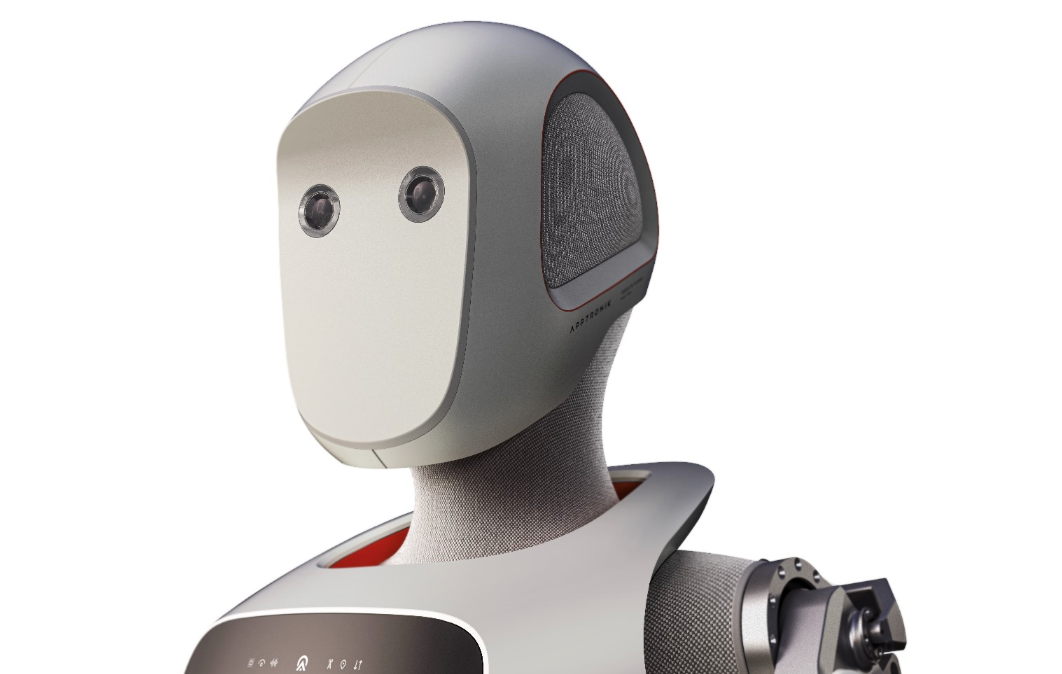
NEO adopts a bipedal humanoid design, close to adult users in height, about 30 kg, through the soft wrap structure and tendon-driven joints to reduce the risk of hard collision and hand pinching, more suitable for long-term activities in living rooms, kitchens, bedrooms and other spaces.
It has built-in large language models and multimodal perception capabilities, which can understand natural language instructions, recognize objects and scenes in the environment, and give personalized feedback based on memory. For housework tasks that have not yet been mastered, the remote "1X Expert" can take over the teaching and accumulate data for the system while completing a task.
3. Typical scenarios and user value
In the home scene, NEO is mainly responsible for folding clothes, tidying up the table, sorting out shelves, opening doors to welcome guests, moving items, night inspections and turning off lights, etc., and stripping away the "low-value, but must-do" trivial tasks from the daily life of residents.
Compared with single-function devices such as sweepers and window cleaners, NEO emphasizes connecting multiple tasks in series on the same machine and moving freely in the house; Compared with placing humanoid robots in factories, real-life training data can be obtained earlier directly from the home.
4. Technology and evolution direction
On the AI side, 1X proposes its own World Model and Redwood AI to allow NEO to learn movement, operation, and conversation capabilities in simulated and real environments in a unified manner, and evaluate the success rate of strategies.
In terms of hardware, NEO continues the tendon drive scheme of early EVE industrial robots, but is lighter in size and looks more home appliance-style, emphasizing noise control and long-term reliability. The company is also exploring allowing the same platform to enter warehouses, factories and other spaces to improve the scale effect of hardware.
Q&A Frequently Asked Questions
Q1: What is the difference between NEO and traditional smart speakers and sweepers?
A: Smart speakers are mainly conversational, sweepers are only responsible for floor cleaning, while NEO can perform tasks that require manual operation such as folding, handling, and organizing through humanoid bodies and hand freedom, and concentrate a variety of household chores on a single robot.
Q2: What is the current autonomy of NEO, and will someone always be remotely controlled?
A: NEO has been able to complete some standardized household chores autonomously, but will still be taught by remote experts on complex or new tasks. The long-term goal is to increase the proportion of autonomy as data increases, so that remote control is more of a back-up solution rather than the norm.
Q3: How to ensure the safety of humanoid robots at home?
A: NEO reduces the risk of collision by softly wrapping the shell, tendon-driven low-energy action, and perception of the human body's presence, while trying to avoid hand pinch and low noise in the structure to reduce the feeling of pressure during long-term coexistence.
Q4: Is it suitable for the average family to book NEO directly?
A: Judging from official information, NEO is still in the early adopter stage, which is more suitable for users with sufficient budgets, high acceptance of new technologies, and willing to iterate with products. For price-sensitive or households that only need basic cleaning, traditional appliances may be more realistic.