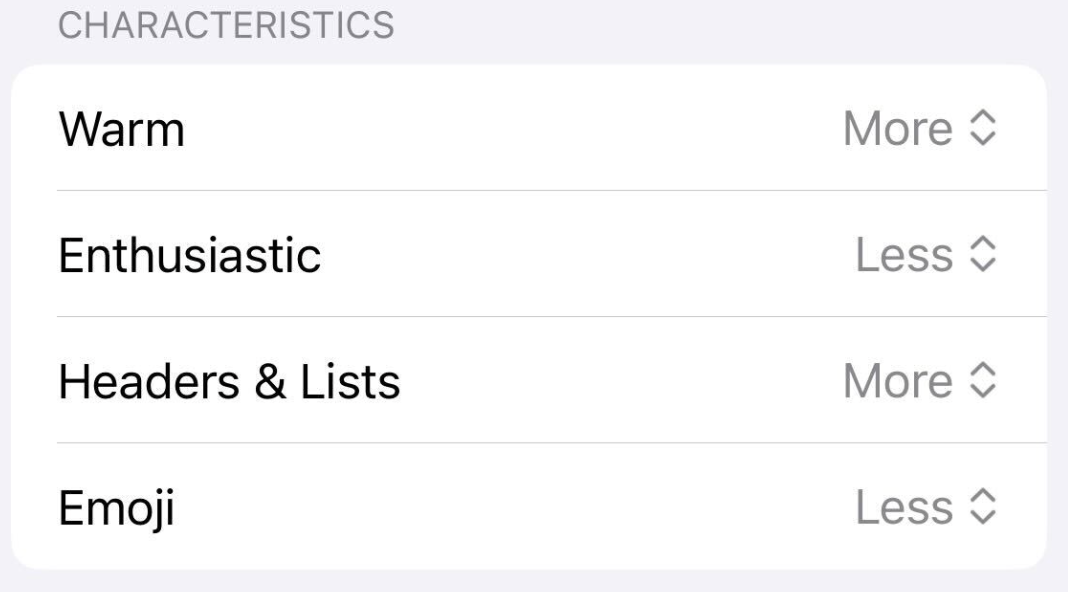
ChatGPT has updated its personalization capabilities, allowing users to adjust the specific expression characteristics of the model's responses in the "Personalization" option, including the warmth of the tone, the overall enthusiasm, and the frequency of emoji use. This feature is aimed at the conversational experience itself and is designed to bring the style of reply closer to personal preferences.
According to the function description, these settings do not change the knowledge scope or ability boundaries of the model, but affect the language presentation and emotional expression intensity, and are suitable for daily communication, content creation assistance, or long-term use scenarios. After the user completes the configuration once, subsequent conversations will follow the corresponding style by default.
It should be noted that the specific scope of the personalized settings, whether they are applicable to all model versions, and the synchronization between different devices or accounts are still subject to the actual product interface. For professional scenarios that rely on a unified tone or standardized expression, it is still recommended to clearly state the style requirements in the prompt.
FAQs
Q: What can be adjusted for ChatGPT's personalization feature?
A: This feature is mainly used to adjust the tone characteristics of the reply, such as warmth, enthusiasm, and the frequency of emoji use.
Q: Can personalization affect the accuracy of responses?
A: This setting only affects the expression and does not change the model's knowledge scope or factual judgment ability.
Q: Where can I find ChatGPT's personalization settings?
A: The relevant options are located in ChatGPT's "Personalization" settings page.
Q: Does personalization work for all conversations?
A: After opening and saving the settings, they are usually applied to subsequent conversations as the default style, subject to the actual performance of the product.
Q: Is it suitable for professional or formal use scenarios to enable this function?
A: In scenarios that require a strict tone or a unified style, it is advisable to adjust carefully or additionally state specific requirements in conversations.