Codex is stuck and not responding? Check by approval, terminal, and log check
If Codex is stuck and unresponsive, do not send the same message repeatedly. Confirm in order whethe
CodeGPT is an AI programming assistant that supports its own API Key. The homepage of the official website focuses on flexible model selection and visibility of the process, emphasizing that developers can freely switch between different models and complete generation, refactoring, debugging and proxy development in VS Code, JetBrains and other environments. The page also writes about 2M + installations, open source, MCP connectivity, settable rules and context tracking, so it is more oriented to a programming platform for real engineering processes than a plug-in bound to a single model. This is critical for teams that need to control their own costs, model sources, and context boundaries, and is suitable for engineering organizations that already have fixed development specifications and multi-model strategies.
The problem with many code assistants is not that they cannot write, but that users are not clear about what model they use, how much context they consume, and whether they can access external systems. CodeGPT puts transparency and controllability at the forefront, and obviously wants to be an AI programming platform that can be embedded in the team's daily work.
CodeGPT is suitable for code generation, refactoring, debugging, document query, cross-file modification, external system access and team-level AI development specifications. For teams that want to keep model selection and data control in their own hands, it would be more suitable than a closed plug-in.
Suitable for individual developers, technical teams, platform engineers and organizations that need to use AI uniformly in multiple IDE environments. For people who already have their own model strategy or API budget, the experience will be more in line with actual needs.
CodeGPT does not replace the review, testing and security processes in software engineering. Especially in multi-model switching, self-contained keys and external connection scenarios, permissions, costs and context disclosure boundaries need to be set clearly by yourself. Proxy development results still need to be manually accepted.
When included, CodeGPT should be placed under the AI programming tool category, focusing on writing self-contained API keys, multiple models, multiple IDEs and controllability of development processes. Don't just write a normal chat completion plug-in, because its core difference is openness and configurable.
Does CodeGPT have to use the platform's own model?
No. The most important thing on the homepage of the official website is the self-contained API Key and the free switching model.
Is CodeGPT suitable for team use?
Suitable, especially valuable for teams that want to control model, rules, and context boundaries.
What is the difference between CodeGPT and ordinary code completion plug-ins?
It places more emphasis on multiple models, observability, rule setting and external system access rather than just a few lines of code.

Google Antigravity is an AI programming environment for the "agent-first" era, helping developers collaborate with multiple agents to complete the entire process from planning to coding, debugging and delivery. Google Antigravity embeds agents in IDEs, terminals, browsers, and other development tools, supporting task decomposition, automated execution, and traceable artifact records for easy review and reproducibility. With powerful reasoning and tool calling capabilities, Google Antigravity significantly improves code generation, test orchestration, script execution, and cross-project collaboration, making it suitable for individuals and teams to quickly build modern applications and services.

Kiro is an AI-powered integrated development environment (IDE) powered by AWS that creates a full-process experience from prototype to production for developers. It uses a spec-driven development model that automatically converts natural language prompts into detailed requirements, system designs, and specific tasks, and performs code generation, documentation maintenance, unit testing, and performance optimization through intelligent agents. Built-in agent hooks support event-driven automation (such as saving file triggers) and Steering files to give users custom control over AI behavior. Kiro natively integrates Model Context Protocol (MCP) to connect to multiple tools and services (e.g., databases, documents, APIs), and is compatible with VS Code plugins and settings, supporting multimodal inputs such as image indication UI or architectural logic. Currently in preview, the core features are open for free, and tiered subscriptions are available for professional users.

ZOER is an AI full-stack web app builder aimed at entrepreneurs, product managers, and no-code developers. Its value is not that it decides everything for the user at once, but that it provides actionable assistance around the idea of building front-end, back-end, and database applications: users can describe requirements, build full-stack applications, preview and deploy code, and then complete the follow-up process based on their own business judgment. When choosing such a tool, you need to pay attention to code quality, data security, and online testing, especially when it comes to accounts, customer profiles, contracts, courses, audio, video, or code output. Its visibility capabilities include AI web app generator, frontend, backend, and DB, making it more suitable for rapid application prototyping.

ZETIC.ai is an end-side AI deployment and NPU-optimized platform aimed at AI engineers, mobile development teams, and edge device teams. Its value is not that it does everything at once, but provides actionable assistance around deploying models to end-side devices and optimizing inference performance: users can convert models, test hardware, optimize NPUs, monitor performance, and then complete subsequent processing based on their own business judgments. When choosing such tools, you need to pay attention to device compatibility, model accuracy, and deployment validation, especially when it comes to accounts, customer profiles, contracts, courses, audio, video, or code output, all of which should be reviewed manually. Its visible capabilities include on-device AI, NPU optimization, and benchmark on devices, making it better suited for end-side AI engineering.

ZeroTrusted.ai is an AI zero-trust security and LLM firewall platform aimed at security teams, AI application teams, and enterprise IT managers. Its value is not to make all the work for users at once, but to provide actionable assistance around securing data, identity, and AI prompt interactions: users can configure LLM firewalls, anonymous prompts, monitor health status, and handle security incidents, and then complete follow-up processing based on their own business judgment. When choosing such tools, you need to be mindful of privacy data, policy misjudgments, and corporate compliance, especially when it comes to accounts, customer profiles, contracts, courses, audio, video, or code output. Its visibility capabilities include LLM firewall, data protection, prompt anonymization, and SOAR, making it more suitable for enterprise AI security governance.

ZeroThreat is an AI web application and API security testing platform aimed at security teams, development teams, and DevSecOps personnel. Its value lies in not making all the decisions for users at once, but rather providing actionable assistance around scanning web applications and APIs for vulnerabilities and assisting in automated penetration testing: users can configure targets, run scans, view vulnerabilities, generate remediation recommendations, and follow up with their business judgment. When choosing such a tool, you need to pay attention to the scope of authorization testing, false positives, false positives, and fix verification, especially when it comes to accounts, customer information, contracts, courses, audio, video, or code output. Its visibility capabilities include AI-powered scanning, automated pentesting, and web/API security, making it more suitable for authorized security testing.
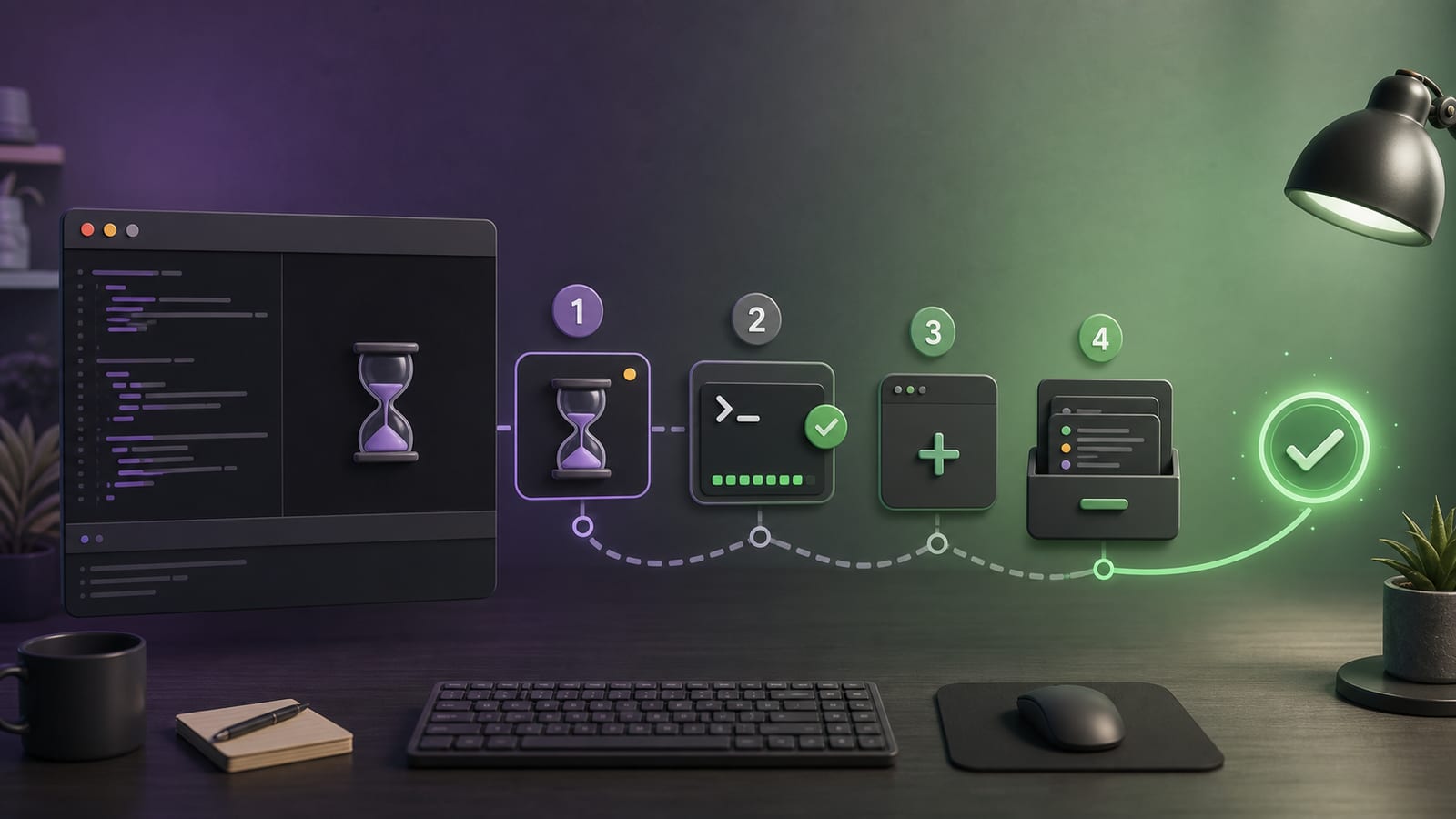
If Codex is stuck and unresponsive, do not send the same message repeatedly. Confirm in order whethe

codex exec In CI, it can analyze code without making changes; first check the sandbox: non-interacti

If Codex Skills is installed but does not trigger, first check if it is located in the scan director

Codex config.toml changes that don't take effect usually don't mean the TOML file is corrupted, but

After exiting the Codex CLI, you don't need to redescribe the entire task; just run codex resume sel

On August 3, 2026, the Qwen team released the Qwen 3.8-Max on the official Qwen blog, positioning it