1. Brand positioning and technical route
ENGINEAI Zhongqing Robot is a humanoid robot company from Shenzhen, focusing on "highly dynamic bipedal humanoid + full-stack self-developed joints". The products cover education and scientific research, robot enthusiasts to industrial training and commercial displays, hoping to make video-level skills that were originally only in the laboratory into standard products that can be mass-produced and delivered.
2. Overview of the core product line
SA01: Open source bipedal humanoid robot for educators and developers, the price is relatively controllable, supports algorithm and control open source, suitable for universities, laboratories and individual players to do gait, reinforcement learning, embodied intelligence and other research, is a "robot pit platform".
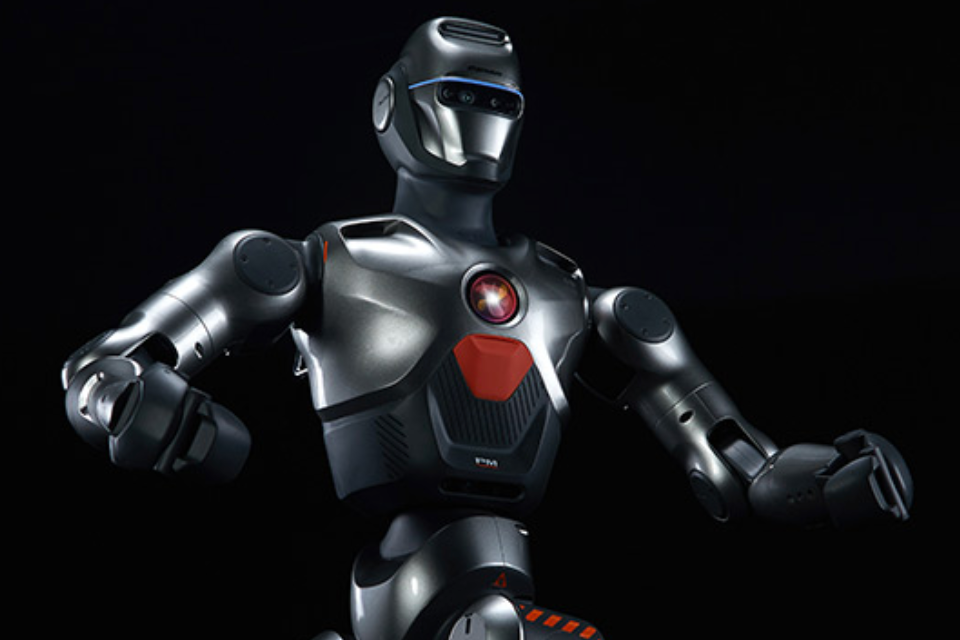
PM01: Focusing on high sports performance and anthropomorphic gait, it has officially demonstrated difficult movements such as running, front flips, ax dance, etc., with a height of about 1.38 meters, 24 degrees of freedom, and a built-in large-capacity battery, which can work continuously for about 2 hours, suitable for scientific research institutions, exhibitions and high-end development.
SE01 / T800, etc.: a full-size or heavy-duty humanoid platform with a larger size, with more emphasis on industrial training and scenario verification, used for handling, walking in complex environments and commercial displays, and is a pre-research platform for future industrial and service scenarios.
3. Key technical features and user significance
Zhongqing emphasizes full-stack self-developed joints and anthropomorphic natural gait, and makes the robot closer to real human movements when running, jumping, turning, and going up and down slopes through high-torque motors, lightweight structures and gait control algorithms. The practical significance for users is that the same platform can not only display "show-off actions", but also carry serious research and engineering projects, without having to build hardware from scratch. Open source and development toolchains lower the hardware barrier for algorithm teams, allowing more energy to focus on the control and intelligence layers.
4. Applicable groups and purchase suggestions
If you are a university teacher, researcher, or robot club with a limited budget but want a programmable bipedal platform, SA01 is preferred. If you want to do high sports performance research, large-scale exhibition halls or event displays, you can focus on PM01; For industrial training, production line verification, or brand showrooms, look at full-size or heavy-duty platforms such as SE01 and T800. Before purchasing, it is recommended to focus on three points: control interfaces (such as ROS, simulation environment), after-sales and spare parts, and subsequent software upgrade rhythm.
Q&A
Q1: Is ENGINEAI's robot suitable for buying as a "toy" for individual players?
A: The overall platform is more professional, and the price and maintenance cost are much higher than that of consumer toys, which is suitable for individuals and teams with a certain robot foundation and clear research or display needs, and is not suitable as a household "pet robot".
Q2: What are the advantages compared with exhibition robots that can only "dance and perform"?
A: Many exhibition robot movements are preset choreography, and the scene adaptation is limited; The humanoid platform of Zhongqing provides open interfaces and perception and control capabilities, and can be connected to self-developed algorithms for perception, positioning, decision-making and other research, which is closer to real scientific research and engineering tools.
Q3: What preliminary preparations do schools or enterprises need to make if they want to introduce it?
A: It is recommended to first evaluate the usage scenarios and budget to confirm whether open source support, simulation environment, and multi-machine collaboration are required. Prepare basic safety specifications and operational training to ensure sufficient space and protective measures in the laboratory or exhibition hall environment.
Q4: Can I really work in the factory in the future?
A: The current product is more "verification platform + early demonstration", and it needs to continue to iterate on reliability, cost and safety standards to truly replace workers. For today's users, the more realistic value is to familiarize themselves with the humanoid robot form in advance and accumulate control and scene experience.