1. Product positioning and appearance
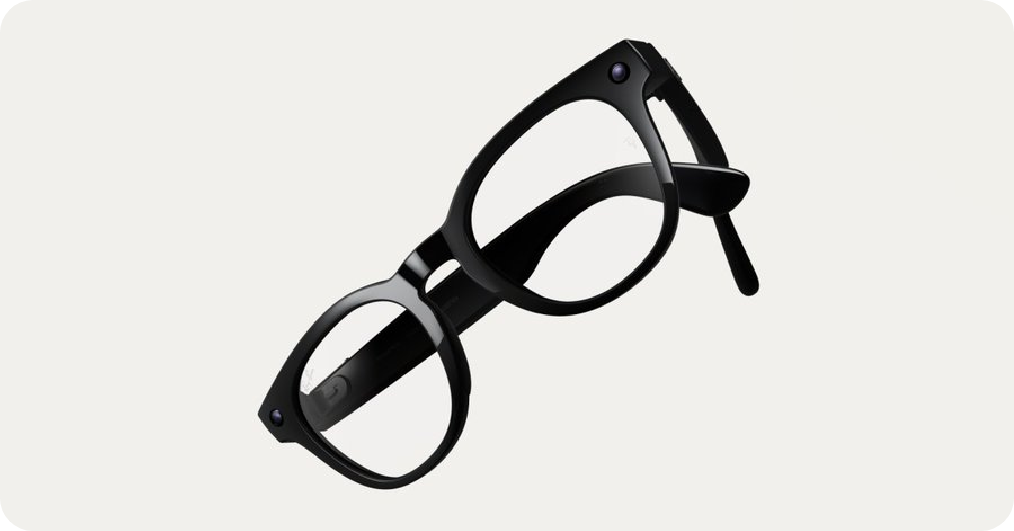
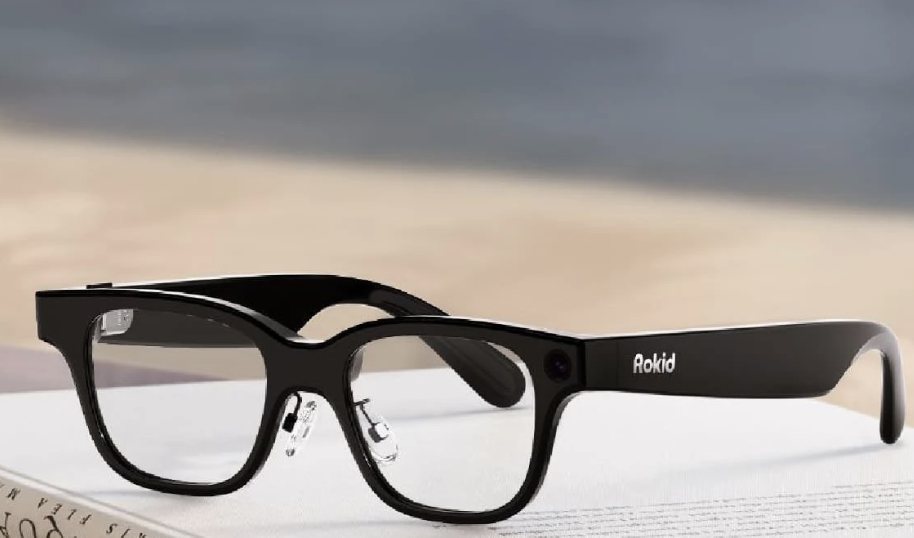
Rokid Glasses are AI glasses for daily commuting and light office scenarios, focusing on "good glasses and good assistants". The whole machine is about 49 grams, the weight is close to ordinary sunglasses, and it looks like a pair of fashionable frames, which are easier to integrate into daily wear, and there will be no strong "technological pressure" like wearing a headset.
2. Core hardware and wearing glasses
use Qualcomm Snapdragon AR1 platform, with two plus 32 gigabit storage, built-in optical waveguide display module, field of view of about 30 degrees, eye brightness up to 1,000 nits, and can be seen clearly outdoors. The body integrates two directional speakers and an array microphone, which can be used as open-back headphones. The front 12-megapixel camera supports first-view photography and recording, and there is an indicator light to indicate the recording status. The battery life of a single unit is about four hours, and it can be replenished multiple times with the charging case, which is more suitable for scattered use throughout the day rather than chasing dramas for a long time.
3. AI capabilities and typical usage scenarios
Rokid Glasses is equipped with a multi-modal large model, which supports the ability to see objects, take photos and answer questions, multilingual translation, real-time navigation, flash notes, and meeting minutes. You can see real-time subtitle translation when you go abroad, and you can look up at the navigation arrows instead of staring at your phone screen in your local life. During meetings or classes, it can automatically convert speech into text, making it easier to retrieve key points later. Voiceprint payments and voice commands can be used to order food, request a car, and make small purchases, turning some fragmented operations into a single sentence.
4. Interaction mode and applicable groups
Glasses support voice wake-up, temple touch and head movement to answer calls, nod to answer, shake your head to refuse, and do not need to take out your mobile phone when walking or carrying things. Through the supporting application, the speech can be imported as a teleprompter, and key sentences can be displayed on the edge of the lens, making it more calm during speeches and roadshows. Official support for myopia and astigmatism lenses customization, snap mounting, not only to ensure clear imaging but also to take into account comfort. Overall, it is more suitable for users who travel frequently, need to communicate across languages, frequently hold meetings and give speeches, or want to reduce the time spent looking at their phones.
Q&A
Q1: What is the difference between Rokid Glasses and Rokid AR Lite?
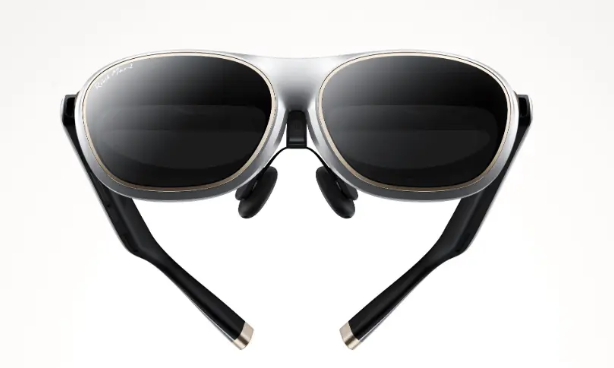
A: Rokid Glasses are more inclined to informative prompts and AI assistants, with a smaller field of view, which can be used for navigation, subtitles, reminders, and teleprompters; AR Lite products have a larger field of view and are more suitable for watching movies and playing games on the portable giant screen, and the two are positioned differently.
Q2: Can the battery life last a day?
A: The unit is used continuously for about four hours, and the charging case in the middle can cover a whole day of commuting and meetings, but if you record videos for a long time or call AI frequently, the battery will drop faster, and you need to plan the charging rhythm reasonably.
Q3: How dependent is the network?
A: Core functions such as translation, object recognition, and Q&A all rely on the Internet, and only a small amount of local capabilities can be retained in the offline environment. When planning to use it for a long time, it is best to ensure that the mobile network is stable and choose the appropriate package based on the traffic situation.
Q4: Will taking photos and videos cause privacy issues?
A: There is a shooting indicator light on the frame, but others may not understand the meaning, it is recommended to turn off the shooting function as much as possible in indoors, meetings, classrooms and other occasions, take the initiative to explain in front of the photographer in public to avoid misunderstandings, and at the same time turn off unnecessary background recording and automatic upload options in the system.