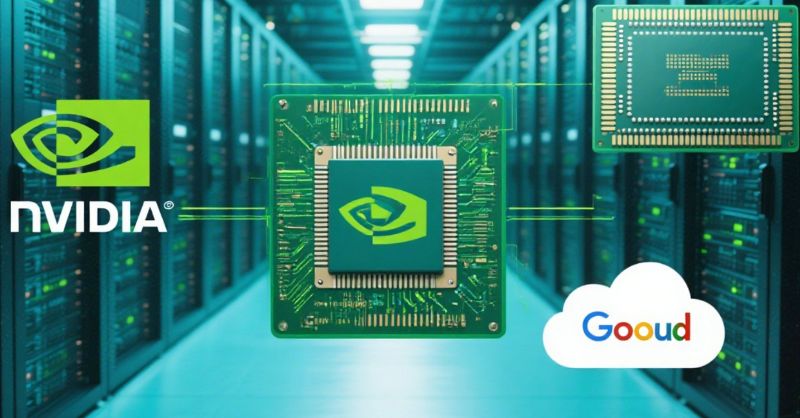
Talking about the cooperation with Google and the competitive landscape in the industry, NVIDIA expressed its pleasure with Google's progress in the field of artificial intelligence and emphasized that the company will continue to provide relevant computing power products and platform support to Google. NVIDIA said its platform is in a "leading generation" position in the current wave of generative AI.
In its specific statements, NVIDIA claims that its platform can run "every AI model" and cover a wide range of computing scenarios, from cloud data centers to edges and terminals. The company also compares general-purpose GPU platforms with specialized ASIC chips, believing that GPUs have more advantages in terms of performance, scenario adaptability, and resource deployment and transferability, while ASICs are often optimized only for specific AI frameworks or limited functions. The above views mainly reflect the manufacturer's description of their own product positioning and competitive advantages, and are not equivalent to a neutral assessment of the entire industry.
FAQs
Q: What is the relationship with Google mentioned by NVIDIA?
A: NVIDIA said it will continue to provide computing power and platform support to Google, while acknowledging Google's technological progress in the field of artificial intelligence.
Q: What does NVIDIA mean by "running every AI model"?
A: This emphasizes its universal GPU platform compatibility and ecological coverage, referring to the platform's ability to support a wide range of mainstream AI models and application scenarios.
Q: How does NVIDIA evaluate its differences from ASICs?
A: Companies believe that general-purpose GPUs are more advantageous in terms of performance, flexibility, and resource replaceability, while ASICs are more optimized for specific frameworks or specific tasks.
Q: Are these claims about leadership and superiority objective?
A: The relevant statements are mainly from NVIDIA's own position, with obvious marketing colors, and the specific effect needs to be combined with different application scenarios and third-party evaluations.