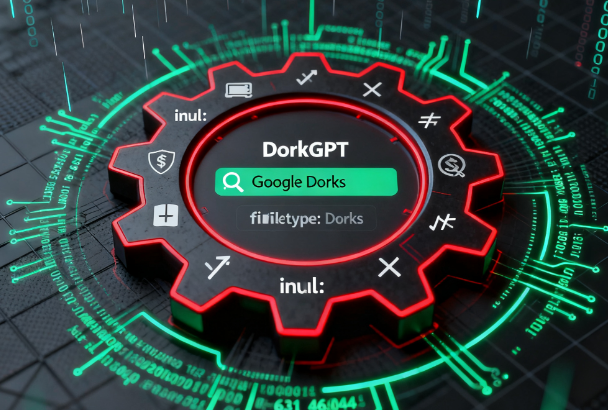
DorkGPT is an AI-based online tool for automatically generating Google Dorks advanced search statements. Users simply describe what they are looking for in natural language, and DorkGPT outputs precise query statements with multiple search operators, making it easy to locate specific public information in search engines.
The official DorkGPT website is dorkgpt.com and is operated by the Predicta Lab team, which specializes in digital threat protection and search tools. The tool is primarily aimed at cybersecurity practitioners, penetration testers, OSINT investigators, researchers, and users related to SEO or data analytics who need to search in-depth for publicly available resources.
DorkGPT itself is only responsible for generating search statements, not directly crawling, storing, or displaying search results, and the actual query is still completed in Google or other search engines.
2. Product Overview
The core positioning of DorkGPT is to "use AI to help you write high-quality Google Dorks search statements". Google Dorks refers to complex search statements made up of multiple advanced search operators for refined searches in publicly indexed data. DorkGPT leaves the process of constructing such statements to AI to complete automatically, lowering the writing threshold.
Typical use is when a user describes the target information in a page, such as looking for a type of public document, a specific content under a specific site, or a public resource related to a certain technology. DorkGPT generates a combined query statement containing operators such as site, filetype, and inurl based on the description, which users can copy into the search engine for execution.
Compared to handwritten Google Dorks, DorkGPT helps users get structured, reusable query statements faster through AI's understanding of natural language, reducing the time spent memorizing operators and repeated trial and error. At the same time, the tool emphasizes the use of compliance and public information, and is used to assist in legitimate purposes such as security audits, research, and information retrieval.
3. Core Functions
1. Main Functions
- Natural language generation Google Dorks
- users describe their search targets in plain language, and DorkGPT automatically generates corresponding advanced search statements, reducing the memory burden on grammatical details.
- Advanced operator combination construction
- Automatically combine multiple advanced operators, such as site qualification, file type qualification, title or link position qualification, etc., to make queries more accurate and easy to reuse.
- Multi-scenario search prompts
- support different scenarios such as network security audits, research searches, SEO analysis, and intelligence gathering, and construct query structures that adapt to the scenarios for users.
- Multi-search engine compatible ideas The
- generated statements are based on Google Dorking and are compatible with advanced syntax ideas supported by mainstream search engines, making it easy for users to try across multiple platforms.
- The results can be copied and modified The
- output search statement is displayed in plain text, which can be directly copied to the browser search box or manually fine-tuned on this basis.
2. Technical features
- based on the semantic understanding of large models
- Use large models to identify target entities, constraints, and filtering logic in user descriptions, and map them into advanced search operator combinations.
- Templated Generation for Query Structure The
- tool uses query structure templates to decompose common search requirements into dimensions such as site scope, content type, time, and keyword location to ensure that the generated statements are readable and maintainable.
- Focus on public information and compliance scenarios Product
- positioning focuses on public information scenarios such as OSINT, SEO, and security audits, emphasizing search assistance only for public resources that have been indexed by search engines.
- No need to install
- DorkGPT directly through the web page, no need to install client software, users can submit query requirements and obtain statements as long as they visit the website.
- Linkage with the Predicta Lab ecosystem
- DorkGPT has synergies with other products of Predicta Lab, such as using the generated search statements for more complex data exploration and visual analysis tools, realizing a closed loop from query construction to analysis and display.
4. Pricing and Version
According to public information, DorkGPT provides basic capabilities that can be used directly through the web page, and is open to users for free use, making it suitable for lightweight scenarios for daily construction of advanced search statements. Third-party AI tool navigation websites generally label DorkGPT as "free to use" or "offer a free plan," but the specific call limits and quotas are not detailed on all pages, which may adjust over time.
At the same time, the graph analysis tool associated with DorkGPT in the Predicta Lab ecosystem offers separate free and paid versions, including visual survey graphs, timelines, and logs, and a third-party article provides pricing information for annual fees. This information is sourced from unofficial sources and is subject to change due to version updates, so it should be considered as a reference and should not be regarded as a fixed or long-term policy.
Overall, it can be considered that DorkGPT's core Google Dorks statement generation function currently provides a free entrance, while advanced graph analysis and survey functions may be implemented through separate paid products, subject to the official page and actual registration process, and there is uncertainty.
5. Applicable Scenarios and Crowds
- Network Security Audit and Penetration Testing Scenarios Security
- teams can use DorkGPT to construct complex advanced search statements to examine their system's exposure surface in public search engines and identify potential misconfigurations or sensitive information leaks, provided they strictly adhere to laws and authorization boundaries.
- OSINT and Investigative Research Scenarios
- Investigative journalists, intelligence analysts, and research institutions can use DorkGPT to improve the efficiency of public information retrieval and locate information related to people, organizations, and events faster in publicly indexed data.
- SEO and Website Analysis Scenarios
- SEO practitioners can use DorkGPT to construct advanced search statements such as on-site index checking and competitor page structure analysis to assist in site content inclusion and structure optimization.
- Technology and Security Education Scenarios In
- teaching scenarios, DorkGPT can be used to demonstrate the construction method of advanced search statements to explain search operators, public information exposure risks, and security boundary awareness, but avoid using them for unauthorized targets.
- Personal Advanced Search Application Scenarios
- Individual users who require high search quality, such as researchers or engineering technicians, can quickly obtain high-precision search statements through DorkGPT to locate specific format documents, specific topic content, or site-wide information.
Overall, DorkGPT is more suitable for professional or semi-professional users who already understand compliance boundaries and have basic security and privacy awareness, rather than a completely zero-threshold mass entertainment tool.
6. FAQs
Q: What is the main purpose of the Google Dorks search statements generated by DorkGPT?
A: The search statements generated by DorkGPT are used to accurately retrieve indexed public information in search engines, with typical uses including public exposure investigation in security audits, OSINT information collection, SEO analysis, and various research searches for public resources, without involving intrusion into the system itself.
Q: Does DorkGPT display or download sensitive data directly?
A: DorkGPT itself is only responsible for generating search statements and does not directly crawl or present search results. Users need to copy the statement to the search engine for execution, all results come from publicly indexed content, and the user is responsible for accessing and using the data, and needs to strictly abide by local laws and relevant terms of service.
Q: Is DorkGPT completely free to use?
A: Public tool directories generally label DorkGPT as offering free usage capabilities, allowing users to use its core search statement generation capabilities directly within web pages. For higher-level graph analysis and other extended capabilities, a separate charging model may be adopted, and the specific price and quota information are uncertain, and the official description and current product page shall prevail.
Q: Is DorkGPT friendly to zero-based users?
A: For users unfamiliar with advanced search operators, DorkGPT can significantly simplify the statement construction process, simply describing the target in natural language to obtain the corresponding statement. However, users still need to understand compliance boundaries and privacy risks, otherwise inappropriate actions may occur when using the results.
Q: Are there any legal risks associated with using DorkGPT?
A: The construction and use of advanced search statements themselves are usually only for publicly indexed information, and are legitimate means of information retrieval. The risk mainly comes from the use of the results, and if the search results are used to attack, hack or exploit the leaked data, it may violate applicable laws. When using DorkGPT, you should only conduct security audits and research within the scope of authorization, and comply with local laws and terms of service.