I. Basic Information
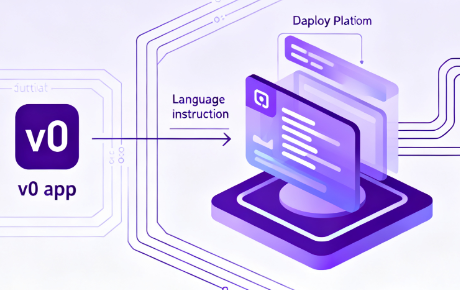
v0.dev, formerly known as v0.app, is an AI application generation platform launched by Vercel. The platform generates runnable web applications, including interfaces, logic, and backends, using natural language descriptions. It supports delivery with modern front-end technology stacks, including React, Next.js, Tailwind CSS, and common component libraries. v0 emphasizes an end-to-end experience "from idea to deployment," enabling collaborative retrieval, inference, debugging, and planning, and integrates with services such as GitHub and Vercel hosting.
II. Product Overview
v0 is centered around an intelligent agent, allowing users to submit requests through conversational prompts. The system automatically breaks down tasks, generates code, previews results, and fixes errors. The platform features a built-in Design Mode for visual editing, supporting file uploads, website parsing, and integration with external tools, facilitating a closed loop from sketch to deployment in a single session. Users can deploy directly to Vercel or synchronize repositories for version control and collaboration; enterprises can utilize team and enterprise solutions under higher compliance and security requirements.
III. Core Functions
1. Main functions
Generate and edit: Generate pages, components, and business processes using natural language, supporting real-time code preview and visual editing.
Automatic retrieval and error correction: The agent can search web pages, check sites, and automatically correct common errors, reducing manual troubleshooting.
Integration and Deployment: Supports GitHub synchronization and one-click deployment to Vercel, providing preview links and rollback processes.
Templates and Examples: Provides community and official templates covering common scenarios such as landing pages, dashboards, and internal management tools.
Platform API: It exposes a text-to-application generation pipeline, allowing users to obtain session links, export generated files, and continue the conversation.
Security and Governance: Provides access control, collaboration spaces, and privacy policies to meet the compliance requirements of teams and enterprises.
2. Technical characteristics
Modern Stack Output: By default, it produces React, Next.js, and Tailwind code, making it easy to integrate into existing project systems.
Intelligent agent workflow: Complete retrieval, reasoning, planning and debugging in single or multi-round sessions to improve end-to-end success rate.
Visual design mode: Use Design Mode to refine the layout and style, ensuring a stable UI presentation.
Scalability: By leveraging the platform's API to integrate with external tools, an automated generation and deployment pipeline can be formed.
IV. Pricing and Versions
Personal plans include Free and Premium tiers. The Free plan provides a basic monthly credit, visual editing, and GitHub synchronization and deployment capabilities; Premium is designed for high-frequency and heavy users, offering higher credit limits and additional features. Team and Enterprise plans are billed per user, covering collaboration, privacy, and security requirements; there are also Business and Enterprise tiers offering stricter data and access controls. Specific credit limits, prices, and benefits are subject to change on the official website, and some benefits may vary depending on region or time.
V. Applicable Scenarios and Target Audience
Product and Design: Quickly generate interactive prototypes and high-fidelity pages from text descriptions for review and user testing.
Front-end and full-stack: As a code accelerator, it generates the basic structure for continued development and integration locally or in the cloud.
Internal tools: Quickly build management backends, forms, and dashboards to shorten the time from requirements to delivery.
Platform Engineering and Integration: Embedding text-to-application capabilities into existing workflows and custom portals via platform APIs.
Teaching and Training: Demonstrating modern front-end development and engineering processes through examples and templates to improve teaching efficiency.
VI. Frequently Asked Questions
Q: What is the relationship between v0.dev and v0.app?
A: v0.dev has been renamed v0.app. The functionality is retained and intelligent agent capabilities and platform APIs have been added. The original entry point will be redirected to the new domain.
Q: Can the code generated by v0 be maintained and extended independently?
A: Yes. v0 outputs standard React, Next.js, and Tailwind code, which users can sync to GitHub to continue development and integration locally or in the cloud.
Q: What is the basis for billing v0?
A: Billing is based on usage, with input and output tokens converted into credits. Different tiers offer different monthly limits and feature caps. Please refer to the official pricing information for details.
Q: Can companies go private and configure compliance?
A: The Team, Business, and Enterprise solutions offer enhanced privacy controls, member management, and security capabilities, aligning with enterprise compliance requirements. Specific support details are subject to official documentation.
Q: Does it support integration and automation with third-party services?
A: Yes. Session links can be generated, files exported, and sessions continued via the platform API. It can also be integrated with hosting, database, and authentication services to form an automated pipeline.