1. Basic Information
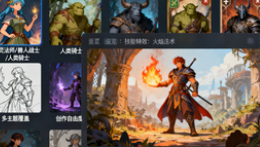
Dreamlook.ai is an online fine-tuning and generation platform for the Stable Diffusion ecosystem. It supports minute-by-minute fine-tuning of SD1.5 and SDXL, and completes custom model training and image generation through a unified workflow. The platform offers a token-based, scalable API and console, making it suitable for individual creators, studios, and enterprise-level mass production. Key keywords include Dreamlook.ai, Stable Diffusion, SDXL, fine-tuning, model training, API, mass generation, and token-based billing.
2. Product Overview
Dreamlook.ai integrates the "training-generation-integration" process into a single platform: users initiate training by uploading samples and parameters. Upon completion, generation can be directly invoked within the console or API, forming a closed loop from style learning to finished product output. The platform emphasizes minute-by-minute training and massive parallelization, facilitating rapid accumulation of style models and batch output across multiple campaigns, channels, or SKUs. The documentation provides end-to-end examples and standardized endpoints, lowering the barrier to integration between frontend and backend, making it suitable for embedding generative capabilities into existing products or internal pipelines.
3. Core Functions
1. Main functions
- Custom model training supports fast fine-tuning of SD1.5 and SDXL to form a reusable proprietary model.
- Online image generation: After training is complete, you can generate images directly in the console or via the API. Multiple resolutions and batch parallelization are optional.
- LoRA works in conjunction with complete fine-tuning to balance lightweight migration and high consistency requirements.
- Task orchestration and scaling support massively parallel queues, suitable for activity peaks and automated production lines.
- The account and metering system uniformly measures the number of training steps and generated usage by token to facilitate cost control.
2. Technical characteristics
- The training process takes minutes, shortening the waiting time from sample to available model.
- Programmable APIs cover training startup, status polling, model and inference endpoint calls, making it easy to integrate into CI/CD or backend services.
- Unified management of models and generation, supporting calling, versioning and reuse by model ID, improving collaboration efficiency.
- Quality and stability oriented, optimized for common specifications such as 1024×1024, balancing speed and details.
- The privacy and compliance module provides a data and model management portal, allowing enterprises to set retention policies and permissions as needed.
4. Pricing and Versions
The platform uses a combination of token billing and subscriptions. Fine-tuning Stable Diffusion 1.5 costs 10 tokens per 5,000 steps; fine-tuning SDXL costs 30 tokens per 5,000 steps. Image generation is calculated as approximately 8 images generated for 1 token. Multiple plans are available to meet varying activity intensity and team size, with differences reflected in monthly tokens, concurrent quotas, and support levels. Actual prices, trial quotas, and terms are subject to change over time and by region; please refer to the official website for details.
5. Applicable Scenarios and Target Audience
- Brands and e-commerce: Fine-tune style models using product or character samples to batch generate key visuals, details, and scene images.
- Content and marketing teams: Quickly produce consistent materials for multiple activities and channels, supporting large-scale parallel development.
- Platforms and application providers: Integrate training and generation into existing systems through APIs to build automated creation capabilities.
- Education and Research: Demonstrate fine-tuning processes and inference calls in courses or experiments, and reproduce training parameters and results.
- Studios and freelancers: Improve delivery speed and cost control with minute-by-minute training and unified billing.
6. Frequently Asked Questions
Q: What models and training methods does Dreamlook.ai support?
A: It supports fine-tuning of SD1.5 and SDXL, and provides training and export paths that work with LoRA to meet both lightweight and high consistency requirements.
Q: How to integrate training and generation into business systems
A: Start training, query status, and call inference endpoints through the official API, which can be automated in backend services or pipelines.
Q: How is the billing calculated?
A: Training is measured as "the corresponding number of tokens consumed every 5,000 steps", and generation is measured as "approximately 8 images per 1 token". Different subscription tiers come with monthly tokens.
Q: How long does it take to train it to be usable?
A: The platform emphasizes minute-level training, and the specific duration is affected by the sample size, number of steps, and concurrent queues.
Q: How to manage data and model retention and permissions?
A: It provides a model and data management portal, and supports access and retention policies managed by projects and teams. If corporate compliance requirements are involved, the official terms and conditions and the description on this page shall prevail.