1. Basic Information
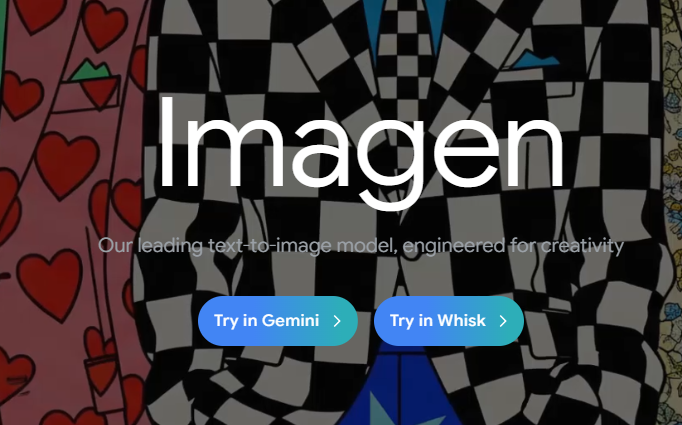
Imagen is a series of text-to-image models from Google DeepMind. Its core focus is high-fidelity text-to-image capabilities, covering realistic, illustrative, and multi-style creative needs. The latest version, Imagen 4, emphasizes higher clarity, stable text and typography rendering, and faster generation speeds, providing services to end users and developers through a unified product and API. Imagen is available in Gemini apps, Google AI Studio, and Vertex AI, and is suitable for scenarios such as brand design, advertising materials, e-commerce, and social media content.
2. Product Overview
Imagen targets productivity scenarios from text to image, aiming to produce usable visual results with minimal prompt complexity. It features photorealism, detailed depiction, and improved text spelling, while balancing abstraction with artistic style generation. To enhance user experience, Imagen provides sample prompts and creative key points to help users define subject matter, style, environment, lens, and composition, reducing trial and error.
3. Core Functions
1. Main functions
- Text-to-Image: Generate high-resolution images based on natural language prompts, covering people, animals, landscapes, products, and scene synthesis.
- Typography and Text Rendering: Improved spelling and typography for creating images containing text, such as posters, covers, cards, and comics.
- Multi-style support: diverse presentation styles such as realism, illustration and art, emphasizing the expression of materials, light and shadow and details.
- Developer Access: Invoke Imagen capabilities through the Gemini API and Vertex AI, enabling product integration of image generation, magnification, and editing workflows.
- Creative Examples and Tips Project: Provides structured tips and suggestions, covering description methods of subjects, attributes, environment, style, atmosphere and photographic parameters.
2. Technical characteristics
- Diffusion-based generation paradigm: High-fidelity image synthesis based on a diffusion model, combined with stronger text understanding capabilities to improve instruction alignment and detail consistency.
- High Resolution and Clear Detail: Provides stable performance for textures, materials, and minute structures, making it suitable for close-ups of products, clothing materials, and natural details.
- Text and typography: Targeted optimization of the readability of small fonts and complex design elements to improve the usability of screens containing text.
- Security and Identification: Invisible digital watermarks are embedded in generated images to facilitate identification as AI-generated images; security strategies are implemented in data screening, annotation, red team testing, and content assessment.
- Ecosystem integration: Collaborates with Gemini's multimodal capabilities for more complex creation and editing sessions, covering the entire process from inspiration to finished film.
4. Pricing and Versions
Imagen is provided as a cloud service, with pricing and quotas varying by usage portal and region. The Gemini API and Vertex AI for developers are billed on a pay-as-you-go basis, typically based on the number of calls generated and the size of the output. Individuals and teams can access usage quotas through the Gemini app and associated plans. Specific pricing, free quotas, and rate limits vary by region and product plan, and should be referenced on the official pricing page and console.
5. Applicable Scenarios and Target Audience
- Branding and Marketing: Rapidly produce event KVs, promotional posters, social media illustrations, and H5 cover images, emphasizing style consistency and iteration speed.
- E-commerce and product display: Product main pictures, application scenario synthesis and multi-style picture replacement, saving shooting and rework costs.
- Media and creative teams: covers, illustrations, comic panels, storyboards and concept visuals, shortening the cycle from script to screen.
- Education and training: Course illustrations, experimental diagrams, and demonstration materials facilitate the rapid generation of teaching visualization content.
- Application developers: Embed text-based graphics capabilities into websites, mobile devices, and workflow systems to achieve automated visual output.
6. Frequently Asked Questions
Q: What is the core difference between Imagen and traditional graphic design tools?
A: Imagen is positioned as a provider of high-fidelity generation and enhanced text and typography rendering capabilities, emphasizing stable performance in realistic details, materials, and small-font readability. It also provides watermark identification and security assessment mechanisms, making it suitable for direct use in the production of user-oriented visual materials.
Q: How to integrate Imagen capabilities into products or systems?
A: Developers can access models through the Gemini API or Vertex AI, select endpoints for generation and amplification, and build compliant workflows with measures like pornography detection, sensitive content filtering, and log auditing. Non-developers can build and iterate using the visual interface in the Gemini app or Google AI Studio.
Q: Is Imagen-generated content identifiable?
A: We embed invisible digital watermarks in generated images to identify them as AI-generated, which helps with traceability and platform governance. We also use data screening, annotation, and red team testing to reduce the risk of improper output.
Q: Is Imagen's price consistent?
A: Prices and quotas vary by portal, region, and plan, and may change over time. Please refer to the official pricing and console information for Gemini API and Vertex AI.
Q: Do you support advertising-grade posters and comic pages containing text?
A: Imagen is optimized for spelling and typography, and can generate readable text elements in most scenarios. However, errors may still occur when using extremely small fonts, complex curves, or dense typography. We recommend that you refine the final product through multiple rounds of prompt iterations and post-processing vector typesetting.