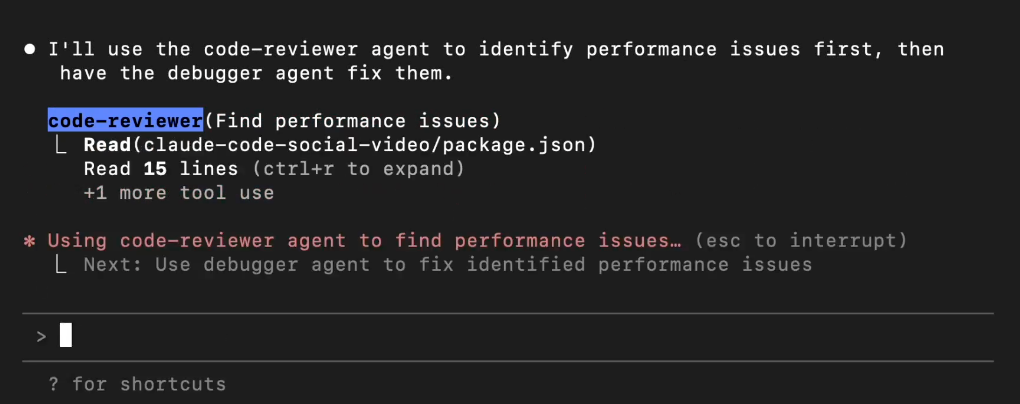
Anthropic introduced Subagents in Claude Code, breaking down large coding assistants into collaborative "expert teams." Each subagent has independent system prompts, context, and tool permissions, allowing them to collaborate serially or in parallel on specific tasks (such as debugging, testing, code refinement, and documentation generation), breaking down complex problems into stable engineering pipelines. Official materials and practical examples demonstrate that Subagents can be created and invoked through the command palette or configuration files, and intermediate products can be passed between subagents to improve hit rate and reproducibility.
The documentation explains that subagents have independent contexts and security boundaries, limiting tool availability and preserving operational traces. Community practices have demonstrated a multi-role pipeline spanning "product-design-engineering-review," as well as automated workflows for testing and regression. For teams and enterprises, Subagents help solidify standards and best practices into "executable roles," reducing the failure rate of context switching and long-term tasks.
Frequently Asked Questions
Q: What are Subagents?
A: Claude Code has configurable "sub-agents" that specialize in a specific task and have independent context, system prompts, and tool permissions.
Q: How does it work?
A: Run in a preset order or in parallel: for example, the debugging agent locates the problem first, the testing agent performs regression verification, and finally the refining agent organizes the patch and instructions.
Q: Can it be customized?
A: Yes. You can create new characters, bind approved tools (including MCP), and set up unique prompts and input/output specifications.
Q:What are the applicable scenarios?
A: An end-to-end pipeline from large-scale refactoring, regression testing, code review, requirements clarification to document generation.
Q: Enterprise availability and limitations?
A: It has been incorporated into the Claude Code ecosystem. Enterprise solutions and seat management are implemented according to official guidelines. High-intensity use may be subject to rate or quota restrictions.