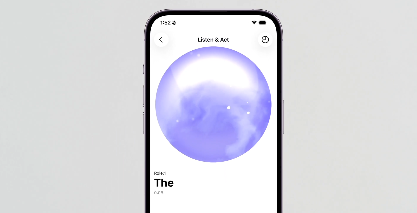
Flowith announced iOS 2.0, featuring a "proactive voice agent" that emphasizes an interaction path that listens for context before executing actions, aiming to reduce user click and switching costs. Official materials claim it adopts the Liquid Glass visual language from iOS 26 and unifies subscriptions to "a single subscription unlocking multiple models including conversation, image, and video," positioning it as a mobile AI creation and knowledge workspace.
Social media and the download page indicate that Flowith 2.0 is now available for iPhone and iPad, supporting voice input, file/image uploads, and multi-agent workflows, organizing context around features like a "Knowledge Garden." Terms like "the world's first proactive voice agent" and "not an app, but an atmosphere" are product promotional references. Liquid Glass is a system-level design style for iOS 26, and its experience and usability are subject to device and system settings.
Frequently Asked Questions
Q: What is the core selling point of Flowith iOS 2.0?
A: Proactive voice agent: listens to the context first and then automatically executes; cooperates with iOS 26's Liquid Glass interface and multi-model unified subscription.
Q: Is this really the “world’s first” active voice agent?
A: This statement is just marketing talk. There are also attempts at voice + agent in the industry, which require strict definition and comparison.
Q: What devices and systems are supported?
A: For iPhone/iPad. Specific models and functions depend on the iOS version and permission settings.
Q: What is the relationship between Liquid Glass and Flowith?
A: Liquid Glass is the new system design style of iOS 26; Flowith 2.0 claims to build its interface and interaction based on this style.
Q: How to obtain and experience it?
A: Install through the App Store or access the mobile portal from the official website; the functions and subscription policies are subject to the application page.