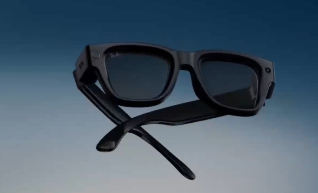
Meta has released the new Ray-Ban Display AI smart glasses, which hide content when not needed and display AI-powered information, maps, photos, and messages when needed. The glasses are paired with the EMG Neural Band, allowing for precise control with subtle gestures, supporting video calls, real-time subtitles and translation, music control, and walking directions. The glasses weigh approximately 69 grams and last approximately 6 hours of mixed use, or approximately 30 hours with the foldable charging case. They start at $799 and will be available in the US on September 30th. Ray-Ban Display's full-color, high-resolution display is visible when needed and hidden when not. AI content, notifications, and maps can be privately displayed within the glasses. The EMG Neural Band uses electromyography to detect subtle movements, enabling natural and precise gesture interaction. Features like air writing will continue to improve.
2. AI Function Matrix: Communication, Understanding and Action
AI smart glasses support video calls and caller ID, real-time subtitles and multilingual translation, music and message control, walking navigation and album preview; they work in conjunction with the mobile phone and application ecosystem to form a closed loop of "seeing-understanding-acting".
(1) Body and battery life
Approximately 69 grams, IP grade protection, mixed use of about 6 hours; the charging box can reach a total of about 30 hours.
(2) Price and Release
Starting at $799, first released in the United States (September 30); subsequent regions will be gradually opened.
(3) Privacy and Availability
Local visual prompts and physical indicators, private display by default; the screen can be completely dark when not in use.
II. Getting Started Suggestions and Implementation Scenarios
1. Three Steps to Getting Started: From “Seeing” to “Using Well”
Set the brand/theme → Bind Neural Band and quick gestures → Enable high-frequency AI functions such as subtitles, translation, and navigation to form a daily closed loop.
2. Typical Applications: Content and Efficiency Dual Drive
Live media shooting and real-time feedback, business remote presentations and walking navigation, tourism and local translation, barrier-free assistance and subtitle recording. AI smart glasses are more efficient in the context of “what you see is what you get”.
(1) Efficiency Template
One-click subtitles for calls/conferences, key point review, and quick photo album overview.
(2) Content Template
Shoot and annotate while walking, and automatically align to the timeline during playback.
(3)Safety Template
Automatically reduce brightness and notifications when switching scenes to ensure walking safety.
a. Power Strategy
Prioritize low power mode and on-demand lighting, and charge it in the box when going out.
b. Privacy Policy
Turn off the camera/microphone prompts and synchronize with the cloud in sensitive scenes.
c. Gesture Strategy
Map common operations to "low-error" gestures such as single finger/pinch.
Frequently Asked Questions (Q&A)
Q: How is Ray-Ban Display's AI display different from traditional HUD? A: It's designed for everyday information flow rather than heavy AR overlays, emphasizing private readability and lightweight interaction that can be accessed and hidden at will, making it more suitable for high-frequency AI scenarios such as messaging, navigation, and subtitles. Q: How accurate is the EMG Neural Band? Can it "write in the air"? A: The neural wristband uses EMG to recognize subtle gestures and already supports precise control. Capabilities like air writing and gesture text will continue to be upgraded, making it suitable for quieter environments or when voice communication is inconvenient. Q: How is battery life balanced against weight? A: The device weighs approximately 69 grams on its own, with a combined usage time of approximately 6 hours, and a total of approximately 30 hours with the foldable charging case. Low power consumption and on-demand lighting reduce fatigue and battery anxiety. Q: Pricing and availability? A: Starting at $799, it will be available in the US on September 30th. It will be rolled out in phases in subsequent regions, supporting prescription lenses and offering multiple sizes and colors.