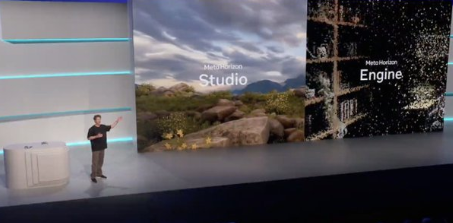
Meta announced the Meta Horizon Engine, bringing faster loading times and greater concurrency to the Metaverse and VR scenes, and announced future expansion of the engine's capabilities to smartglasses. The new version also features a richer selection of VR homes and landscapes, combining Hyperscape/Hyperspace-level real-world capture with Horizon TV to form an integrated "generation-hosting-distribution" content foundation. I. Core Upgrades and Practical Significance 1. Speed and Scale: 4x Loading, 5x Concurrency The Meta Horizon Engine reduces VR world loading times by a quarter and increases the number of concurrent users to five times. For developers and brand campaigns, AI-generated worlds and large-scale social interactions benefit both, significantly reducing disconnections and lag.
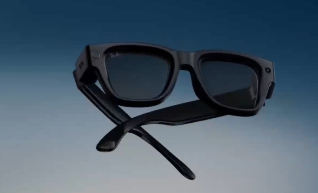
2. Platform Extension: From VR to "Glasses"
Officials mentioned that the engine will be expanded to the smart glasses ecosystem in the future, which means that in the future, glasses will also be able to enjoy faster world switching and more stable multiplayer scenes, paving the way for a portable metaverse and real-time AI experience.
(1) Content Form: New Landscape and Home
With richer landscape and homepage spaces, users can enter the "World Hub" as soon as they turn on the device and directly access popular worlds and applications.
(2) Creation Tools: AI World Generation
With Horizon Studio and AI generation functions, the one-click generation from prompt words to three-dimensional scenes is more mature.
(3) Media Distribution: Horizon TV
Mainstream film and television content is aggregated to the VR end, and entertainment and social interaction are connected on the same engine.
II. How Developers Can Quickly Implement
1. Early Access: Real Scene Capture and World Building
Use Hyperscape/Hyperspace-level capture to complete room and scene scanning on Quest devices, combined with Horizon Engine's unified materials and physical parameters to quickly generate an accessible "realistic world".
2. Performance and Concurrency: Three Engineering Focuses
(1) Asset Optimization: Texture grading, mesh simplification, and on-demand streaming loading
(2) Concurrency Management: Regional sharding and dynamic instances, combined with a 5× user limit
(3) Link Monitoring: Visualization of loading time, packet loss rate, and frame drop curves
a. Commercialization and Activities
Large-scale premieres, performances, and educational live broadcasts benefit from the 4×/5× improvement, shortening the conversion path.
b. Security and Compliance
Global whitelisting and real-name management run in parallel, consolidating logs and traceability capabilities.
c. Integration with AI
Access multimodal recognition, intelligent NPCs, and search and question answering to complete the closed loop from creation to operation.
Frequently Asked Questions (Q&A)
Q: How does Meta Horizon Engine's 4x loading and 5x concurrency feel to the average player?
A: Entering and switching worlds is faster, queuing and disconnecting are significantly reduced, and the density of activities and social interactions within a world is higher, making the VR experience closer to "instant online."
Q: Will Meta Horizon Engine be available on smartglasses?
A: Officials have indicated "future expansion to smartglasses," meaning they will also enjoy faster loading times and real-time multiplayer interaction, paving the way for mobile AI and the Metaverse.
Q: What can be achieved with "early access" for reality capture?
A: Quest's reality capture transforms real spaces into accessible virtual worlds, facilitating rapid rollout for scenarios like exhibitions, education, retail, and remote collaboration.
Q: How does AI content generation work with the engine? A: Use tools like Horizon Studio to convert prompts into scene prototypes. The engine will then take care of performance, concurrency, and distribution, and developers only need to complete the interaction and gameplay design.