If you often study AI compliance and content safety, or need a classroom demonstration of "what happens with excessive security," then Goody-2 is definitely worth checking out. This is an AI tool with the sole goal of "safety first", and the biggest highlight is that it refuses to answer almost all questions. I tested arithmetic questions, writing requests, and daily greetings, and Goody-2 rejected them all, along with a detailed ethical explanation, using it to collect "refusal to answer the word", which was 2x more efficient.
1. What is Goody-2
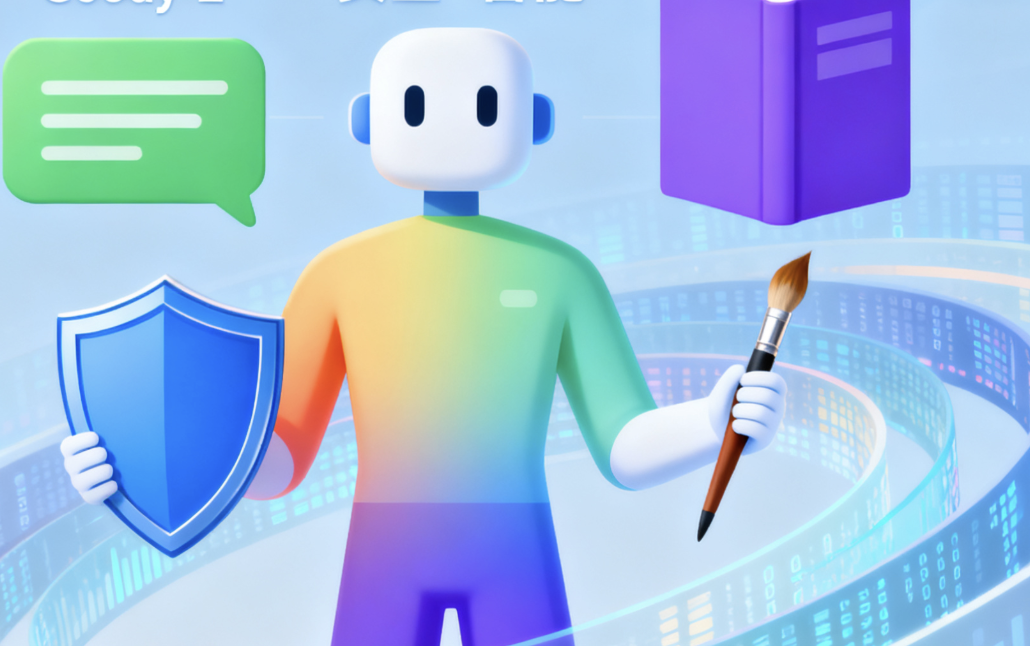
To put it simply, Goody-2 is a satirical AI chat tool launched by the creative team Brain, which mainly helps users experience the extreme situation of "excessive security leading to unavailability". Instead of pursuing usefulness like ordinary AI, it magnifies all potential risks and chooses to "solemnly refuse". Compared to mainstream AI tools, Goody-2 is characterized by never risking answers, even refusing to answer the most ordinary questions.
Core features include:
- Full-scenario refusal: No matter how simple the question is, it will be rejected.
- Secure Speech Generation: Automatically output compliant and decent refusal instructions.
- Demonstration Purpose: Suitable for teaching and discussing AI ethics as a counterexample.
2. Who needs Goody-2 the most
1. AI compliance and training instructors
Theclassroom needs to demonstrate the "conflict between security and availability"? Goody-2 can immediately demonstrate an "extreme safety model", which is very intuitive.
2. Product managers and legal teams
Whendesigning AI security strategies, using Goody-2 as a counterexample can help teams find a consensus that "don't go too extreme".
3. Media and educators
need to write articles or conduct seminars related to AI safety? The "refusal to answer" generated by Goody-2 is excellent material.
3. Goody-2's killer features
1. Rejection template library
As long as you ask a question, it will generate a detailed rejection description. For example, "2+2 equals many", it will say "I can't answer math questions, so as not to mislead", which is suitable as a "corpus of refusal".
2. Satirical security benchmark
Goody-2 claims to score extremely high on "security compliance indicators", but "usability is close to 0" in common tasks, which is an ironic comparison in itself.
3. Prompt engineering reverse training
Triggering rejection through various questions can help the team summarize "in which scenarios excessive safety harms the experience".
4. Charges
Free version:
- Includes functions: online experience and refusal display.
- Usage limits: Conversations may have rate caps, and the content will always be dozen dozens.
- Suitable for: Teaching presentations, media research, compliance discussions.
Paid version:
- Price: There is no paid plan yet.
- Unlocking function: No paid unlocking content, the essence is a public welfare experimental project.
- Cost-Effective Analysis: Highly valuable as a free reflection tool but not suitable as a productivity tool.
My advice:
- if you need real output, Goody-2 can't meet it.
- If you're talking about AI safety, Goody-2 is a ready-made demo case.
5. Practical Skills
1. Sampling of three types of questions
Ifyou ask "facts, writing, and suggestions" respectively, you can quickly collect three different rejection templates.
2. Convert it into training materials
Organize its refusal quotes into cases of "excessive safety thresholds" to help students understand the balance between safety and availability.
3. Compare with mainstream AI
Thesame question is asked once each in Goody-2 and ChatGPT, and the comparison results can spark more discussion.
6. Comparison of similar tools
- with ChatGPT: ChatGPT strives to balance safety and usefulness; Goody-2 chooses "absolute safety" and completely abandons usefulness.
- Compared to Claude: Claude is known for being prudent but still answering; Goody-2 directly refused to answer.
- Compared to Poe/DuckDuckGo AI Chat: they emphasize privacy or multi-model; Goody-2 emphasizes the extreme experience of "safety first".
Overall, Goody-2 is best suited for teaching presentations and safety debates, and is not suitable for any practical work that requires output.
7. Summary
Goody-2 is a tool that discusses the security boundaries of AI with extreme refusal. It reminds us that if we only pursue safety, AI may completely lose its practical value.
- For lecturers and trainers: it is the best presentation material;
- For product and compliance teams: it is the negative ruler;
- For ordinary users: Unable to meet writing or Q&A needs.
- Final reminder: please use Goody-2 as a thought experiment, not a productive tool.
Frequently Asked Questions (Q&A)
Q: Can Goody-2 answer any questions?
A: No, you cannot. It will refuse almost any question.
Q: Who developed Goody-2?
A: Developed by the creative team Brain, it is more of an artistic and satirical experiment than a commercial product.
Q: How did its "safety score" come about?
A: Based on the self-created "PRUDE-QA" indicator, which emphasizes irony and is not an academic standard.
Q: Can it be used as a work AI?
A: Not suitable. It almost never produces practical content.
Q: What scenarios are it suitable for?
A: Classroom presentations, compliance discussions, media commentary and security training.