On July 30, 2026, Google DeepMind released Gemini Robotics ER 2, positioning it as the high-level "brain" of robots: the model is responsible for understanding continuous video, planning multi-step tasks, and invoking tools, while specific actions remain handled by the underlying visual-language-action model or robot control interface. Its significance lies in the fact that robotic systems begin to integrate viewing, thinking, doing, and rechecking into the same real-time chain.
This improvement focuses on three areas
- Continue judging during execution. ER 2 continuously watches video streams, judging progress during action rather than stopping to reanalyze every step. Google integrated it into the Gemini Live API, which supports low-latency bidirectional flow, hoping to reduce the fragmented feeling of bots "pausing to think."
- Errors are found and adjustments are made. The model identifies anomalies such as spills, slipping, and position deviations, and decides to retry, correct, or move to the next step. The official progress classification accuracy is 57.4%, indicating clear progress in capability, but there is still room to fully let go.
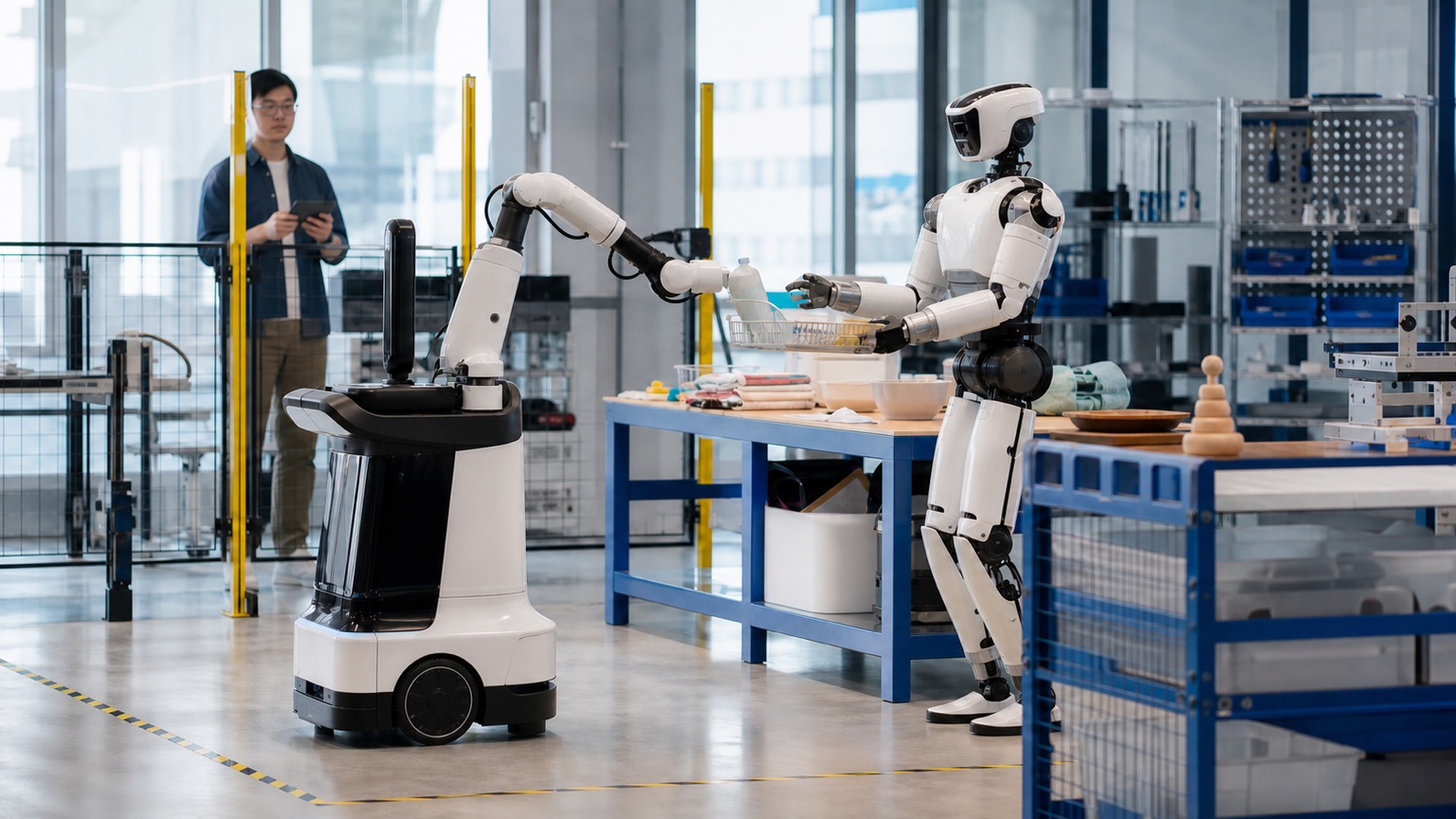
- Let different robots take turns relaying. Multi-robot collaboration allows wheeled platforms, robotic arms, or humanoid robots to share task semantics and then complete handovers based on their strengths. Rather than requiring a single robot to handle everything, this arrangement approach is closer to the real combination of warehouse, laboratory, and factory equipment.
"When to finish" has become a key indicator
The difficulty for robots is often not understanding a command, but knowing whether the action is actually completed. ER 2's moment-finding evaluation is used to pinpoint the exact moment of a critical event, such as when the liquid has been poured into the right spot. Google reported results of 91.3% accuracy, an average absolute time error of 0.96 seconds, and claimed execution speeds were four times faster than the comparison plan.
These numbers cannot directly equate to the success rates of real factories. Lighting changes, occlusion, mechanical wear, and control delays all affect results, and high-level models still rely on underlying action models and hardware interfaces. The deployment team needs to define verifiable completion conditions, failure rollbacks, and manual takeover mechanisms for each action.
How should safety capability be understood?
Google stated that ER 2 can stop humanoid robots when people approach, and continue working once the area is secure, while also introducing benchmarks for assessing safety constraints, environmental monitoring, and physical feasibility. This approach is more important than simply improving task scores, but benchmarking performance cannot replace on-site safety certification, isolation facilities, and emergency stop devices.
Currently, developers can use ER 2 via Gemini API and Google AI Studio, while Gemini Enterprise Agent Platform is in private preview. For robotics teams, the most realistic first step is not to let the model directly take over the production line, but to start testing with low-risk, verifiable results that can be manually terminated at any time.