Haystack is an open-source AI application framework maintained by DeepSet, commonly used to build RAG, document Q&A, retrieval pipelines, and LLM workflows. It's more suitable for engineering teams to build composable systems, not tools for zero-code users to quickly drag pages together.
Official open source address
GitHub:https://github.com/deepset-ai/haystack
Its core idea
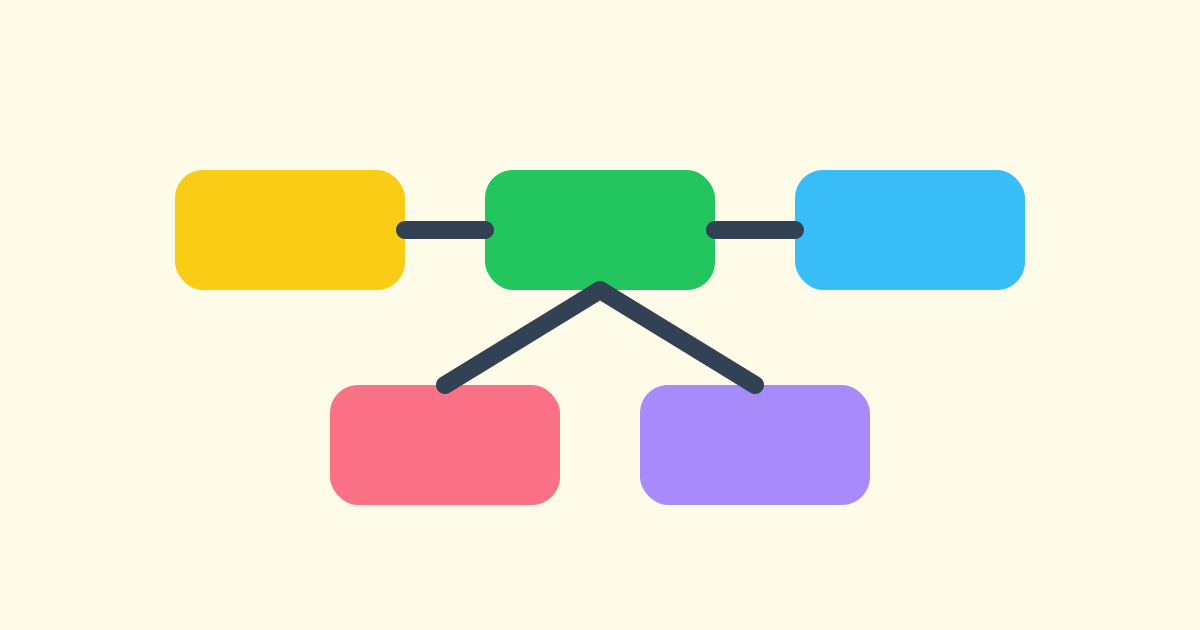
Haystack breaks down processes like document loading, slicing, embedding, searching, reordering, prompts, and model calls into components, which are then combined through pipelines. The advantages are controllability, replaceability, and ease of testing; The cost is that you need to understand why each component exists.
Suitable scenarios
- Internal enterprise knowledge bases require custom search and citation logic.
- Research teams need to quickly replace vector libraries, models, and evaluation methods.
- The development team wants to embed RAG capabilities into their own backend services.
Use thresholds and pit points
Haystack does not automatically decide the best architecture for you. You have to handle data cleaning, permissions, evaluation, deployment, and monitoring yourself. For teams that just want to quickly launch a chat knowledge base, projects with stronger product quality like Dify, RAGFlow, and AnythingLLM may be faster.
If you already have Python engineering skills and want your RAG system to be maintainable long-term, Haystack is worth investing in; If you don't have engineers, don't start with the frame layer yet.