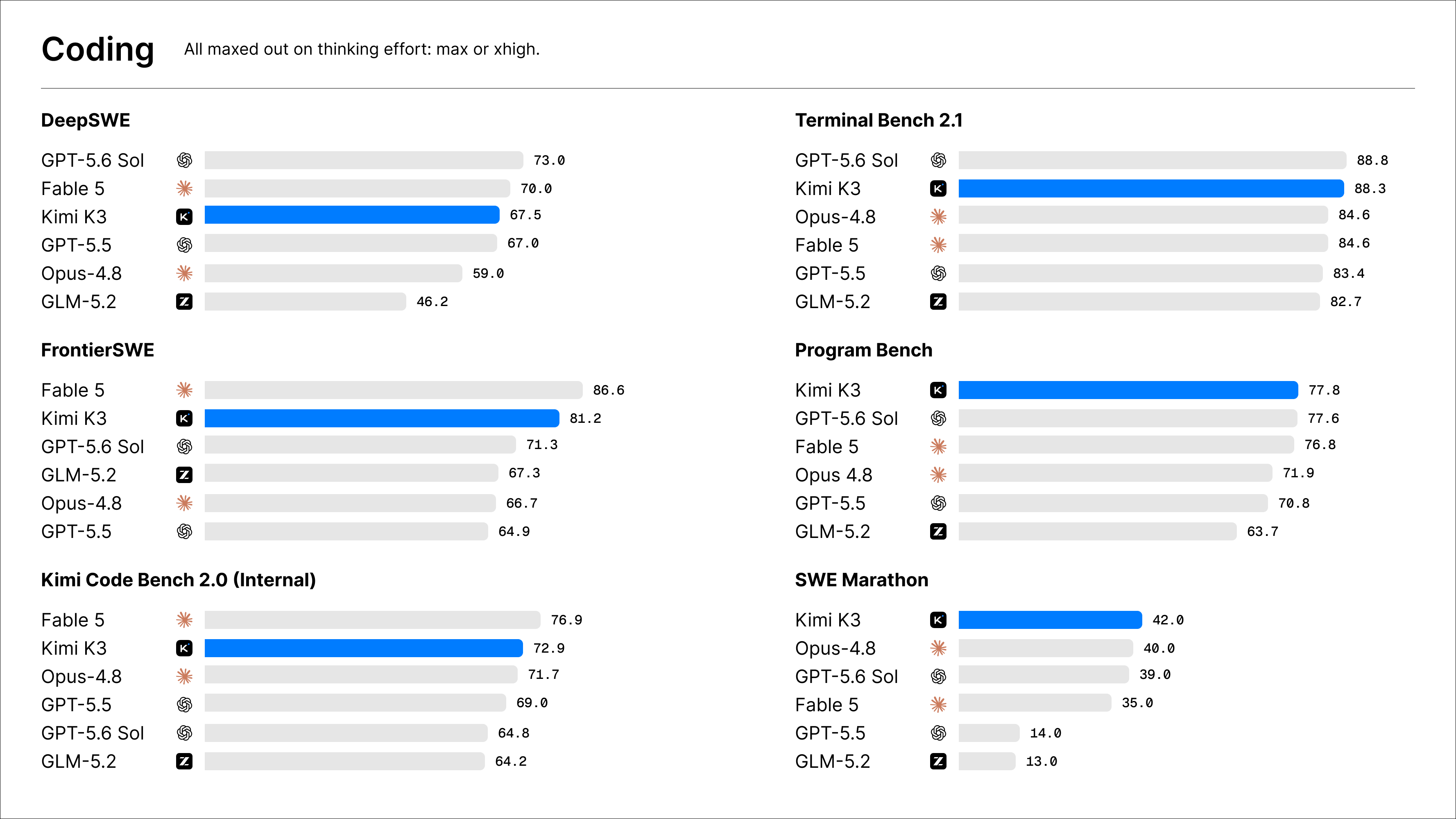
On April 23, 2026, OpenAI officially released GPT-5.5. Unlike GPT-5.5, which was only in the rumor stage before, this time the official positioning is clear: it is not simply a model that is better at chatting, but a next-generation model for complex real-world work, focusing on programming, networked research, data analysis, document and table generation, software operation, and continuous task completion across tools.
This is noteworthy because OpenAI is advancing the "AI agent" from the demo concept to the main product layer. The keywords of GPT-5.5 are not single question answers, but faster understanding of task intent, less reliance on user steps, more use of tools, and the ability to continue planning, checking, and advancing when tasks are not completely clear.
Release focus: ChatGPT and Codex will be released first, and API will come later
According to OpenAI's official release page, GPT-5.5 is being rolled out to Plus, Pro, Business, and Enterprise users of ChatGPT and Codex; GPT-5.5 Pro is being launched for Pro, Business, and Enterprise users of ChatGPT. GPT-5.5 in Codex supports a 400K context window and offers Fast mode, which is faster to generate but also more costly.
The API that developers are most concerned about is not "fully available", but the official statement is that the Responses API and Chat Completions API will be launched soon. In terms of price, GPT-5.5 has a standard price of $5 per million input tokens and $30 per million output tokens, and provides a 1M context window; GPT-5.5-pro's API price is higher, at $30 per million input tokens and $180 per million output tokens.
Why it's more like a proxy model
OpenAI emphasizes that GPT-5.5 has significant improvements in agentic coding, computer use, knowledge work, and early scientific research scenarios. In the official evaluation, GPT-5.5 has improved compared to GPT-5.4 in items such as Terminal-Bench 2.0, GDPval, OSWorld-Verified, BrowseComp, and long context graph traversal. Together, these indicators point to a change: the model not only answers more accurately, but also can do things continuously in the tool environment.
For ordinary users, this means that complex tasks can be broken down in a few steps. For example, letting it organize data, generate tables, make code changes, check results, and continue to correct will be closer than in the past to "explain one thing and wait for it to be completed". For enterprises and developers, the real value lies in reducing the artificial glue layer: the process that required people to constantly copy, paste, confirm, and review logs in the past is more likely to be actively strung together by models in the future.
Don't ignore costs and boundaries
GPT-5.5 is more expensive than GPT-5.4, but OpenAI claims that it is more token-efficient in Codex tasks, so the actual cost cannot be based solely on the unit price. A more realistic way to judge is that simple Q&A, short article rewriting, and lightweight classification do not necessarily need to be cut to GPT-5.5 immediately; long code bases, multi-file modifications, research-based data organization, and complex office flows can better reflect its value.
At the same time, OpenAI also released the GPT-5.5 System Card, stating that it has undergone security assessments, red teaming, and pays special attention to advanced cybersecurity and biological capability risks. In other words, the real signal of GPT-5.5 is not as simple as "the model is getting smarter again", but that OpenAI is packaging high-capability models, security evaluations, tool operations, and subscription products into a more complete working system.
Information source: OpenAI GPT-5.5 release page, OpenAI GPT-5.5 System Card.