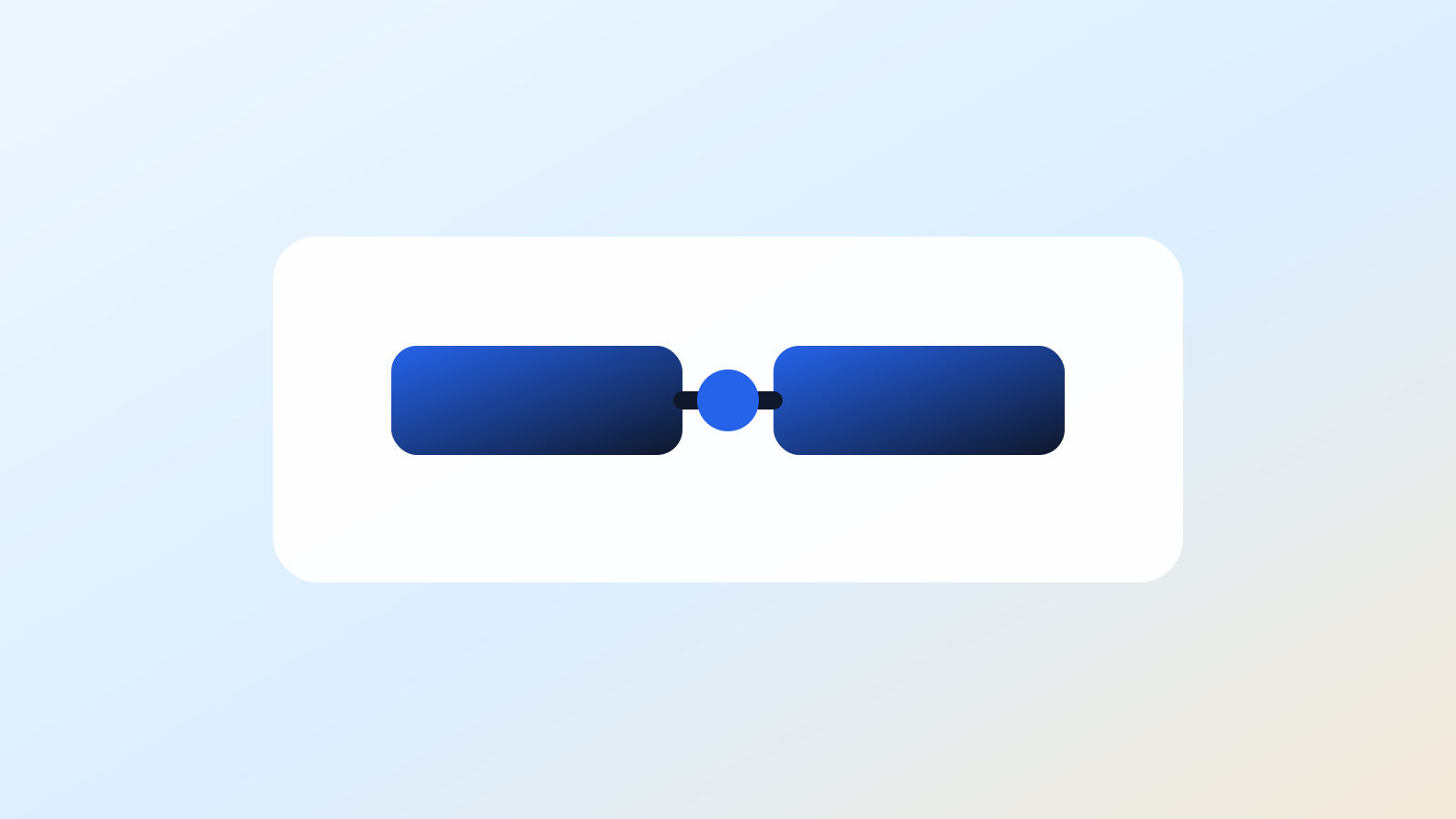
Model Context Protocol (MCP) can be understood as a common wiring specification between AI applications and external tools. Its goal is not to replace APIs, but to allow for fewer layers of customization between models, clients, and tool services. Therefore, in 2026, it will suddenly become a hot word, not because the concept is new, but because agent products begin to require "stable access to tools, data, and permissions" on a large scale.
When many people hear MCP for the first time, they will understand it as "installing plugins for large models". This statement is not entirely wrong, but it is still too narrow. Plugins are more like result forms, MCP is about connection methods and interaction conventions. As long as both the client and the server adhere to the same set of protocols, the model can discover tools, read resources, send parameters, and retrieve results in a more unified way.
At its core, MCP is important because it standardizes on what used to be fragmented integrations. In the past, an agent had to connect to GitHub, databases, document libraries, and browser automation services, and each agent often had to write a single adaptation layer, and the parameter format, authentication method, and error handling were also different. Now everyone hopes to extract this matter into the public layer, so that "what tools to take" and "how to use tools for models" are as separate as possible.
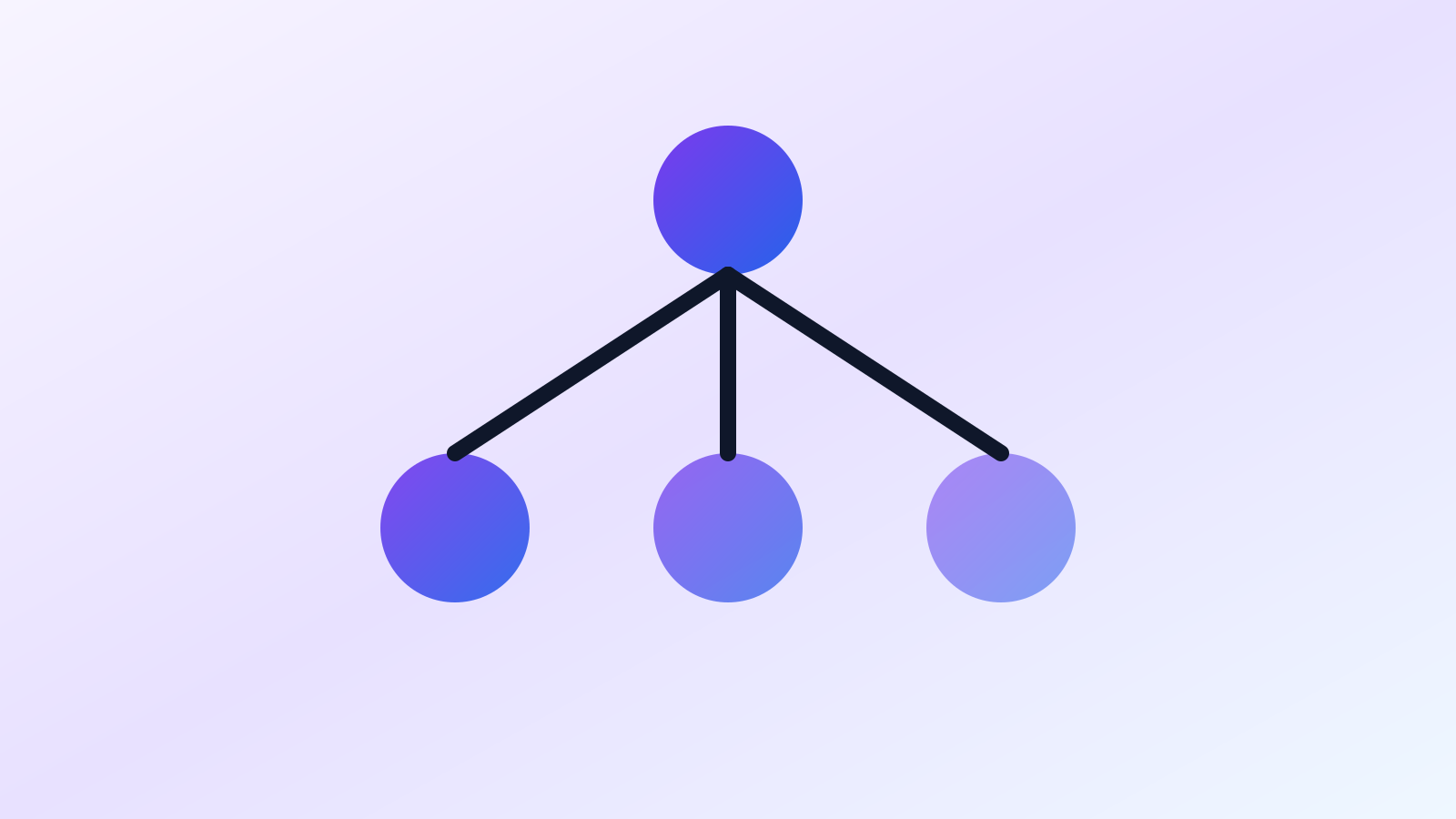
Engineering perspectives, MCP is often broken down into a few keywords: client, server, tool, resource, and tip. The client is usually the side that initiates requests such as Claude Desktop, Claude Code, IDE, and Agent platform; The server exposes a certain data source or operational capability, such as a file system, search, database, or ticket system. The model itself does not directly understand your corporate system, but it can call these MCP servers through the client.
Why are almost all Agent platforms picking it up in 2026? Because agents have moved from "chatting" to "doing things". Once you have to do something, you will encounter real-world system access problems: where to find data, how to authenticate, how to restrict permissions, and how to reuse existing tools. If each platform does its own set, the ecology will be very broken; If everyone builds an ecosystem around an open protocol, the access cost will be significantly reduced. This is why MCP has continued to increase in search volume and discussion over the past year.
MCP is not a one-size-fits-all answer, though. It solves the problem of connection and context provision, and does not automatically solve the more difficult parts such as permission governance, tool security, prompt injection, and audit trace. You expose a dangerous tool through MCP and it is not suddenly safe because you "use standard protocols". Many teams step on the pit, mistaking "being able to connect" for "being able to go online with confidence".
It is also necessary to distinguish the relationship between MCP and API and function calls. API is the interface ontology, function calls are the model's ability to select a tool and pass parameters, and MCP is more like a layer of standardized tools and context channels. It doesn't eliminate APIs, but organizes APIs more standardly for model use.
If you're looking at an agent, AI IDE, enterprise knowledge assistant, or automation platform, it's normal to see MCP frequently lately. It became popular not because it made the model smarter, but because it made it easier to access the real software world. For AI applications in 2026, this is the most valuable layer.