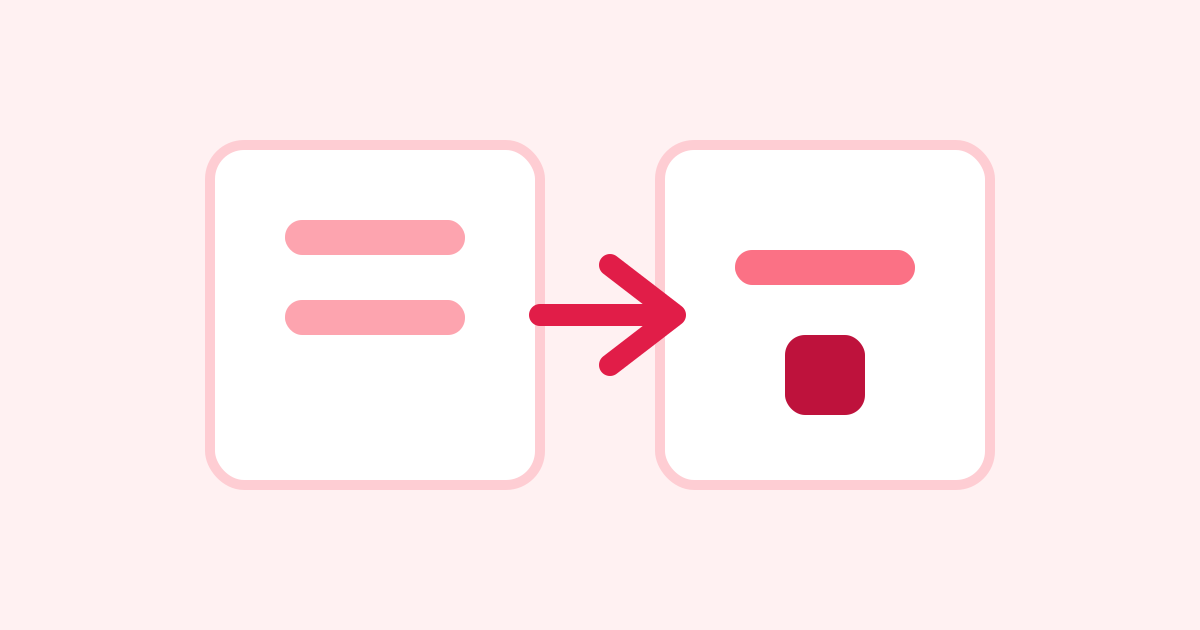
KV Cache is a very important layer of caching mechanism in the inference stage of Transformers. To put it simply, it will save some of the keys and values that the model has already calculated first, and then reuse them directly when it continues to be generated, rather than recalculating it from scratch every time. Because of this, KV Cache is almost always there when it comes to long dialogues, long contexts, and inference speed.
Why it accelerates
If the model recalculates the entire history every time a new token is generated, it will be very costly. The value of KV Cache lies in the fact that the previous historical indication is kept first, and the new token only needs to continue to be calculated on top of this cache. This makes the generation process faster, but at the cost of the cache itself eating the memory.
| With KV Cache | The changes brought about |
|---|---|
| Reduced double counting | Long output and multi-turn dialogue are easier to speed up |
| Increased memory occupancy | The longer the context, the larger the cache |
| Engineering optimization is more important | Inference services balance speed, throughput, and resources |
Why it has been discussed more and more lately
- Both the long context model and the agent task are lengthening the conversation link.
- Inference costs are increasingly becoming a core issue at the product and infrastructure layers.
- As long as you start hosting your own model service, KV Cache is basically unavoidable.
KV Cache is not a fancy new concept, but it will continue to heat up in 2026 as the industry's focus has shifted from "whether the model will answer" to "how the model can be faster, cheaper, and better able to carry long tasks". It explains not capability boundaries, but reasoning efficiency boundaries.