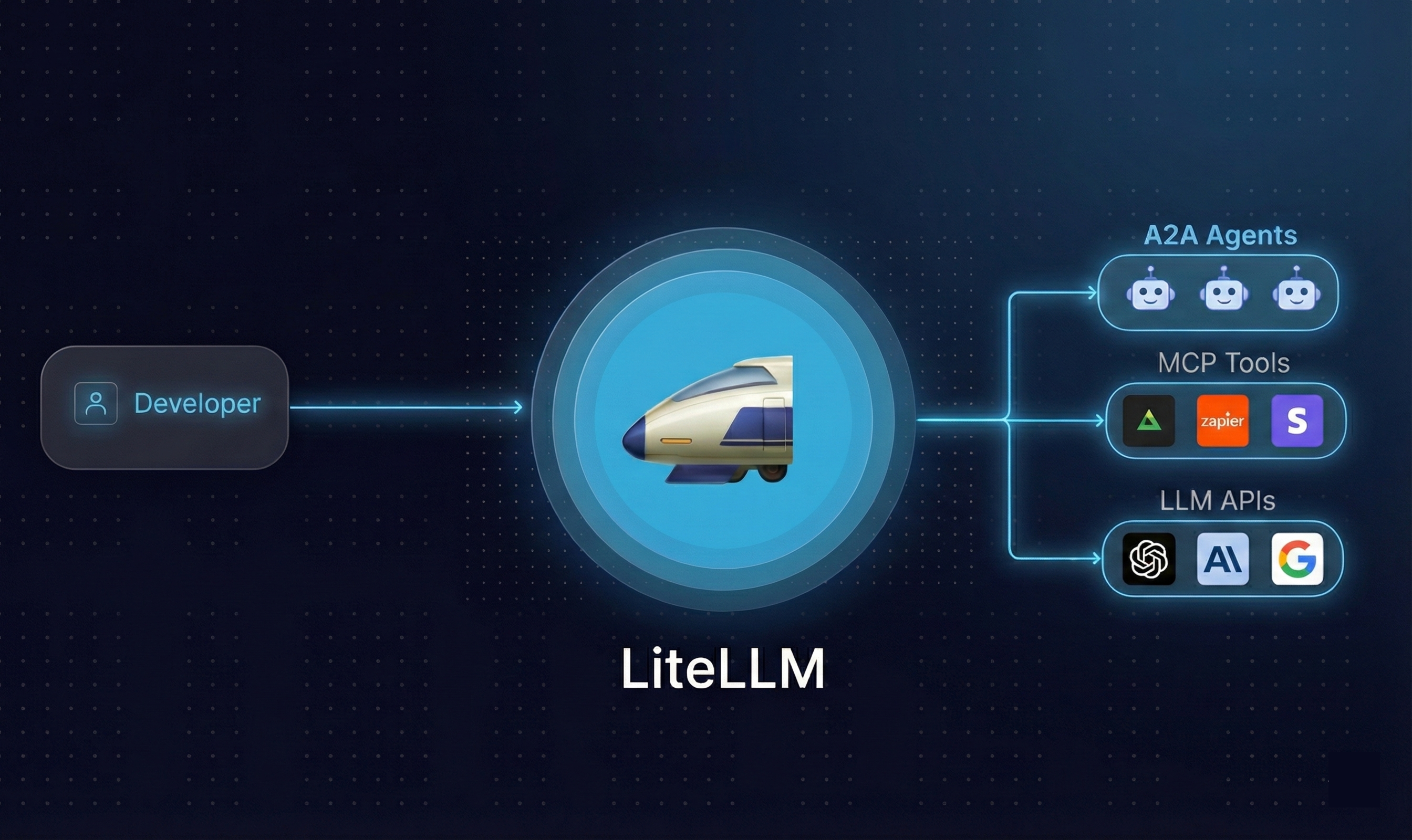
LiteLLM has appeared more and more often in team architecture charts in the past two years, not because it can replace ChatGPT or Dify, but because it is stuck in a very realistic position: helping teams collect a bunch of model services from different vendors, different protocols, and different billing calibers into a unified portal. You can understand it as the "access layer" and "routing layer" of the large model era.
Official repository: https://github.com/BerriAI/litellm
What problem is it best suited for
- The team needs to connect to OpenAI, Anthropic, Gemini, Azure, and open-source inference services at the same time, and don't want to write a set of adaptations for each application.
- You need to do fallbacks, routing, quotas, logs, and cost observations between models.
- You already have your own frontend, agent, or workflow layer, and you are missing a unified model portal.
Why it's not a "everyone should wear" project
LiteLLM is strong, but it's not an end application or an off-the-shelf product interface. It's more like an infrastructure component, with value at the system layer rather than the user interface layer. So if you just play the model locally, it will appear engineering; But once it enters the issues of team collaboration, multi-model switching, budget governance, and service stability, its presence will quickly become stronger.
Is it worth deploying?
If you have already felt that "there are more and more models, the access is getting more and more chaotic", LiteLLM is worth watching; If you haven't even gotten through the first product link yet, it's usually more important to make the application itself first. Its core value is not to make AI smarter, but to make multi-model systems more controllable.