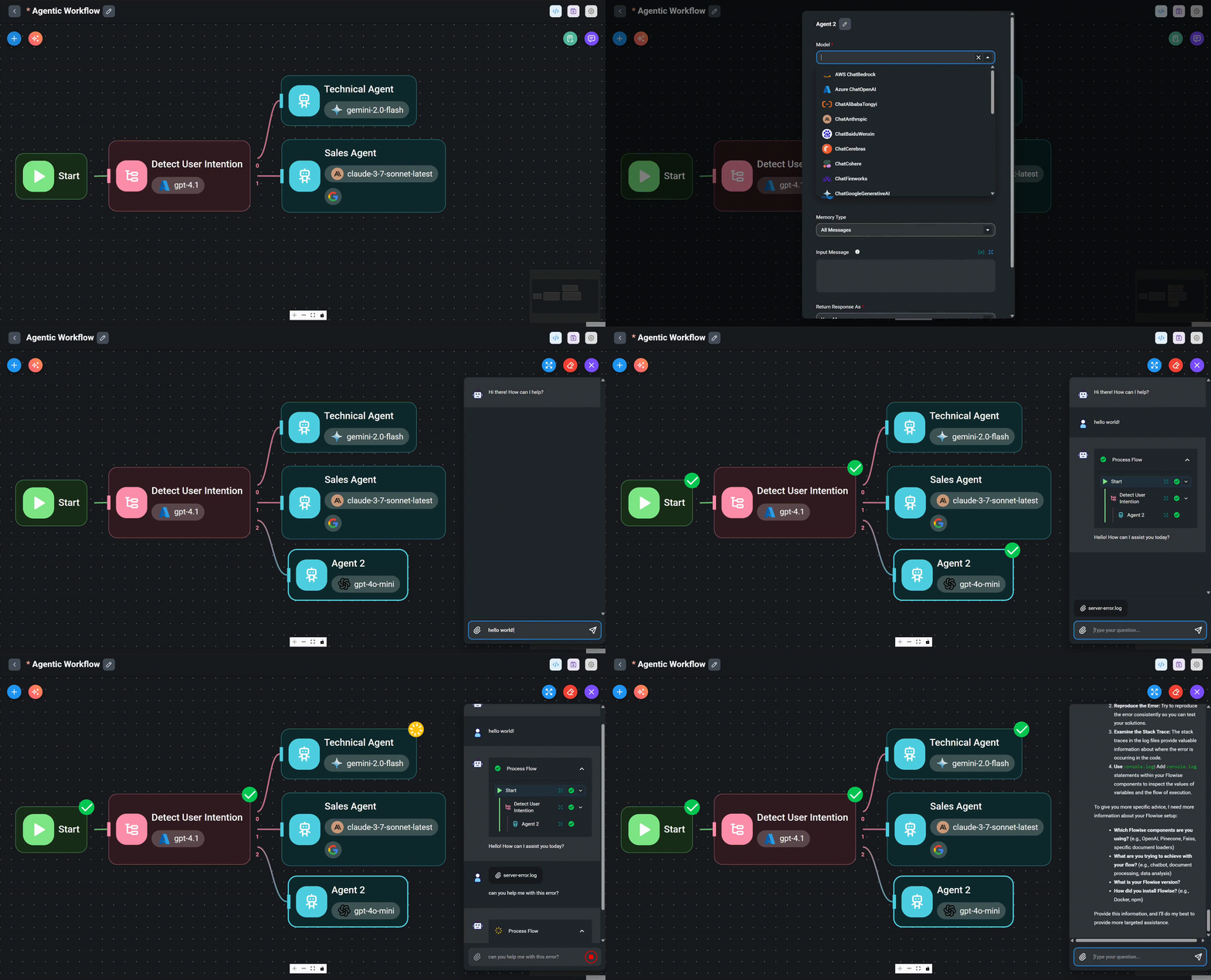
Projects like Dify have been popular not because they are the lightest, but because they combine the most common layers of capabilities in AI application development: model access, prompt orchestration, workflows, knowledge bases, application releases, log observations, and simple operations panels. For teams that want to get their "working AI apps" up and running as quickly as possible, it's more complete than just giving you a chat frontend or an underlying framework.
Official repository: https://github.com/langgenius/dify
Where Dify is really strong
- It's more of an "application platform" rather than a single tool, suitable for chatting, knowledge base Q&A, workflows, and internal assistants at the same time.
- The onboarding path is relatively straight, and products, operations, and development can collaborate faster in the same interface.
- If you want to verify the closed loop of the business first, rather than putting together the model gateway, RAG, frontend, and backend yourself, Dify will be significantly less troublesome.
Its cost is also clear
| Judgment point | Dify's performance |
|---|---|
| Deployment complexity | Medium to above, not one-click minimalism |
| Suitable for the crowd | Teams that want to quickly build apps and on-premises platforms |
| Not for anyone | People who just want the lightest local chat or minimalist prototype |
Dify is not a "fully automatic" one-size-fits-all base. Models, knowledge base chunks, permissions, costs, and online stability still need to be managed. If your goal is only to run a few models on the machine and do occasional Q&A, it will be heavy; But if you need an open source platform that continues to grow workflows, knowledge bases, and business applications, Dify is still worth watching.