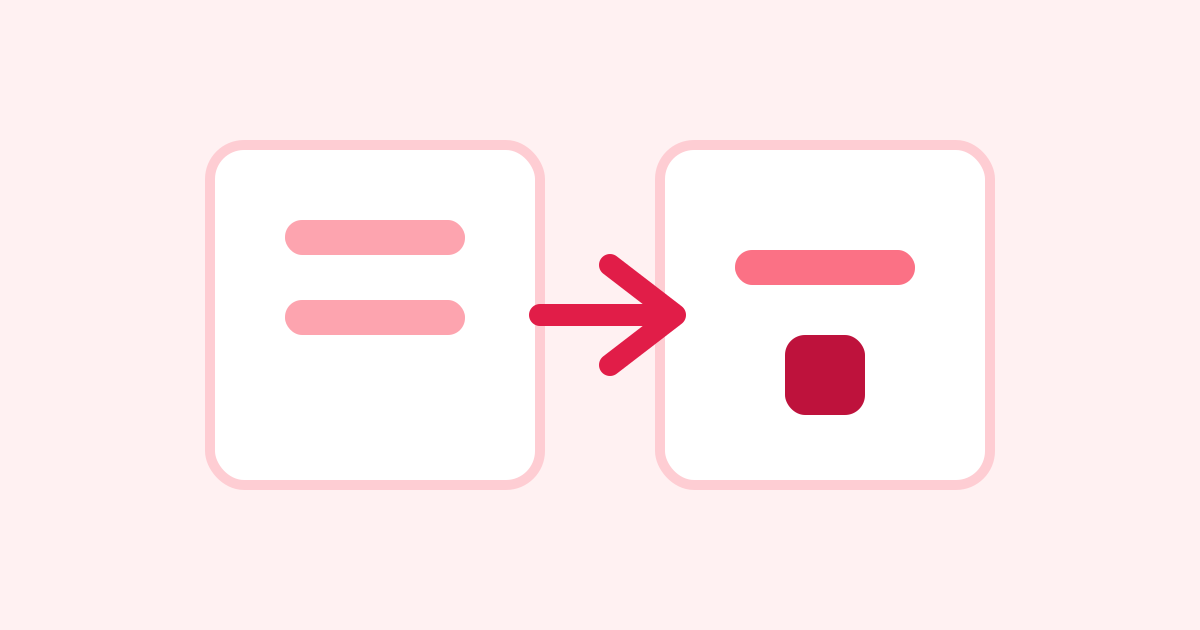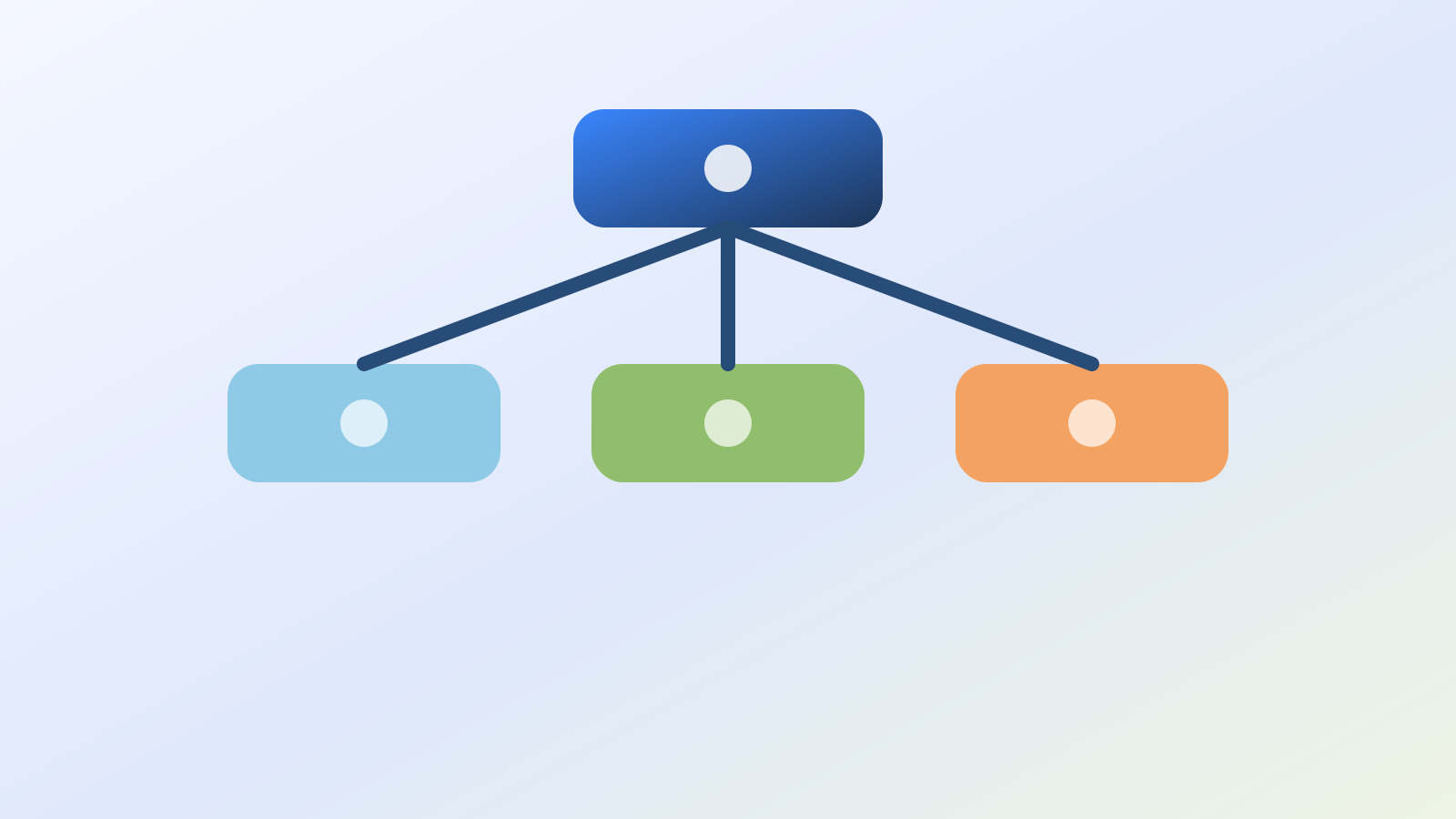
Schema can be understood as a "what data looks like" manual. It is not responsible for the specifics but defines the structure, fields, types, hierarchies, and constraints. As long as you want the model to stop playing freely, but to honestly output it in a certain format, Schema basically comes into play. This is why when talking about JSON, structured output, function calls, and tool calls, I always bring it up.
What exactly is it restricting?
| Constraints | What is the Schema saying? |
|---|---|
| field | What keys must be there, what is the name |
| Type | Is it a string, number, boolean, array, or object |
| Levels | Which fields are wrapped together and who are children of whom |
| rules | Which are required, which are empty, and which can only be taken with specific values |
Why does it appear in both JSON and tool calls?
Because these two types of scenarios don't want to be "decent", but want "the program can be picked up directly". If the model outputs a piece of natural language, people may understand it, but the program may not be able to catch it; With Schema, the model is not just writing answers, but filling in values in a defined container. Tool calls rely on this in particular, as the tool may report an error if the parameter name, parameter type, and required relationship are wrong.
What does it have to do with prompts?
The prompt is telling the model "what are you going to do"; Schemas are more like telling the model "what the data you produce must look like." The two are often used together, but they work differently. Relying only on prompts, the model may know to output contact information, but it may not stably give you fixed keys such as name, phone, email; With the addition of a schema, the output is closer to what the program expects.
Common misconceptions
- Myth 1: With a schema, the results are reliable. In fact, it is better at restraining the format and is not responsible for ensuring that the facts themselves are correct.
- Myth 2: Schemas belong only to developers. In fact, as long as you are doing fixed table extraction, batch classification, and automated workflows, you are already affected by it.
- Myth 3: It's just another way of saying JSON. To be more precise, JSON is the carrier and Schema is the rule.
So, the real value of Schema is not to make the output "look neater", but to make it easier for model results to get into programs, tables, and toolchains. It explains a common phenomenon: why AI also extracts information, some people get a piece of prose, and some people get data that can be directly stored in the database.