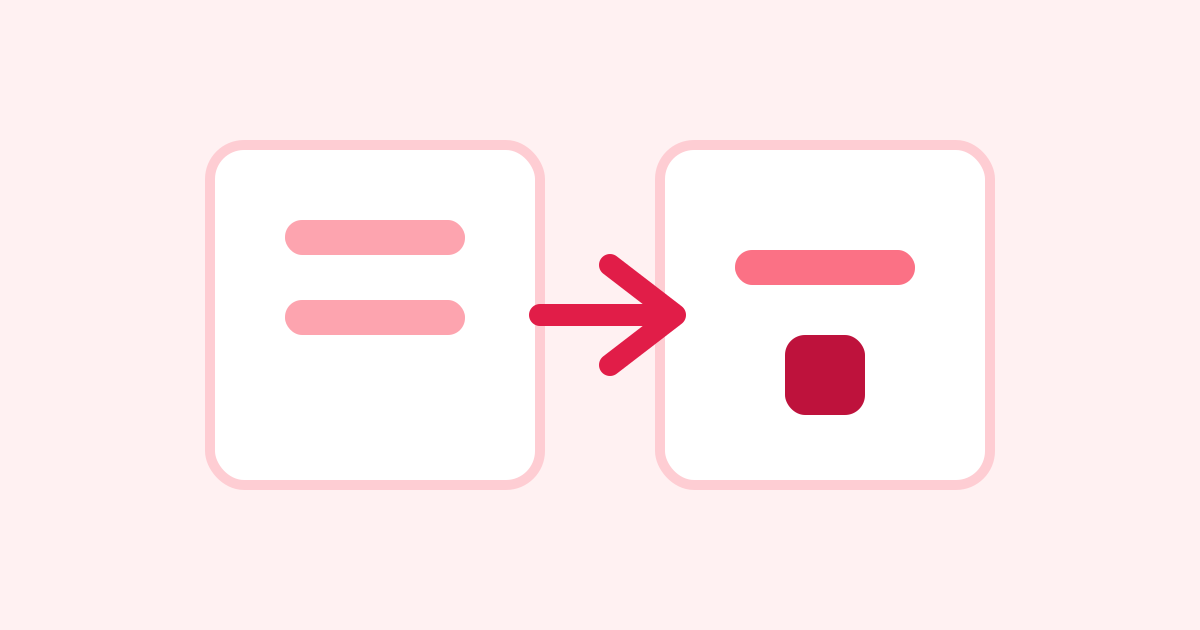
Context engineering is not about writing more flowery prompts, but about systematically determining what the model can see this time, what it sees first, and what it should ignore. If prompt engineering is more like writing a good question, then context engineering is more like building the entire input environment. Many people think that AI tasks are unstable because the model is not strong enough, but in fact, the context feed is often too messy.
What is the difference between it and prompt engineering?
Prompt engineering mainly focuses on how you express your requirements, such as roles, tone, steps, and formats; Context engineering is concerned with a broader scope beyond the prompt itself, including historical conversations, retrieval snippets, tool returns, system rules, user profiles, sample answers, and priority order. That is, the prompt is only part of the context, not the whole thing.
Why it has been particularly important lately
- Long tasks, knowledge base Q&A, Agent, and multi-tool collaboration are becoming more and more common, and model input is no longer just one question.
- The most error-prone thing in real products is often not generation, but context pollution, information conflicts, and prioritization confusion.
- The same model often fluctuates not in ability fluctuations, but in the context quality of each round feed.
A practical framework for understanding
| level | What is the context engineering dealing with |
|---|---|
| selection | What materials should come in and what shouldn't |
| Sort | Whoever is seen by the model first, who is the main rule, and who is just a reference |
| Compression | How to summarize long information to avoid the window being filled with irrelevant content |
| Isolation | How to reduce old conversations, dirty data, and injected content interfering with each other |
So, the core of context engineering is not "writing like a spell", but about having the model work in the right material and boundaries every time. It's particularly useful for explaining a common phenomenon: why you only change a few sentences, but the AI results like a different person. Many times, it is not the model that changes, but the contextual environment.