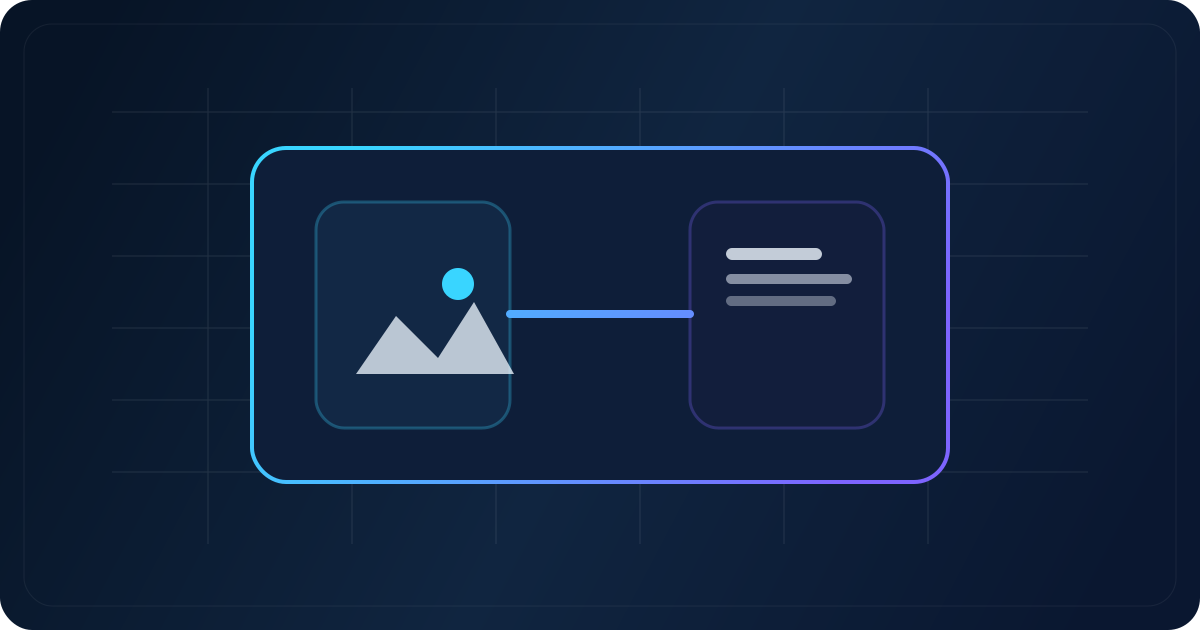
Visual language models, or VLMs, are one of the most talked about models recently. Many people confuse it with the "multimodal model", but in fact, the relationship between the two is very close, but not exactly the same. VLM emphasizes that the model can process both images and text, and put visual and verbal information into the same understanding and generation process. Because of this, it is widely used in scenarios such as image Q&A, document understanding, image description, visual retrieval, and interface understanding.
If ordinary large language models are only good at text, then the core advancement of VLM is to "make the model really read". It can not only read what is in a picture, but also judge the key points based on your text problems, which is why its value in practical applications is getting higher and higher.
What is its relationship with multimodal models?
Multimodal models are larger concepts that may include multiple inputs such as text, images, audio, video, etc.; VLM is more like a branch that focuses on "vision + language". That is, not all multimodal models are equal to VLMs, but many can be classified as multimodal.
Why VLM is getting special attention right now
Because a large number of real scenes are not plain text. Users upload screenshots, scan contracts, analyze product images, read tables, and understand charts, all of which require the model to understand both vision and language, rather than forcibly converting images into text before processing.
What are the common applications?
- Screenshot troubleshooting and interface understanding
- Document pages, forms, and ticket identification
- Image description, visual Q&A, and retrieval
- Visual understanding in bots and agents
Therefore, the importance of visual language models is not that they just "look at pictures", but that they allow AI to process real-world information more naturally. It's also one of the core foundations of many next-generation multimodal AI products.