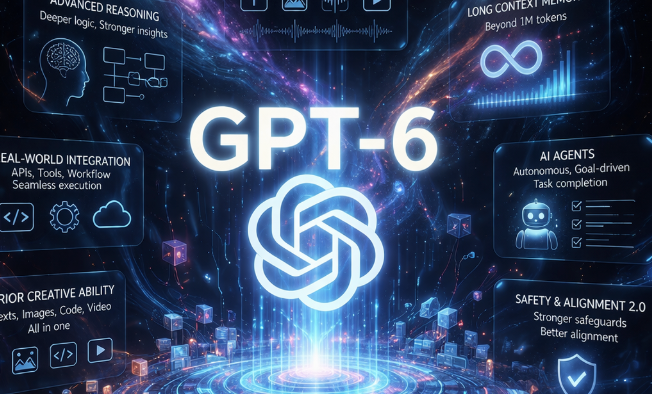
rumors surroundingGPT-6, the market has recently focused on not just model naming, but the computing power supply behindAI agent. It was revealed that it may have 2 million token contexts, native multimodal, and merge ChatGPT, Codex and browser capabilities into a single superapp. The authenticity remains to be confirmed, but this set of clues points to the same problem: cutting-edge models are beginning to be inversely defined by infrastructure.
The real highlights behind the rumors of GPT-6
2M token context, unified agent entry and lower prices may sound like a product upgrade, but in essence it is more like a declaration of service capabilities.Because when the model starts to run for a long time, invoke multiple tools, and perform tasks across models, the focus of competition is no longer just "whether it will", but "whether it can stabilize supply."
Anthropic has first exposed pressure
Anthropic has recently tightened access to third-party tools, which has been interpreted by the market as proxy loads are impacting existing capacity models. Subscription is originally suitable for chat and lightweight calls. When it is put into long-link agent tasks, cost and scheduling will quickly become unbalanced.
This is also why the industry is beginning to show signs of "quota". It's not that the model is suddenly regressing, but that the high-intensity agent workload is forcing the platform to rewrite the distribution rules.
2M context essence is hardware problem
Very long context is not simple multi-heap token. It directly drives up KV cache pressure, memory footprint, memory bandwidth requirements, and system scheduling complexity.
Once native multimodal and persistent execution are superimposed, the bottleneck shifts from training to reasoning. Who can run such tasks stably and who truly has tickets for the next generation AI platform.
The model competition is turning into a supply competition
OpenAI's rumored superapp route and Anthropic's trade-off on agent load actually explain the same thing: models, software and hardware can no longer be viewed separately.
The most critical thing in the next stage is not who calls out GPT-6 first, but who first turns long-context, multi-tool collaboration and continuous execution into scalable services. On the surface, this battle is a comparison of models, but at the bottom, it is a comparison of computing power delivery capabilities.