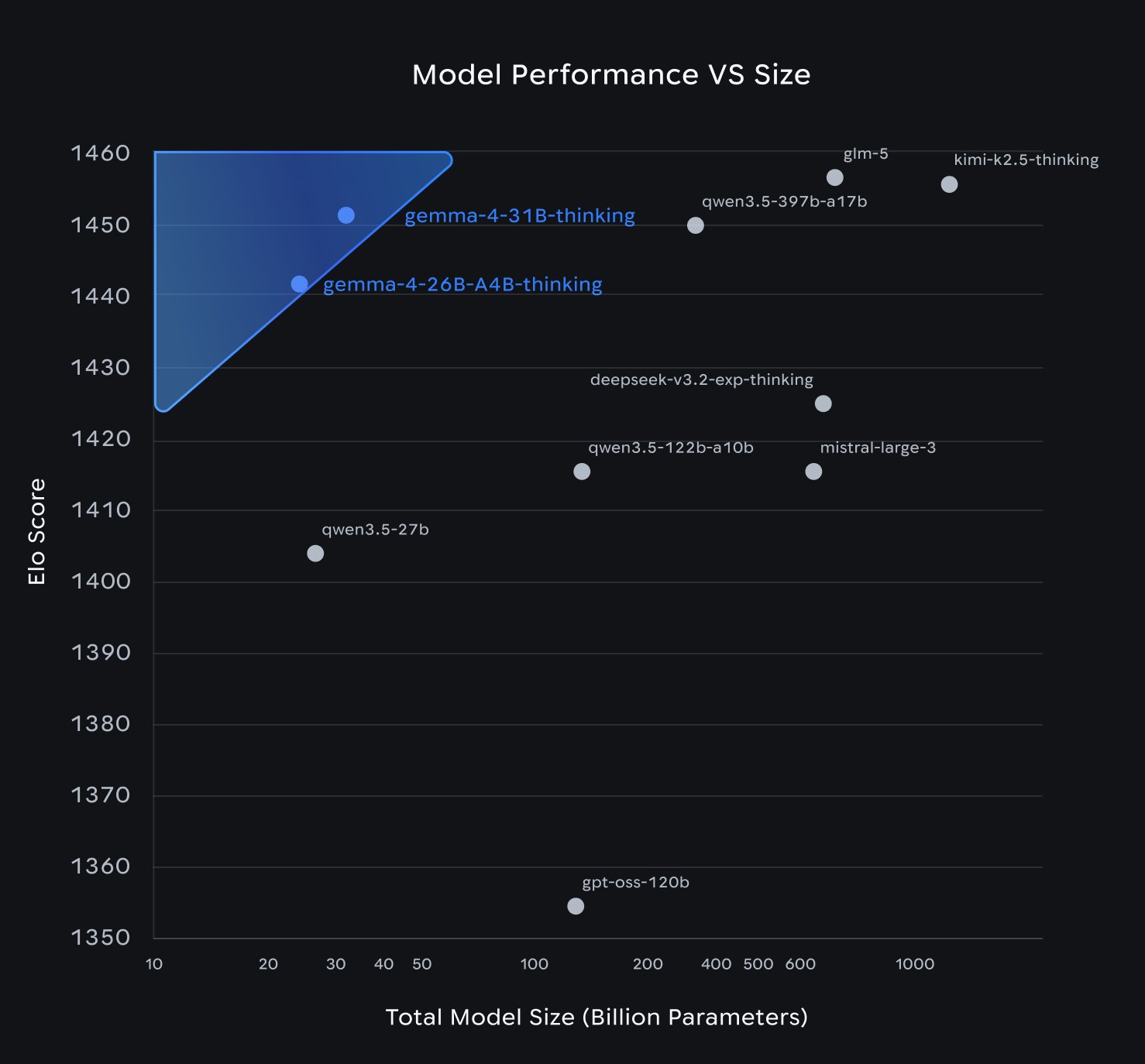
Gemma 4 has been released and is positioned as the strongest generation of open models to date. It continues the Gemini 3 homologous research results and brings stronger reasoning capabilities and agent workflow capabilities to developers 'own hardware. For the open model market, this is not just a version update, but also a re-blocking for local deployment and commercial implementation.
Gemma 4 emphasizes reasoning and execution first
From the official statement, Gemma 4 no longer only emphasizes lightweight and usability, but puts advanced reasoning and agency workflows as its core selling points. This shows that open model competition is shifting from "whether you can run" to "whether you can really do things."
For developers, once their reasoning capabilities are improved, the value of Gemma 4 will not only be chat or completion, but also include task disassembly, tool calls and multi-step execution. This type of capability is closer to the product requirements of the next phase of AI applications.
Local AI deployment has been pushed to the front desk
Gemma4 clearly focuses on running on its own hardware, which makes local AI the focus again. Modeling power falls directly to personal computers, workstations or edge devices, meaning that the way latency, privacy and cost are balanced is changing.
The cloud model is still strong, but more and more developers want to leave core capabilities in their controllable environment. Gemma 4's product narrative is essentially competing for this part of the local deployment market.
Apache 2.0 amplifies business imagination
Another key signal this time is that Gemma 4 adopts the Apache 2.0 license. For startups and corporate teams, commercial lenient licensing will directly affect whether access, secondary development, and whether it can be truly put into the product line.
The battle for open models is not just about parameters and running points, but also about who can provide a lower-threshold commercialization path. If Gemma 4 can balance reasoning capabilities, local operation and loose licensing, Google's presence in the open ecosystem will increase significantly.
The open model is entering a more realistic stage of competition. Whoever can solve performance, deployment and licensing issues at the same time is more likely to become the foundation for the next batch of AI tools and agent products.