1. Abstract
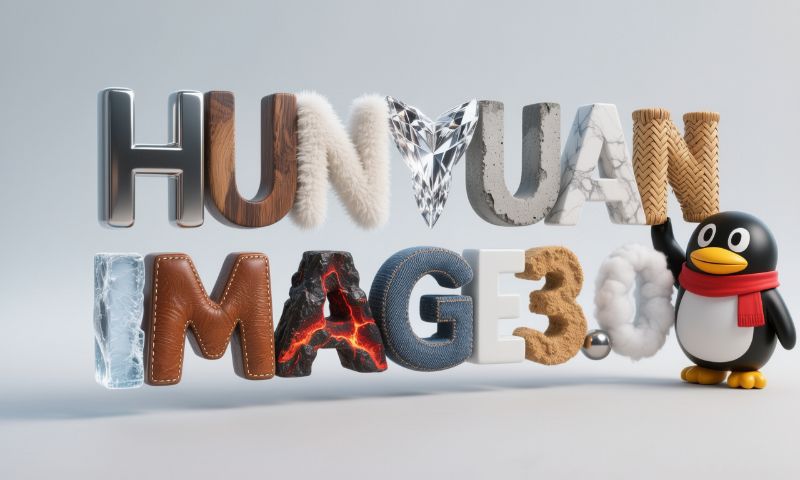
HunyuanImage 3.0-Instruct is an open-source image generation and image editing model from Tencent's Hunyuan team, emphasizing the unified multimodal capability of "understanding + generation", and is more suitable for creative editing and interactive remapping through the Instruct (with reasoning/instruction following) form. In the Image Edit Arena (lmarena) list, it entered the first echelon in the world and achieved a high ranking, becoming one of the open source image editing bases that the community has paid attention to.
2. Core features
- Unified autoregressive multimodal framework: Unify multimodal understanding and generation under the same architectural idea, which is convenient for "looking at the picture and changing the picture" and intention understanding.
- Ultra-large-scale MoE: Official information shows that it is an MoE form with 64 experts, a total parameter of about 80B, and about 13B/token activated during inference, with the goal of achieving a better balance between semantic alignment and picture detail.
- Instruct for editing: supports intent understanding, prompt enhancement, and more controllable editing results based on input images (suitable for style transfer, local modification, material/lighting/composition adjustment, etc.).
- Distil is easy to deploy: HunyuanImage-3.0-Instruct-Distil distillation checkpoint is provided, and the official recommendation is to take fewer sampling steps (such as 8 steps) to improve efficiency.
3. Installation
- Get the code: Clone the GitHub repository and install dependencies according to requirements.
- Prepare the running environment: The official example is mainly the PyTorch CUDA environment, and the corresponding version installation method is given; It is recommended to first perform the "Environment Setup" of the repository/model card.
- Download Weights: Get the HunyuanImage-3.0-Instruct or Distil weights from Hugging Face.
- Operation mode: It can be run according to the official Transformers quick start process or local Demo/Gradio examples; If you are looking for throughput and speed, you can pay attention to the official inference acceleration support (such as vLLM-related routes).
4. Typical use cases
- Directive remodeling: Use natural language to describe "changing the sky to dusk, keeping the characters unchanged, enhancing the sense of cinema", etc., to generate editing results that meet the intention.
- Style and texture transfer: change the painting style, material, light and shadow, and tone without destroying the main structure.
- Product and e-commerce image optimization: background replacement, detail enhancement, composition unification, batch generation of variants (need to cooperate with manual review).
- Creative iterative workflow: Use multiple rounds of interaction to gradually converge the effect (first change the style, and then make some fine-tuning).
5. Ecology and competing products
- Ecological entrance: GitHub provides inference code and examples; Hugging Face provides information on Instruct and Distil weights, discussion boards, and community adaptation.
- List and comparison perspective: In Image Edit Arena, HunyuanImage-3.0-Instruct compares with multiple closed-source/open-source models on the same stage. Competing products commonly include Qwen series image editing models, as well as image capability routes such as Seedream and Flux from some manufacturers.
- Selection suggestions: If you are more concerned about "controllable editing with command following" and the open-source weight that can be reproduced by the community, you can give priority to trying Instruct. If you are more concerned about inference efficiency and cost, you can start with Distil to validate the workflow.
6. Limitations and precautions
- Computing power threshold: Level 80B MoE may still have high requirements for video memory and multi-card parallelism; It is recommended to verify feasibility with a Distil or lower step strategy before landing.
- Editing consistency: In complex scenarios, subject drift, detail out-of-sample or text rendering may be unstable, and key outputs need to be manually reviewed.
- Copyright and compliance: Altered materials and generated content must comply with authorization and usage specifications; Establish traceable data and review processes for commercial advertising proposals.
- List interpretation: Arena scores and rankings will change with time and voting; There are also tags such as "Preliminary", so it is recommended to conduct offline evaluation in combination with your own dataset.
7. Project address
https://github.com/Tencent-Hunyuan/HunyuanImage-3.0
8. Frequently asked questions
Q: What image editing tasks is HunyuanImage 3.0-Instruct suitable for?
A: It is more suitable for natural language command-driven image modifications, such as style/lighting/composition adjustment, background replacement, local retouching, and generating multiple version iterations.
Q: What is the difference between HunyuanImage-3.0-Instruct-Distil and the original Instruct?
A: Distil focuses on efficiency and a deployment experience with fewer samples (the official recommendation is fewer steps), while the original version is more inclined to full capabilities and upper limit performance.
Q: How much computing power does HunyuanImage 3.0-Instruct require to be deployed on-premises?
A: The scale of the model is large, usually requires high video memory and possible multiple cards; It is recommended to follow the official example first, and then use the Distil/Low Steps/Parallel strategy to gradually reduce costs.
Q: Will the ranking of HunyuanImage-3.0-Instruct in Image Edit Arena change?
A: Yes. The list will change with voting and version updates, and it is recommended to refer to the "Last Updated" date on the list page, combined with the conclusions of the self-test.