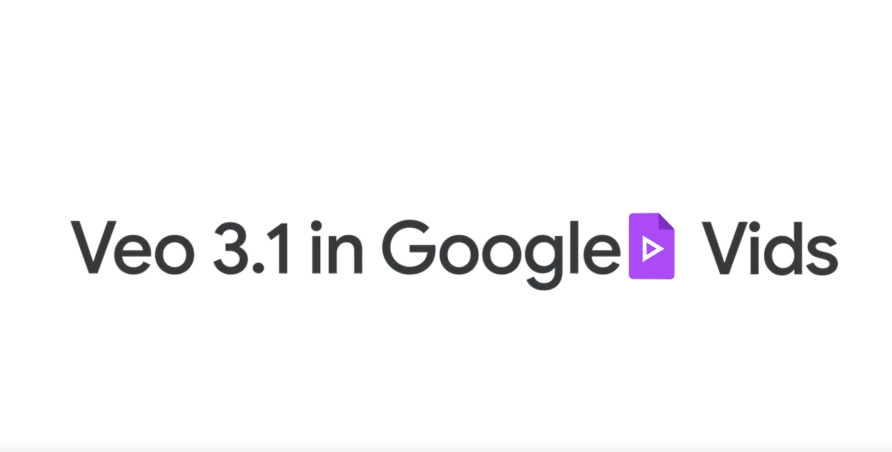
Google Workspace announced that Google Vids' AI avatars have been upgraded to be powered by the Veo 3.1 video generation model. According to the official description, the new version is closer to life-like presentation in terms of expression details, lip synchronization and picture stability, and at the same time has a faster generation speed, which can be used in scenarios such as training videos, internal announcements and support guidelines, allowing users to create a more "professional" explanation video by simply writing a script, without the need for a camera to appear or repeatedly re-record.
This feature is currently available to eligible Google Workspace and Google AI subscription plans, and there is no separate admin or end-user switch. The official also reminded that Workspace users will receive a higher usage quota of at least 30 days as a promotional experience, and then it will be implemented according to the usage limit per user; The help documentation lists common limits such as the number of preset avatars, the number of times per week, and the maximum duration of a video generated at a time, and the quota rules may be adjusted. When using it, it is still necessary to pay attention to compliance and misuse risks, and avoid using it for misleading impersonation or automated decision-making in sensitive scenarios.
FAQs
Q: What are the changes after the upgrade of Google Vids' AI virtual human?
A: The upgrade focuses on more natural expressions, smoother lip syncing and more stable framing, while improving the generation speed.
Q: Which users can use Veo 3.1-powered Vids avatars?
A: Eligible Google Workspace or Google AI subscription plans are required, and the specific coverage is subject to the official availability list.
Q: Can Google Vids virtual humans really make training videos "without a camera"?
A: You can enter a script to make the preset virtual human dubbing appear, which is suitable for training, publicity and operation explanation.
Q: Is there a limit on the usage quota or duration of Google Vids avatars?
A: There are restrictions on the number of times a user can generate a video and the duration of a single video, and Workspace accounts may have a higher promotion period in the short term.
Q: What are the risks of enterprises using AI virtual humans for training content?
A: It is necessary to avoid leaking internal information and causing misleading "real appearances", while complying with the prohibited use of generative AI and relevant compliance requirements.