Back to AI information
Qwen3-TTS releases VoiceDesign and VoiceClone: Free command control voice line support for 3-second voice cloning

Qwen3-TTS releases VoiceDesign and VoiceClone: Free command control voice line support for 3-second voice cloning

AI information Admin 135 views

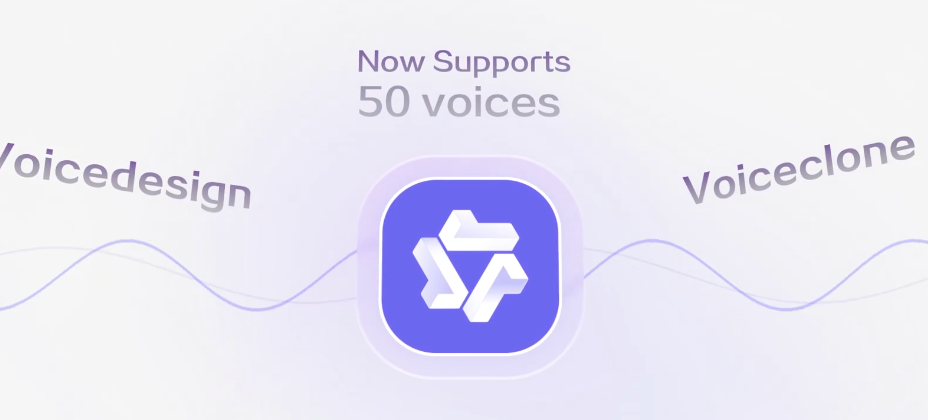
Qwen released a new lineup of Qwen3-TTS, launching two capability lines: VoiceDesign-VD-Flash and VoiceClone-VC-Flash: the former uses "free text instructions" to control the tone, rhythm, mood and character design at a fine-grained level, emphasizing that it does not rely on preset timbres; The latter focuses on voice cloning in just about 3 seconds of audio, and enhances performance in multilingual generation and more natural speech speed stops. Official publicity claims that the two outperform several competing or similar systems in some role-playing and multilingual evaluations.

From the perspective of the scope of application, VoiceClone-VC-Flash claims to be able to generate voices in 10 languages (including Chinese, English, Japanese, Western, etc.), and gives indicators such as relative WER reduction, but the public caliber may not cover all data sets, noise conditions and evaluation processes, and the actual effect may fluctuate with accent, recording quality, and text field. Relevant capabilities have been demonstrated on Qwen Chat and public demo pages, and developers can also refer to cloud models and TTS documentation. At the same time, voice cloning involves portrait rights, privacy, and authorization boundaries, and the use of samples and generated content requires ensuring explicit consent and avoiding the risk of impersonation.

FAQs

Q: What problems do the new VoiceDesign and VoiceClone solve in Qwen3-TTS?

A: VoiceDesign is used to "design and control" the voice style with text instructions; VoiceClone is used to quickly replicate specific speaker timbres from short audio samples and synthesize them in multiple languages.

Q: What are the audio requirements for VoiceClone-VC-Flash for 3-second voice cloning?

A: Usually requires clear vocals, less background noise and distortion; The cleaner and more stable the sample, the better the clonal similarity and understandability.

Q: What languages does VoiceClone-VC-Flash support and what are the common limitations?

A: The official claim supports 10 languages (including Chinese, English, Japanese, Spanish, etc.); When crossing languages, accent migration, pronunciation deviations of individual proper names and fluctuations in intelligibility may occur.

Q: What are the most easy risk points to step on when using the voice cloning function?

A: Unauthorized cloning of other people's voices, impersonation or misleading dissemination; and uploading audio samples containing sensitive personal information to unknown environments.
Qwen3-TTS released two Flash capability line analysis Qwen3-TTS launches new VoiceDesign-VD-Flash capabilities Qwen3-TTS launches a new lineup of VoiceClone-VC-Flash Qwen3-TTS uses text instructions to finely control the tone, rhythm, and emotion VoiceDesign-VD-Flash implements free text command control of voice VoiceDesign allows users to create characters without preset tones VoiceDesign-VD-Flash fine-grained control of timbre and mood VoiceDesign-VD-Flash is geared towards role-playing voice generation VoiceDesign designs voice style and expression with instructions VoiceClone-VC-Flash 3-second audio fast voice cloning VoiceClone-VC-Flash enhances the multilingual speech synthesis experience VoiceClone-VC-Flash improves natural speech speed and stoppage Qwen3-TTS advertises that the multilingual evaluation is better than some competitors Qwen3-TTS role-playing performance is benchmarked against similar systems The applicable scenarios of the two Qwen3-TTS capability lines are fully sorted out VoiceClone claims to support Chinese, English, Japanese, Spanish, etc VoiceClone-VC-Flash supports 10 languages for generating interpretation Accent migration may occur in VoiceClone multilingual generation VoiceClone synthesizes proper pronunciation bias prompts across languages The VoiceClone effect is affected by the accent and the quality of the recording Requirements for clear vocal samples for three-second voice cloning Precautions for the interpretation and evaluation of WER indicators Qwen3-TTS public metrics may not cover all datasets Errors caused by differences in noise conditions and evaluation processes How do developers learn how to use Qwen? Chat experience Qwen3-TTS Summary of Qwen3-TTS public demo page capability highlights Developers refer to the Cloud Model and TTS documentation guide What problems does VoiceDesign and VoiceClone solve? VoiceDesign is used to design and control voice style descriptions VoiceClone is used to quickly replicate speaker timbre analysis The cleaner the VoiceClone sample, the better the similarity Background noise distortion affects VoiceClone understandability VoiceClone adapts to different text domains of risk alerts Voice cloning involves portrait privacy and authorization boundaries Explicit consent is required before using voice cloning Voice cloning compliance tips to avoid impersonation risks Privacy risks of uploading audio samples with sensitive information What authorization and processes are required for enterprise applications VoiceClone? How to create a unified persona with VoiceDesign How to control the emotional rhythm with VoiceDesign Evaluate the availability of VoiceClone in customer service and broadcast scenarios How to verify WER and subjective auditory perception when multilingual TTS is implemented What dimensions should Qwen3-TTS pay attention to when comparing with competing products? From publicity to measured verification of the Qwen3-TTS effect path

Recommended Tools

More