1. Product positioning
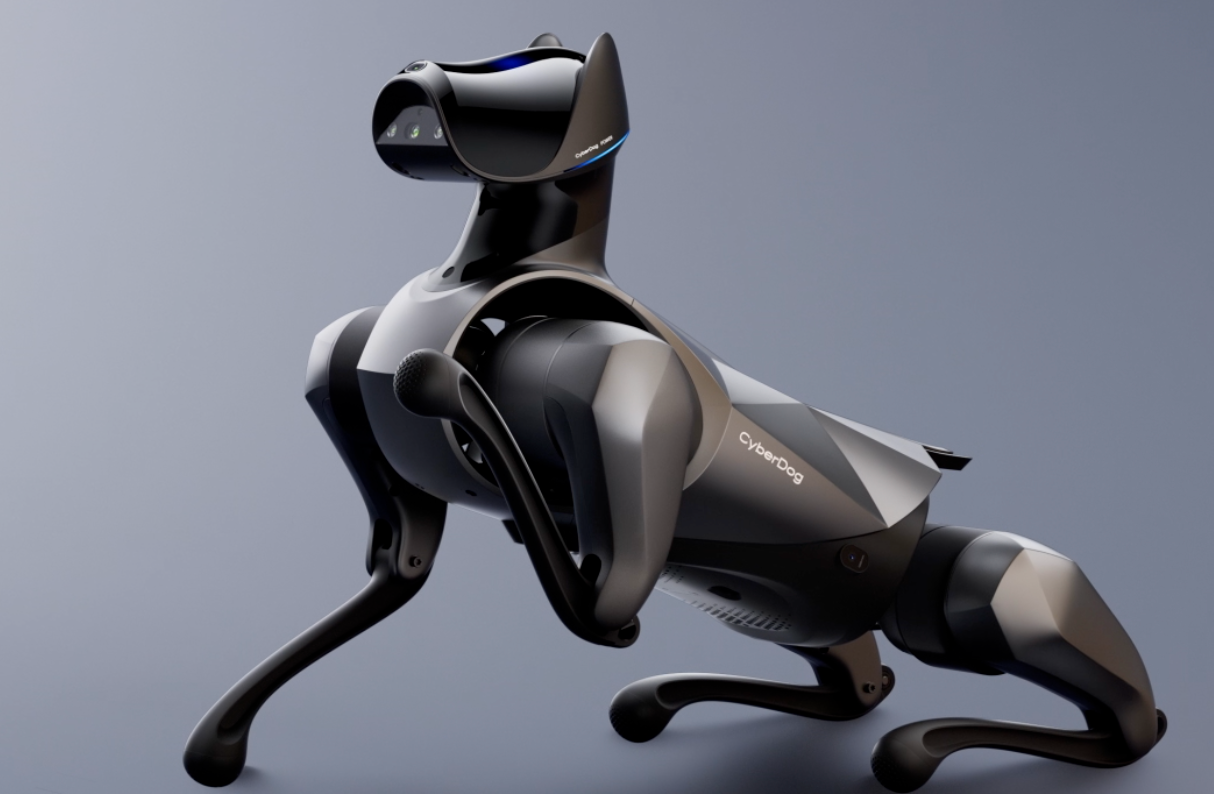
CyberDog 2 is the second generation of bionic quadruped robots launched by Xiaomi, positioned as an "open platform for geeks and developers", with a bias towards consumption and experimental attributes rather than industrial-grade inspection equipment. The size and weight of the whole machine have been greatly reduced, closer to the size of a small dog, and is suitable for companionship, display and algorithm development in homes, campuses and laboratories.
2. Core parameters and technical characteristics
CyberDog 2 uses a 12-degree-of-freedom quadruped platform, with self-developed CyberGear micromotors and motion control algorithms, with high dynamic balance capabilities, and can complete difficult actions such as running, jumping, twisting, and space stepping. The weight of the whole machine is about 8.9kg, which is about 40% less than the previous generation, making it safer and easier to control.
The fuselage integrates 19 sensors, including vision, depth, laser, ultrasound, IMU, and touch, for environmental perception, obstacle avoidance, face-to-body recognition, gestures, and voice interaction. Built-in NX chip and coprocessor, the comprehensive computing power can reach more than 10 to 20 TOPS, for multi-modal perception and decision-making. Officials open a variety of control methods: voice, Xiaomi mobile app, Bluetooth remote control, visual programming and SDK interface, which is convenient for zero-based users to developers to get started in layers.
3. Application scenarios and applicable groups
In ordinary homes and schools, CyberDog 2 can be used as a "tech pet" and teaching tool to demonstrate quadruped movements, follow, listen to commands, or combine graphical programming for performance and interaction.
For universities and geek communities, it is an experimental platform with strong mobility and perception capabilities, which can be used for robot motion control, multi-sensor fusion, vision algorithms and human-computer interaction research.
It should be noted that CyberDog 2 is not designed according to industrial inspection or explosion-proof levels, and is not suitable as a main security or high-risk area inspection robot, but more suitable as a R&D and experience platform.
4. Purchase and deployment suggestions
From the official positioning, CyberDog 2 is still a niche development platform, with a price of 10,000 yuan, which is more suitable for users with sufficient budgets, interest in robots, and willing to invest time in learning and tossing. For ordinary families who just want simple companionship or housekeeping, the more realistic choice is still traditional smart hardware.
If it is used as a teaching and scientific research carrier, the site safety, storage and charging conditions should be confirmed before introduction, and teachers or students with basic programming and robotics backgrounds should be responsible for daily maintenance and curriculum design.
Q&A Frequently Asked Questions
Q1: What are the main upgrades of CyberDog 2 compared to the first generation?
A: The volume is significantly reduced and closer to the body size of a real dog; Self-developed motor and control algorithm upgraded, more flexible action; The sensor layout and appearance details have also been optimized, while continuing the idea of an open platform.
Q2: Can I play completely zero?
A: You can directly experience preset functions such as following and performing through apps and remote controls, but to realize the value of the platform, such as autonomous navigation or custom behavior, you still need a certain amount of programming and AI foundation.
Q3: Can it be used for factory or park inspection?
A: It is okay to do demonstration patrols in safe and simple places, but the protection level, battery life and platform reliability are not aimed at industrial scenarios, and the more suitable positioning is experimental "mobile sensor + technology pet".
Q4: What is the most valuable point for developers?
A: A complete quadruped electromechanical platform + multi-modal sensor + open control interface can focus on algorithms and applications without having to make a robot chassis from scratch.