1. Company and product positioning
Fourier is an intelligent robot company headquartered in Shanghai, which was the first to be deeply involved in rehabilitation robots and exoskeletons, and now forms a combination of "universal humanoid robot GRx series + rehabilitation system RehabHub + open source platform", with the goal of promoting embodied intelligence in medical, scientific research and general service scenarios.
2. Overview of GRx humanoid robot series
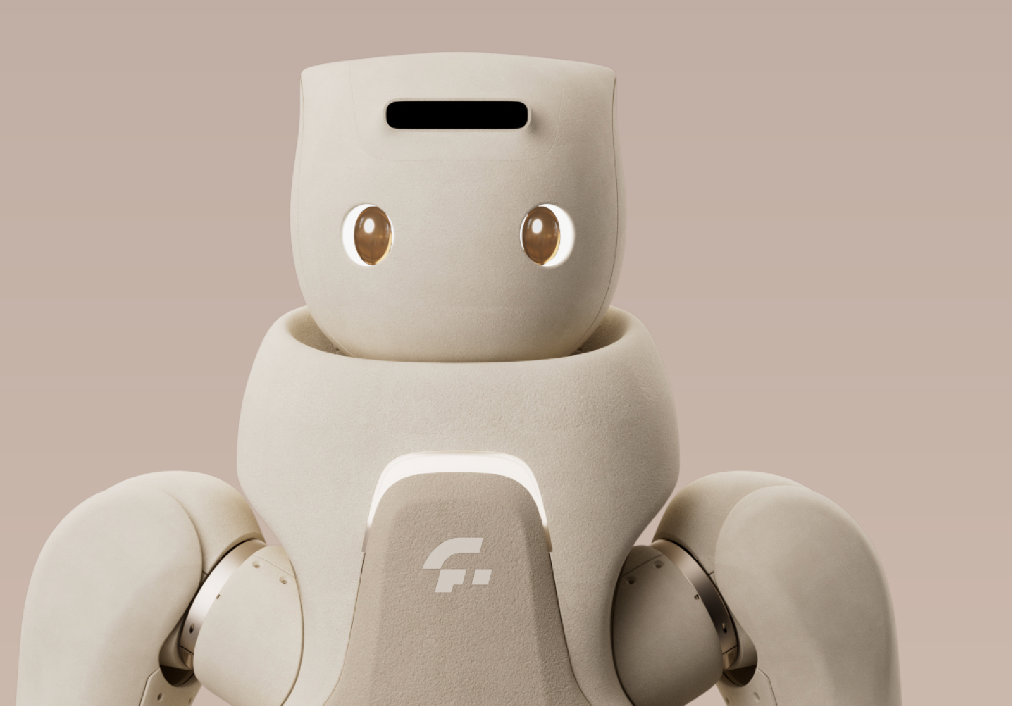
GRx is a family of humanoid robots from Fourier, including models such as GR-1, GR-2, GR-3, and more. GR-1 focuses on the "first mass-produced humanoid", with a height of about 1.65 meters and a weight of more than 50 kilograms, equipped with more than 40 degrees of freedom and autonomous walking ability, suitable for reception, tour guide and scientific research carrier. GR-2 has been comprehensively upgraded in terms of height, degree of freedom, dexterous hands, battery, etc., and is more suitable for high-precision operation and secondary development by developers. GR-3 strengthens the attributes of companionship and emotional interaction, and is aimed at life scenarios that are closer to people.
3. Rehabilitation business and RehabHub
In the medical field, Fourier connects gait training, upper limb training, exoskeleton and other types of equipment to the same digital platform through the RehabHub intelligent rehabilitation port, providing one-stop rehabilitation solutions for hospitals, and landing in hospitals in many countries. For doctors and therapists, the value lies in standardizing training processes, collecting objective data, and improving the reception capacity of departments.
4. Open source and developer ecology
For developers, Fourier has launched action datasets such as the N1 open-source humanoid platform and FourierActionNet, along with the GRx software development toolchain, to support migration strategies between simulation and real robots. Universities and enterprise laboratories can do research on motion control, reinforcement learning, multimodal perception and other research on it without having to develop the whole machine hardware.
Q&A Frequently Asked Questions
Q1: What are GR-1 and GR-2 better suited for separately?
A: GR-1 is more suitable as a display and basic scientific research platform for guided tours, reception and general experiments; GR-2 is more open in hardware and software, making it suitable for teams looking to develop highly dynamic movements and dexterous operations in depth.
Q2: What is the synergy between Fourier rehabilitation and humanoid robots?
A: The rehabilitation equipment has accumulated a large amount of human movement and training data over the years, and this experience can feed back the design of humanoid robots in gait, balance and ergonomics, making the GRx series closer to the real needs of use.
Q3: If colleges and universities want to introduce the Fourier platform, which one should they give priority?
A: Focus on motor control and gait, GR-1 or N1 can be preferred; For medical engineering and rehabilitation science, you can start with RehabHub or single rehabilitation equipment; If you emphasize open source and data, it will be more flexible with FourierActionNet.
Q4: Is the GRx series more commercial or scientific now?
A: At present, it is in the parallel stage of scientific research and early commercial use, with a high proportion of scientific research and demonstration projects, and commercial scenarios are mostly concentrated in reception, guided tours, displays and joint pilots.