1. Product positioning
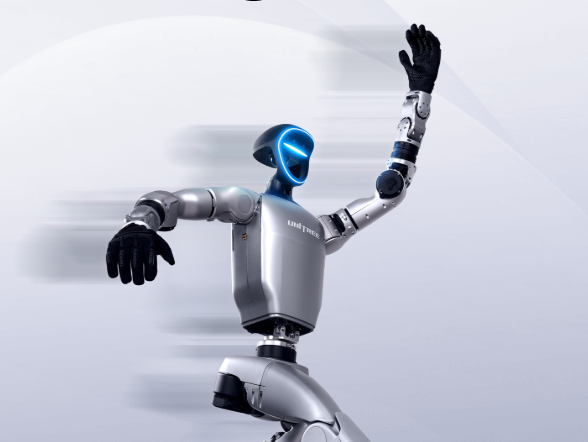
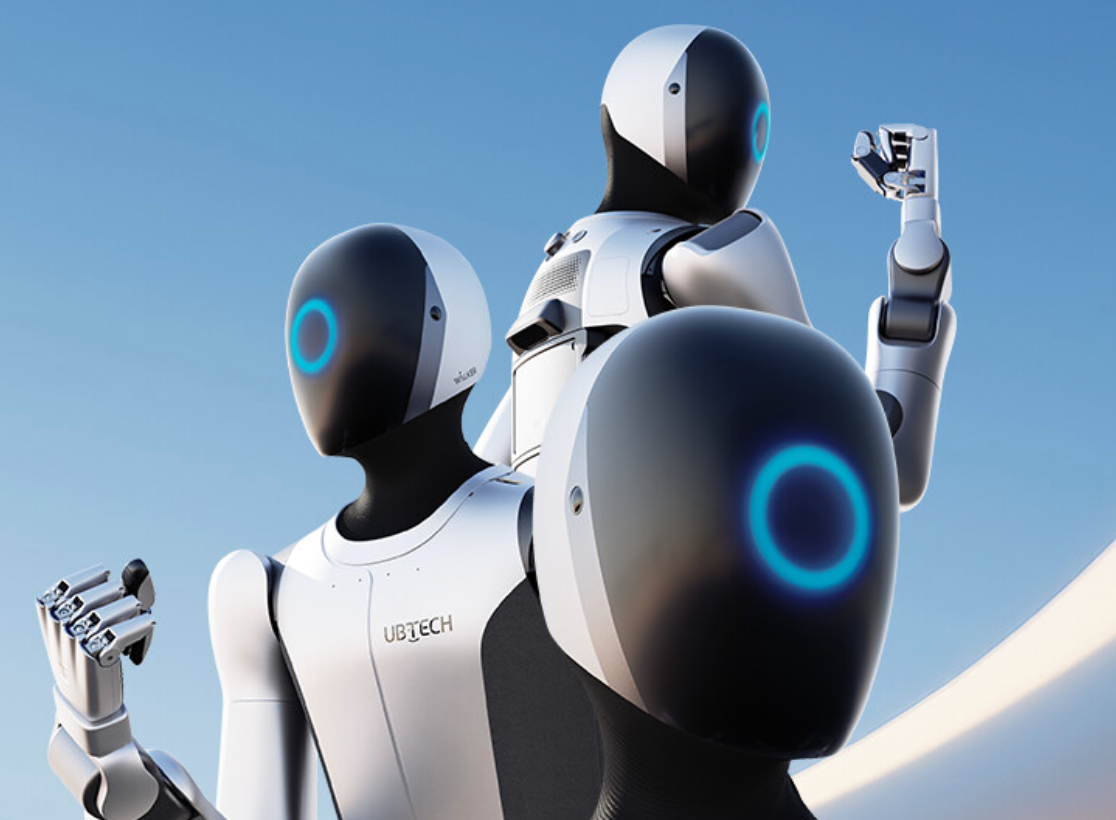
Walker is a bipedal humanoid service robot launched by UBTECH, with a height of about 1.45 meters and a weight of about 77 kilograms, focusing on home and office service scenarios, and also serving as a general humanoid platform for universities and R&D institutions. Its goal is not to move heavy goods, but to complete light work such as reception, parade, display, and simple removal in real space.
2. Core hardware and sports ability
The Walker has a total of 36 degrees of freedom throughout the body, with both legs responsible for bipedal walking, and both arms and hands providing gripping and posture control. Relying on gait planning and full-body balance control, it can maintain stable walking on a variety of surfaces such as floors, carpets, grass, and steps, which is more friendly to teams that want to experiment in complex environments. The rated load of a single arm is about 1.5 thousand grams, which is more suitable for holding bottles, cans, small boxes, documents and other items.
3. Perception system and interaction ability
The whole machine integrates a variety of sensors such as force sense, vision, hearing and spatial perception, which can recognize faces, objects and scenes, and cooperate with the seven-degree-of-freedom arm to achieve hand-eye coordinated grasping. Through multimodal interaction, Walker can listen to voice, see images, communicate with people based on action and environmental information, and support the control of smart home devices such as lights and electrical appliances, which is more valuable for teams doing interaction research on service robots.
4. Software platform and application direction
The computing platform uses a general-purpose x86 processor, runs Ubuntu plus real-time kernel and ROS at the bottom of the platform, and officially provides simulation models and Gazebo support to facilitate rapid algorithm iteration. Typical applications include human-computer interaction research, gait and full-body control algorithm verification, multimodal perception and navigation experiments, and demonstration service robot projects for exhibition halls and office buildings.
Q&A Frequently Asked Questions
Q1: Is Walker more suitable as a scientific research platform or directly commercially available?
A: It is now more general-purpose platform attributes, suitable for universities and enterprise laboratories to do control, navigation, interaction and other research; When commercializing directly at scale, it is usually combined with custom software and used only in a few demonstration or demonstration projects.
Q2: Can Walker do warehousing, handling or heavy duty operations?
A: Not suitable. Single-arm loads are rated at one to two kilograms and are better suited for lightweight handling and teach-in demonstrations, and if the goal is to move boxes and palletize, consider specialized industrial humanoid solutions.
Q3: If it is used as an R&D platform, what is the main threshold for introduction?
A: First, the budget and venue, there needs to be a special area for walking and intervention experiments; Second, the team needs to have a certain foundation in Linux, ROS, and control algorithms to truly realize the value brought by 36 degrees of freedom and multiple sensors.